Singapore to make cool water and breathable clothing mandatory for outdoor workers from Dec 1
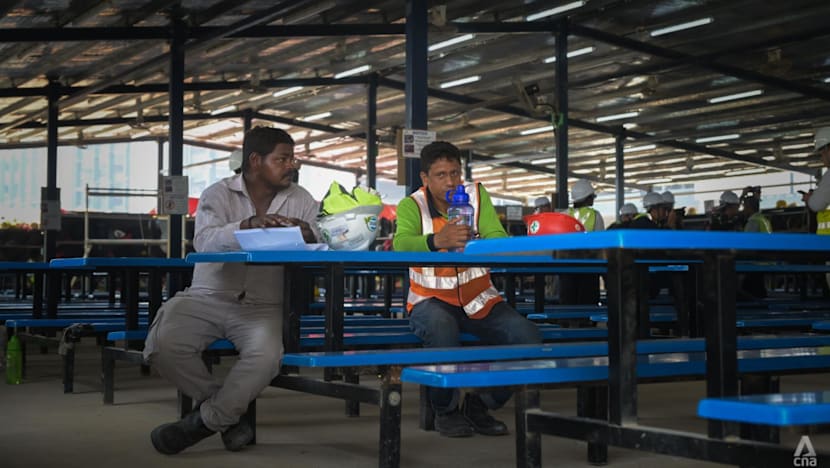
SINGAPORE: Outdoor workers must have cool drinking water, clothes suited to hot climates, emergency ice packs and training as part of new requirements to protect them from heat-related risks from Dec 1.
The Ministry of Manpower (MOM) announced these enhancements to the existing heat stress management framework for outdoor work on Friday (Aug 28).
The framework guides employers on practices to reduce heat stress risk for workers who primarily work in the open without permanent shade.
Four practices, which are currently recommendations, will be elevated to mandatory requirements from Dec 1:
- Establish a heat stress training programme for workers exposed to high temperatures
- Provide cool drinking water supply near work areas
- Ensure cold water, ice packs or water spray are on standby for emergency response
- Provide suitable clothing that is loose-fitting, breathable or moisture-wicking
These requirements apply to all outdoor work scenarios regardless of the wet bulb globe temperature.
They join the current requirements for heat acclimatisation, hourly monitoring of the wet bulb globe temperature, regular rehydration, rest under shade, and emergency response and reporting.
If employers fail to comply with the requirements, they may face enforcement actions such as stop-work orders and composition fines.
From Dec 1, there will also be a new recommendation to provide outdoor workers with shaded rest areas that are well-ventilated and well-insulated or cooled.
Minister of State for Manpower Dinesh Vasu Dash said employers must take proactive steps to protect workers, as part of Singapore's broader efforts to strengthen its resilience to rising temperatures.
"These enhanced measures provide clearer expectations for employers while strengthening protection for workers," he said.
"Better management of heat stress not only safeguards workers' health and well-being, but also helps employers reduce downtime, maintain productivity and support business continuity."
He encouraged employers to use the remaining three months before Dec 1 to review their workplace practices and put the necessary measures in place.
MOM said the enhanced measures were developed together with tripartite partners, the Singapore National Employers Federation and the National Trades Union Congress, as well as industry stakeholders and relevant government agencies.
These measures are being made mandatory two years after they were added to the framework as recommendations in 2024, noted Mr Dinesh.
MEASURES TIMED FOR HOT WEATHER IN 2027
The proactive measures are timed to be in place before the next round of hot weather expected from May next year, he added.
Singapore also faces haze risks with a recent increase in hotspot activity in the region.
Mr Dinesh said MOM was constantly watching the haze situation. “Thankfully, we haven't seen an uptick,” he said.
“We’ve got mechanisms in place to alert work sites and especially workers working outside, in the outdoors, for them to be well-protected, either by way of masks and so forth.
“Thus far, we are in a relatively good position, and we continue to observe what's happening in our neighbouring countries to protect our workers who are working in Singapore.
“In the event where you have haze and hot weather happening together, we will have to again look out for the safety and health of our workers to make sure that they are able to continue working.”
This could mean rest measures if the temperature and haze levels become too high, he said.
“We want to place our workers’ health and safety in the centre of all that we do, because by doing so, not only are we protecting them, but we’re also protecting our employers to be able to have a productive workforce that will help them in their overall timelines and their work.
KioskNews shows a cleaned-up reading view extracted from the publisher’s page — the original always lives on their site, not ours.