Planning To Buy A Home In Rural India? Why Banks May Look Beyond Income
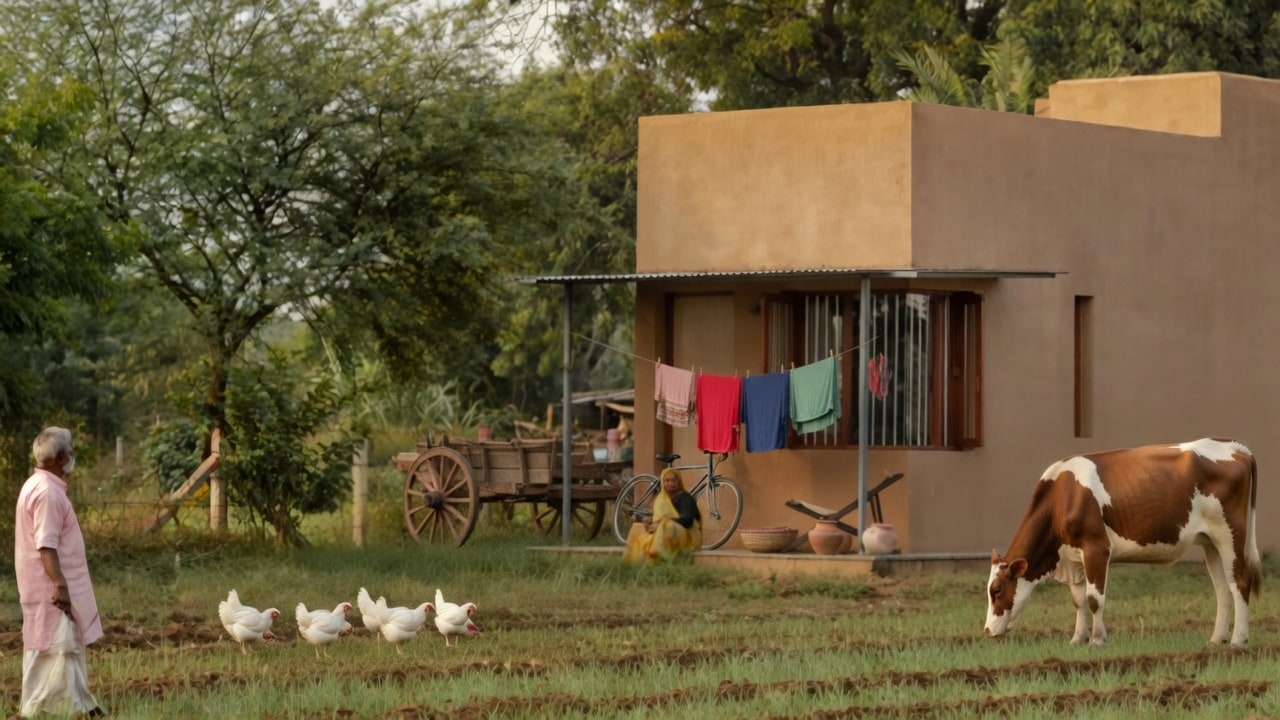
India's rural housing market is changing. The aspiration to own a pucca home is growing, but getting the money to build or buy one remains a challenge for many households.
And the biggest hurdle may not always be higher interest rates. For rural borrowers, the bigger problem can be proving that they have a stable income and a property that can be accepted as security for a loan.
This is because rural incomes often do not follow the predictable pattern seen in cities. A household may earn from farming, a small shop, livestock, daily wages, self-employment or several of these activities at the same time. The income can be sufficient to repay a loan, but it may not come with a salary slip or a standard financial statement.
Also Read | Layoffs Are Rising In Tech, But These Skills Are Helping People Unlock Better Pay
Ajeet Kumar Singh, MD & Co-Founder, SAVE Group, told NDTV that rural housing finance needs to account for these differences rather than assess borrowers only through conventional documentation.
According to Singh, rural households can have adequate repayment capacity even when their income comes from multiple informal or seasonal sources. Understanding these cash flows is therefore critical for lenders looking to expand housing finance in rural markets.
Property Documentation Is A Major Issue
Unlike urban housing markets, where property records and ownership documents may be more standardised, rural properties can involve different types of land records, ownership arrangements and documentation. Any uncertainty over the title or legal ownership can make lenders more cautious.
This makes the quality of the underlying security just as important as the borrower's income.
For lenders, the challenge is to assess both sides of the equation. They need to understand how a household earns and whether the property being offered as security has clear legal ownership.
Technology Can Bridge Gaps
Digital verification, better data analysis and technology-led credit assessment can make the lending process faster and reduce paperwork. They can also help lenders build a clearer picture of a borrower's financial behaviour. But technology cannot solve everything.
A lender still needs to understand the local economy and the borrower's circumstances. That could mean looking beyond a single source of income and understanding how agriculture, small businesses, wage work or other activities contribute to household cash flows.
Singh said a more nuanced approach is needed in rural housing finance, combining technology with local understanding and stronger last-mile engagement.
The opportunity is significant. As rural households become more aspirational and their sources of income diversify, the demand for formal housing finance could also expand. But lenders will have to balance access with responsible lending.
This means rural borrowers should not be judged only on whether they have a conventional salary slip or a long credit history. Their broader financial behaviour, household cash flows and actual repayment capacity also need to be considered.
At the same time, borrowers need clarity on the property they are offering as security. Clear titles and proper documentation remain essential for a sustainable housing finance ecosystem.
As per Ajeet Kumar Singh, the focus should ultimately be on simple, transparent and responsible financing solutions that address genuine housing needs while maintaining sound credit discipline.
KioskNews shows a cleaned-up reading view extracted from the publisher’s page — the original always lives on their site, not ours.