Pentagon mulls placing fleet of military satellites around the Moon
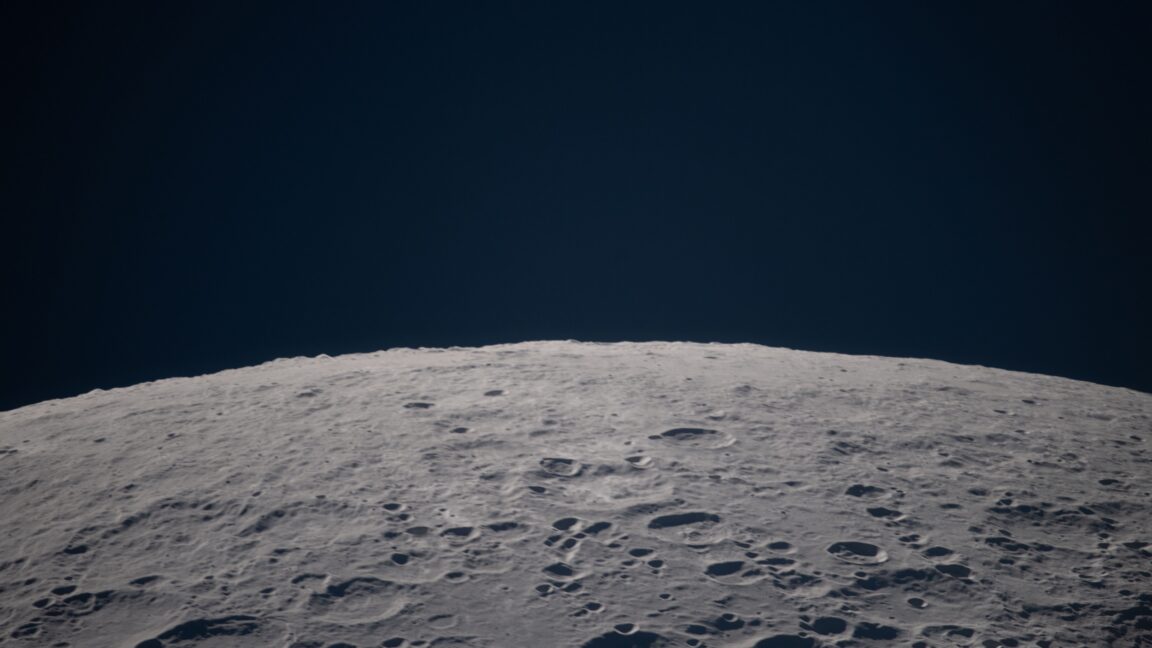
The US military has published a Request for Information on a federal procurement website signaling interest in deploying a “proliferated cislunar constellation” consisting of an unspecified number of satellites performing an undisclosed mission in the vicinity of the Moon.
The announcement follows statements in recent months from the Space Force’s acquisitions chief for advanced programs, Maj. Gen. Stephen Purdy, that the military was getting serious about extending its reach to the Moon. The Space Force’s most distant satellites today are in geostationary orbit, some 22,000 miles (36,000 kilometers) over the equator, collecting routine surveillance and missile warning data.
Most recently, Purdy spoke of a shift in Pentagon leadership’s thinking about the Moon following an executive order signed by President Donald Trump last December. The order set out the Trump administration’s space policy. One section of the order deals with the US government’s ability to detect, characterize, and counter threats to US space interests from low-Earth orbit to cislunar space, the term of art for the region of space around the Moon.
Fighting for the Moon
“I’ve got the Secretary of War and the Chairman of the Joint Chiefs full on stating in public: ‘This is a warfighting domain,’” Purdy said at Space Systems Command’s Industry Days event in October, according to a report in Air & Space Forces Magazine. “And so, I would ask you all, please jump on my cislunar bandwagon because I need some more friends here, along with our deep, passionate crew that have been working on this for years.”
Officials have emphasized the military’s role at the Moon is to protect US interests there as the United States and China ramp up their lunar programs, with a series of robotic missions culminating in crewed lunar landings in the next few years. Some US officials foresee a competition for real estate and resources at the Moon, where there are a finite number of safe landing zones that can access the Moon’s water ice at the south pole.
“We have a role to play, but we’re not the lead,” said Gen. Chance Saltzman, who was the top general in the Space Force until his retirement in August. “I just don’t want to get caught flat-footed when we start to have to protect US interests out there, so we’re along for the ride.”
Now, the Pentagon has taken a preliminary step toward a “Cislunar Space System,” a constellation of military satellites the military says it is considering deploying around the Moon. The new RFI was released by the Department of the Air Force and dated November 2. It asks companies to inform the military on their ability to provide “rapid” and “low-risk” solutions to support the government’s “technical and programmatic objectives.”
The document provided few details about what the Pentagon wants to do around the Moon with the Cislunar Space System, other than it will consist of up to five spacecraft, each with a government-provided payload, to meet military “mission needs” in late 2029.
The RFI hints at a vision for a much larger fleet of satellites in cislunar space. The first five satellites “may serve as seed vehicles that will inform the acquisition strategy for a potential future proliferated cislunar constellation,” the RFI said.
“The government intends to award up to five firm fixed price preliminary design study contracts upon government consideration of the market information collected with this RFI and all other sources of information relevant to the effort,” military officials wrote on the government procurement website.
Responses are due by November 24. It is unclear when the Pentagon might move forward with firm contracts, and the language in the RFI does not commit the military to doing so. The standard commercial satellite development cycle can run two or three years, so it’s a safe bet that military officials would want deals signed sometime in 2027 to meet their 2029 schedule goal.
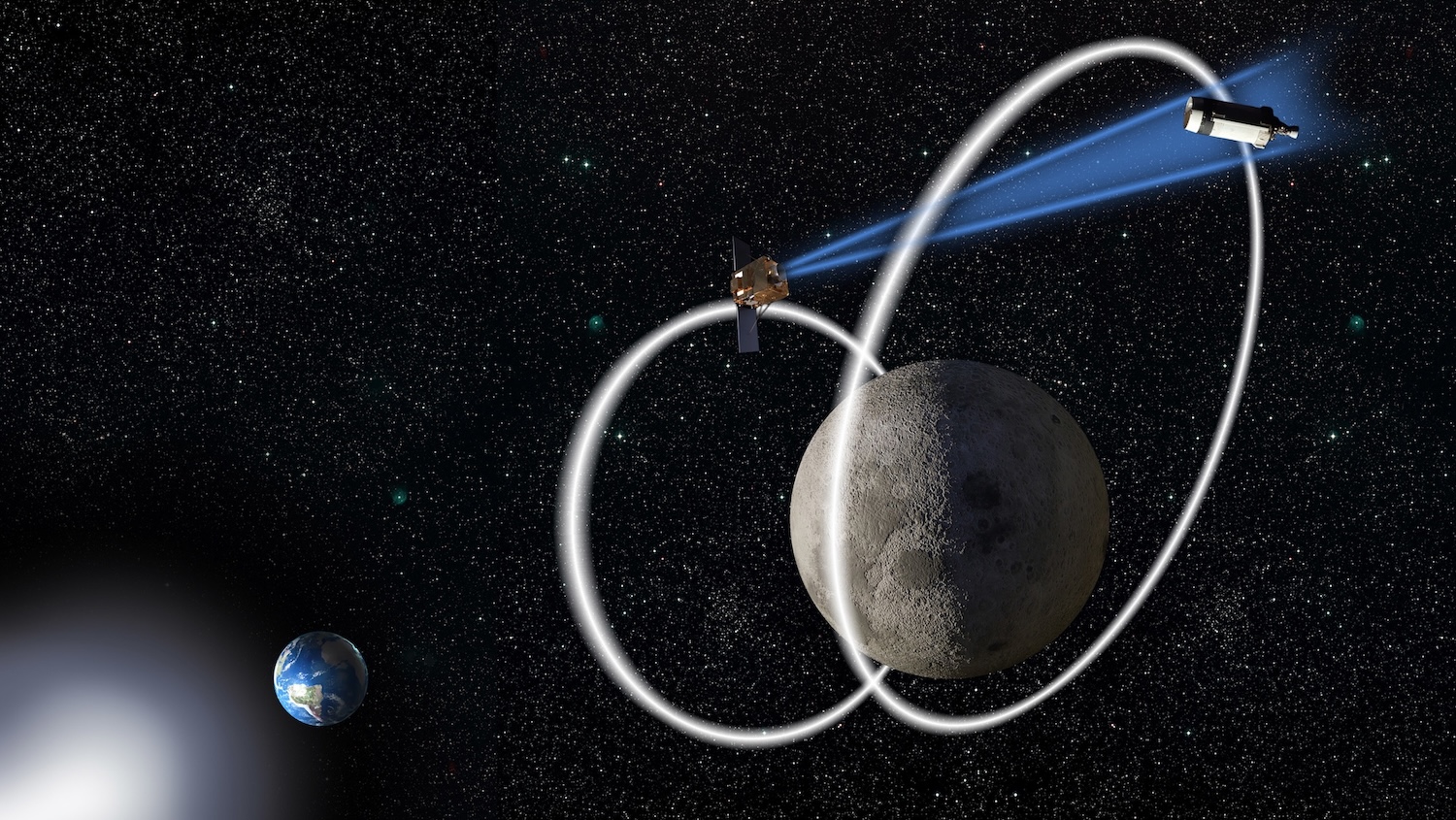
Artist’s illustration of a cislunar space domain awareness mission.
Credit: US Air Force
Artist’s illustration of a cislunar space domain awareness mission. Credit: US Air Force
Some possible missions
The secretary of the Air Force announced in September that the US military has placed unspecified weapons in orbit. But don’t expect the Space Force to send weapons to the Moon any time soon.
While NASA focuses its lunar program on human landings, a Moon Base, resource exploration, and scientific research, military satellites at the Moon could perform similar roles as they do in Earth orbit. These functions could include tracking and characterization of other objects in cislunar space, navigation and communications, and surveillance.
The Defense Department has already had a presence at the Moon. A joint NASA-DOD spacecraft named Clementine discovered the first hints of water ice inside permanently shadowed craters at the lunar south pole.
A military-led mission named Oracle-Mobility is scheduled to launch in mid-2027 on a trajectory toward the Moon. The $75 million Oracle-M mission, formerly known as the Defense Deep Space Sentinel, is led by the Air Force Research Laboratory, which says the satellite will be “highly mobile and will transit throughout cislunar space and experiment with techniques to maintain custody of objects in this region.”
“This mission will allow AFRL to assess strengths and weaknesses of navigation techniques needed for future operational systems,” AFRL says on its website.
A second Oracle mission, Oracle-Prime, is supposed to be ready for launch by the end of 2027. Its mission will involve detecting and tracking other satellites and debris from a position near Earth-Moon Lagrange Point 1, a gravitationally stable location about three-quarters of the way to the Moon.
Each of the Oracle missions will only involve a single spacecraft, but the recent RFI from the Department of the Air Force suggests a move toward a more sustained military presence around the Moon.

Stephen Clark is a space reporter at Ars Technica, covering private space companies and the world’s space agencies. Stephen writes about the nexus of technology, science, policy, and business on and off the planet.
KioskNews shows a cleaned-up reading view extracted from the publisher’s page — the original always lives on their site, not ours.