AI, robotic arms power Hong Kong public hospital laundry and meal centre
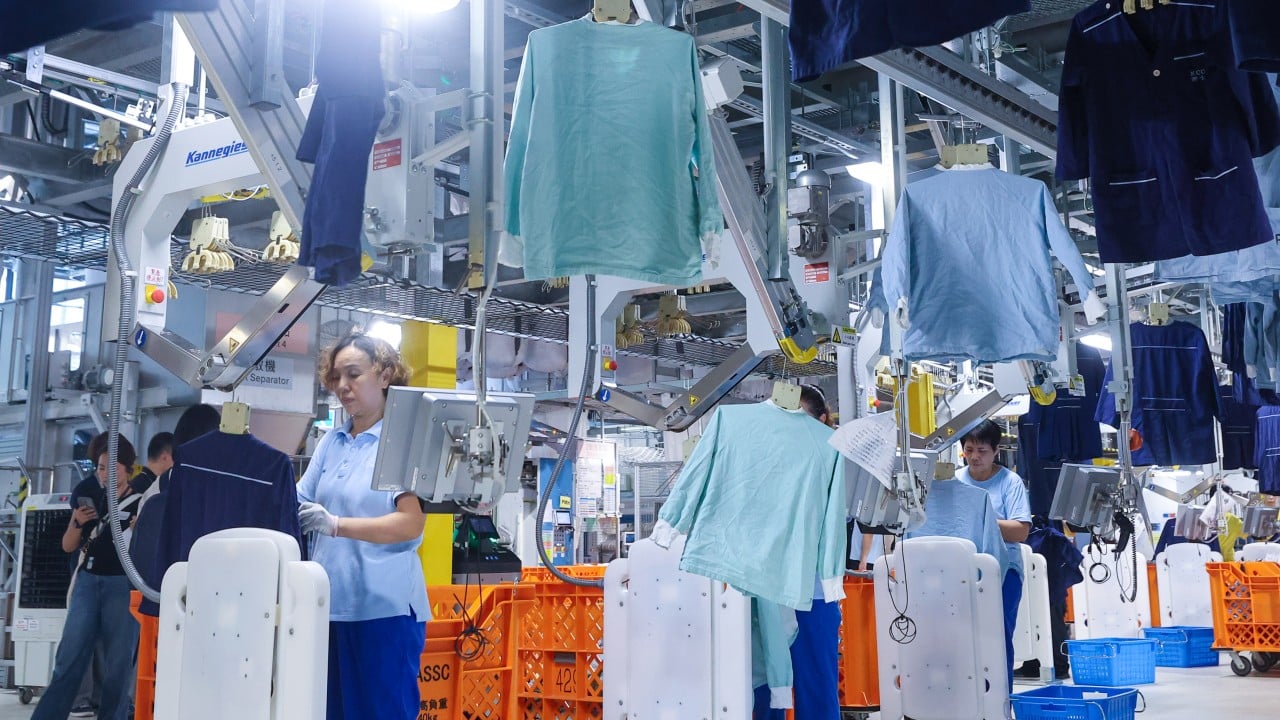
Hong Kong’s Hospital Authority has rolled out artificial intelligence (AI) and robotic automation at its new support services centre to handle laundry processing and meal production for public hospitals, aiming to boost efficiency and worker safety.
The six-storey, 62,000-square-metre centre, which houses the central laundry and food production unit, opened its doors to the press for the first time on Tuesday since beginning operations in March last year.
Located in Tung Chung on Lantau Island, the facility meets about half of public hospitals’ laundry and meal demand, deploying X-ray sorting, robotic arms and cook-chill kitchen technology.
The complex’s central laundry, which occupies three floors, features Hong Kong’s first automatic X-ray sorting system to detect foreign objects in clothing and linens collected from 13 public hospitals.
Robotic arms pick up dirty laundry from a conveyor belt, where items are scanned by an X-ray machine for foreign objects before washing, eliminating the need for manual checks.
“The laundry can be extremely hot and humid in a traditional workplace,” said Dr Law Chun-bon, cluster chief executive of the Kowloon West Cluster. “Automation has greatly improved our occupational safety and health, reducing the repetitive strain and heavy lifting that workers previously endured.”
A one-way workflow links every stage of the laundry process – from washing, drying, folding and ironing to final packaging and delivery – via a hanging-bag system and conveyor belts.
Heavy linen bundles are handled by a robotic transport and stacking system – the first of its kind in Hong Kong – before being transferred to a fully automated storage rack, where automated guided vehicles transport sorted cages directly to delivery bays.
Law said the system could reduce the risk of musculoskeletal injuries among workers.
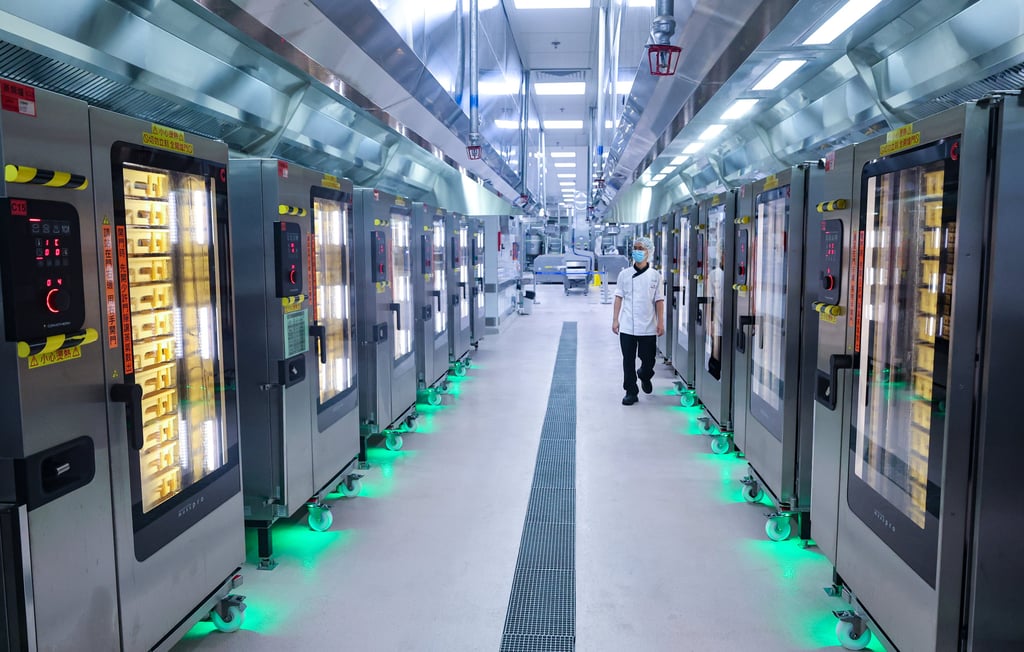
The facility’s central food production unit currently prepares patient meals for 15 public hospitals, using automated cooking, packaging and freezing lines.
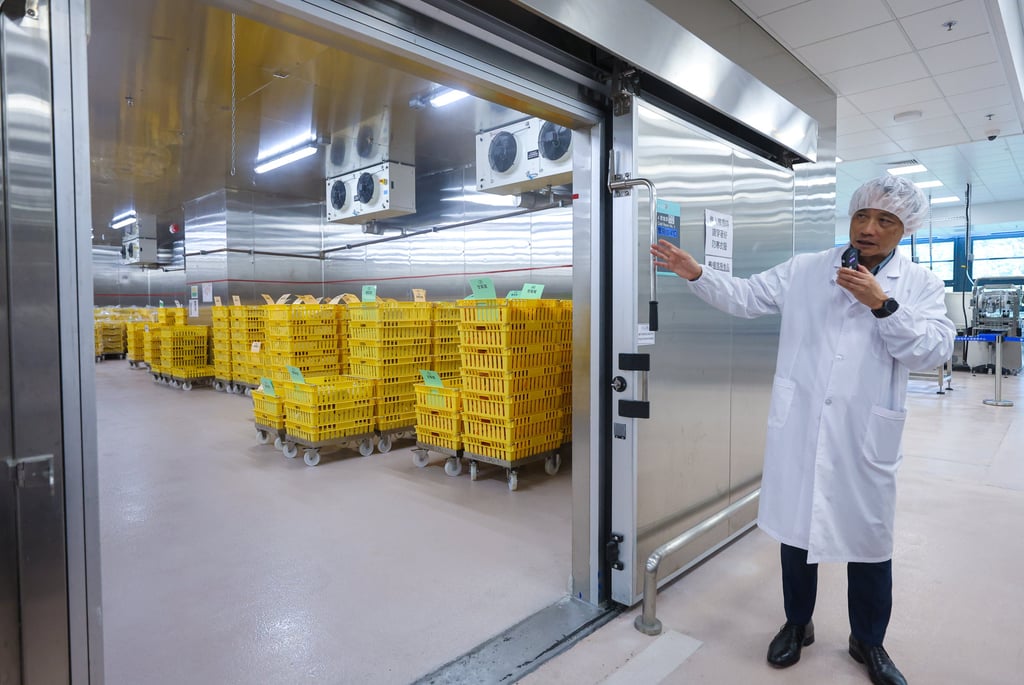
Meals are prepared using cook-chill technology, which cools food from 75 to below 4 degrees Celsius (167 to 39.2 Fahrenheit) within two hours to lock in freshness and ensure consistent quality, while X-ray machines check the food for safety.
“We hope that after trying it, the concept that hospital meals are unappetising can be changed,” Law added.
The Tung Chung centre currently meets around 50 per cent of the authority’s overall support service demand, handling 33.2 million kilograms of laundry and 14.7 million meal sets annually, with the remainder covered by individual hospitals or outsourced providers.
The authority expects the new centre to expand to cover nearly 70 per cent of demand by the end of 2026.
The centre also houses an information technology (IT) corporate data centre with 500 server racks and Central Emergency Stores holding about 25 per cent of the authority’s required personal protective equipment.
“The space freed up in hospitals is extremely precious”, said Antony Lui, chief manager (Business Support Services) at the authority’s head office.
“The space each hospital puts forward will reflect its own development needs and service requirements and it will definitely be used for clinical or patient services.”
The centre is a key project under the city’s First Hospital Development Plan, which aims to expand and redevelop public hospitals to meet rising demand.
KioskNews shows a cleaned-up reading view extracted from the publisher’s page — the original always lives on their site, not ours.