Being Muslim After 9/11 review – other journalists wouldn’t dare to air this
In 2024, the journalist Mobeen Azhar made a documentary called Small Town, Big Riot that ought to have been highly influential, but, in our atomised modern media landscape, wasn’t. He deconstructed how anti-immigrant racists, radicalised by online propaganda, lies and hearsay, end up on the streets perpetrating shocking violence and rioting against a largely imaginary foe.
Azhar’s new film tackles a wider, thornier problem and is less satisfying as a result. But in his willingness to debate hard topics – even if it means hearing difficult arguments, some of which are aimed at him personally – he is still provoking thoughts and airing views that better-known journalists would never go near.
“There was a time, 25 years ago, when being British and Muslim was … OK, you know?” he says. “We were on the cover of magazines and getting elected to parliament. We even captained the England cricket team. And then this happened.” Cut to footage of the World Trade Center’s twin towers exploding on 11 September 2001. The world has not been the same since – and life for British Muslims certainly hasn’t.
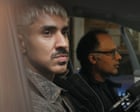
In the film, Azhar charts a quarter of a century of rising Islamophobia, his concern being how Muslims – and Muslim film-makers like him – have reacted. To do this, he teams up with an older documentarist, Masood Khan, who is the programme’s co-director and is often seen jammed into Azhar’s passenger seat wielding a handheld camera, to get those obligatory “musing while driving” shots. As the film develops, he becomes one of Azhar’s most important interlocutors, but he sticks to his main job as Azhar makes his first visit, to the Birmingham house of Salma Yaqoob.
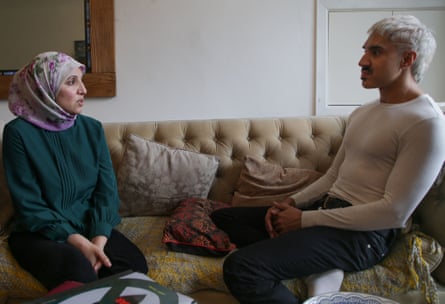
Yaqoob’s career in politics began when she was spat at in the street soon after 9/11, having previously been just “Salma, a mum at the school gate”. In 2003, she helped to organise the biggest political demonstration in British history, against the forthcoming invasion of Iraq. “It was an amazing day,” she remembers. “Such a sea of humanity. And yeah, there was that hope.” Azhar comments that her weary countenance suggests the hope has now gone. “The fire is still the same,” Yaqoob says, although her eyes say different.
While the consequence for Muslims in Iraq was that they were killed in large numbers, the less serious repercussions here were still deeply troubling. Azhar explains how radical Islamist agitators took advantage when their warnings about protests going unheeded were proved to be correct; they began preaching loudly against integration and in support of violent resistance. At the time, Azhar and Khan made films about the phenomenon; now, to their great credit, they are willing to listen to people who think that was a treacherous mistake.
Alyas Karmani in Bradford and Farasat Latif in Luton are community leaders who have worked to deradicalise local Muslim men. Karmani is combative and Latif gentle, but both accuse Azhar of fanning the flames of Islamophobia by helping to boost an unrepresentative fringe. “The problem is the disproportionate publicity these people got,” Latif says. “They were given a platform on mainstream media because they fed into that narrative, post-9/11 and -7/7, that there was this huge Islamic threat.”
These meetings lead Azhar and Khan to debate their film-making careers. On the one hand, a journalist holds a mirror up to society and can’t be expected to ignore inconvenient truths; on the other, journalism is a series of choices about what to cover and what to ignore, and the choice of where to put one’s limited resources can have profound effects.
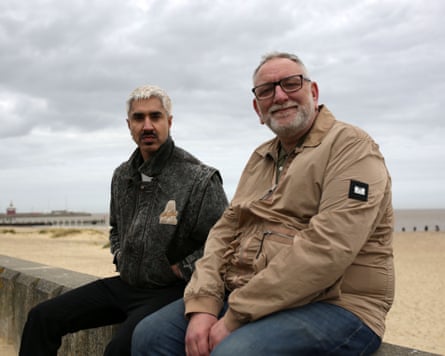
Azhar goes to Lowestoft to meet Ivan, a reformed former organiser for the far-right English Defence League. He says the EDL used the 2007 Dispatches film Undercover Mosque and Stacey Dooley’s 2012 BBC documentary My Hometown Fanatics as recruitment videos and that he was radicalised by the media appearances of the much-quoted extremist preacher Anjem Choudary, now serving a life sentence for running a banned terrorist organisation.
Azhar and Khan’s fascinating discussion about that becomes, in the film’s closing scenes, laden with sad exhaustion. Azhar admits to feeling worn down by the events of 2017, when terror atrocities at Westminster Bridge, London Bridge and the Manchester Arena provoked a retaliatory attack on a north London mosque. In 2026, as Stephen Yaxley-Lennon, AKA Tommy Robinson, agitates against Islam on the streets of London, Khan doesn’t go to cover it, to Azhar’s angry dismay. He’s had enough.
Azhar keeps reporting on the ground, trying and failing to make sense of the chaos outside Yaxley-Lennon’s appearance at a cursed Oxford Union debate. Seeing that something has gone badly wrong is easy; pinpointing what could or should have been done to stop it is not. Life as a British Muslim, meanwhile, only gets harder.
KioskNews shows a cleaned-up reading view extracted from the publisher’s page — the original always lives on their site, not ours.