ASX Runners of the Week: NGX Limited, RBR Group and Eden Innovations
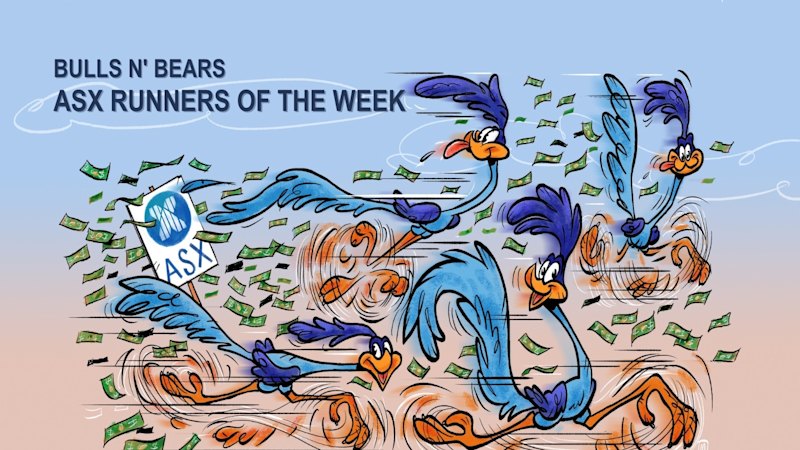
It was another week when Wall Street demonstrated its extraordinary ability to make mountains of money disappear, artificial intelligence continued its expensive march towards world domination and Australian mortgage holders wondered whether the Melbourne Cup might come with an unwelcome interest rate surprise.
Google parent Alphabet supplied the week’s biggest disappearing act, shedding a mind-bending US$500 billion (A$694B) in market value as investors took fright at the astronomical cost of the artificial intelligence revolution.
Half a trillion dollars up in smoke in a single session. That’s enough to buy a fair chunk of the ASX, with change left over for a five-hour lunch and a 1961 Château Latour. Apparently, even Google’s “super” intelligence didn’t see that one coming!
The sell-off followed disappointing earnings and concerns about whether the enormous sums being poured into AI infrastructure will eventually produce profits large enough to justify the expenditure.
The technology might be getting smarter, but investors are increasingly interested in whether the people paying for it know their times tables.
Not that the AI gravy train showed much inclination to slow down.
Anthropic, the outfit behind the Claude chatbot, filed for a blockbuster initial public offering that could reportedly raise as much as US$100 billion (A$143B) and value the business at somewhere between US$1.5 trillion (A$2.13T) and US$2 trillion (A$2.84T).
Its prospectus revealed US$16.3B (A$23.2B) in first-half 2026 revenue, alongside an eye-watering US$80.7B (A$114.7B) net loss, much of it reflecting changes in the “accounting value” of its convertible financing instruments.
Apparently, the solution to spending mountains of money developing artificial intelligence is to ask punters for an even bigger mountain of cash.
The proposed float could challenge Elon Musk’s SpaceX for the title of history’s biggest IPO, although the final price tag remains anyone’s guess.
And while investors were trying to work out what the AI revolution was actually worth, the Middle East supplied another reminder that markets have more than technology valuations to worry about.
Israel’s parliamentary election failed to deliver a decisive majority, leaving Benjamin Netanyahu and opposition leader Gadi Eisenkot to face difficult coalition negotiations in a region rarely renowned for political tranquillity.
With neither major bloc securing the 61 seats needed to govern, another political stalemate now looms over a region where tensions involving Iran and neighbouring countries continue to cast a dark shadow over energy markets.
And with inflation already proving stubborn, the world’s central bankers could probably do without another geopolitical food-fight.
Back home, Prime Minister Anthony Albanese was discovering that political life can be a nasty bunker shot, whether navigating the hazards of climate diplomacy in Fiji or the fallout from a round of golf in his own backyard.
Senate estimates revealed a staggering $34.6 million in contracted commitments for the Fiji Pre-COP climate summit, including a significant spend on accommodation and event management for the three-day event. Officials expect the “indefensible” bill to be lower, but taxpayers could be forgiven for wondering whether saving the planet comes with too much Kava and complimentary cocktails.
And just as Albo might have hoped to escape the financial rough, the Marrickville Golf Club affair popped up.
A $6.05 million federal grant to the club in his electorate, where he had held an undeclared honorary membership before hastily declining the honour once it became public, drew fresh scrutiny. The PM was then forced to walk back claims the money was intended to fix sewage – read: bulldust – problems after the NSW Government pointed out it was already footing the bill for those works.
Instead, the federal largesse was earmarked for clubhouse renovations and other improvements, presumably to make the place a little more befitting of its prime ministerial patron.
Between the Pacific spending debate and the golf club controversy, Albo has certainly had a week of hitting political one-irons. Unfortunately for the Prime Minister, there are no “mulligans” in the house of Reps.
And speaking of household budgets, mortgage holders had good reason to reach for the absinthe bottle ahead of Tuesday’s Melbourne Cup.
Fresh inflation figures showed annual headline inflation reaching 4.3 per cent in September, with underlying inflation still above the Reserve Bank’s comfort zone.
The latest numbers had economists contemplating another interest-rate increase, potentially lifting the cash rate by 25 basis points to 4.85 per cent on the very day the nation stops to watch the ponies thunder down the Flemington straight.
While punters study the form guide for a winner, the Reserve Bank could be saddling up another rate hike. And just like backing a horse that falls at the 400, this one looks capable of leaving everyone a little lighter in the pocket.
With technology stocks wobbling, geopolitical tensions simmering and Australia’s interest-rate outlook highly uncomfortable, the speculative end of the ASX had plenty of excuses to pull up lame.
But a few small-cap hopefuls clearly missed the memo.
This week’s podium belonged to African gold explorer NGX Limited, Mozambique LNG contractor RBR Group and concrete technology developer Eden Innovations, with all three producing gains that would have shareholders reaching for the French rather than the Disprin.
NGX LIMITED (ASX: NGX)
Up 92.9% (7c – 13.5c)
Bulls N’ Bears Runner of the Week is African gold hopeful NGX Limited, which nearly doubled its share price after unveiling an ambitious move into Namibia’s highly prospective Damara Gold Belt.
The explorer charged from seven cents to 13.5 cents after securing agreements to acquire majority interests in seven Namibian gold exploration licences covering more than 1300 square kilometres, giving it a substantial foothold in one of southern Africa’s established gold provinces.
Its proposed portfolio includes the Erongo and Otjikoto South gold projects, with Erongo sitting near WIA Gold’s Kokoseb deposit, which reportedly hosts a whopping 3.78 million ounces of the yellow metal.
The ground covers geological structures associated with gold mineralisation across the Damara Gold Belt, while Otjikoto South lies near B2Gold’s established 1.95-million-ounce Otjikoto gold mine.
NGX can initially earn 51 per cent interests in the relevant project companies, with staged agreements allowing ownership to increase to as much as 85 per cent on most licences.
Acquisition terms include initial consideration of up to US$545,000 (A$774,000) and further staged payments of up to US$2.46M (A$3.5M) over seven years, alongside exploration funding commitments and licence tenure conditions.
Not content with gold alone, the company also secured rights over the 194-square-kilometre Karas copper project, just 10 kilometres east of Koryx Copper’s Haib deposit, home to 5.3 billion pounds of contained copper.
Karas hosts known copper occurrences, including the historically worked Sperlingputs prospect, giving NGX another exploration string to its African bow.
To help finance its ambitions, the company completed a $3.6 million placement bookbuild at six cents per share, with directors or their nominees committing $540,000, subject to shareholder approval.
The proceeds are slated to support exploration across Namibia and Malawi, with initial work at Erongo expected to include soil and calcrete sampling, field-based gold analysis and geological target generation.
Several licence transactions remain subject to approvals and tenure conditions, so there’s still a fair bit of dirt to turn before NGX can claim to have struck the mother lode.
But with its shares almost doubling, the market clearly reckons the Namibian treasure hunt is worth buying a ticket for.
RBR GROUP LIMITED (ASX: RBR)
Up 53.3% (1.5c – 2.3c)
Snagging silver was Mozambique-focused RBR Group, which surged 53.3 per cent after landing its first contract at the country’s giant LNG developments since force majeure restrictions were lifted.
The company’s Projectos Dinamicos subsidiary landed a US$2M (A$2.84M) subcontract to manufacture and deliver 32 accommodation modules and associated facilities for at least 100 workers at ExxonMobil’s Rovuma LNG project in northern Mozambique.
The contract forms part of a broader US$7M (A$9.95M) accommodation package and represents the first stage of a development ultimately intended to house about 700 personnel.
Manufacturing is scheduled to begin in early November, with delivery targeted for late January 2027.
For RBR, which has spent years positioning itself to provide workforce services, training and infrastructure support to Mozambique’s gas industry, the deal represents a potentially important commercial breakthrough.
The country’s LNG developments have endured prolonged disruption from security concerns and project delays, leaving contractors waiting for major construction activity to resume.
Now RBR has an actual contract to show for its persistence.
And while A$2.84M might barely cover the morning coffee bill on a multibillion-dollar LNG development, it looks like a solid starting point for a small company establishing itself in the supply chain.
RBR says Projectos Dinamicos and its Futuro Skills business are pursuing tender opportunities with a combined potential value of approximately US$100M (A$142M).
Those opportunities are not yet secured revenue, but they offer a glimpse of the prize RBR hopes to chase as Mozambique’s gas sector gathers momentum.
Successful delivery of the accommodation modules could strengthen the company’s credentials for future work, although additional contracts are far from guaranteed.
After years of waiting for Mozambique’s LNG juggernaut to get moving, RBR has finally managed to get a foot in the door. Now comes the hard part — making sure the door stays open and the contracts keep rolling in.
EDEN INNOVATIONS LIMITED (ASX: EDE)
Up 44% (5c – 7.2c)
Taking the final podium spot was concrete technology hopeful Eden Innovations, proving that even an industry built around watching things harden can produce lively share-price action.
Eden’s shares climbed 44 per cent after the company delivered updates on its expanding US commercial pipeline and followed up with another order for its EdenCrete concrete admixture technology.
EdenCrete products are designed to improve concrete performance, targeting strength, durability and resistance to deterioration.
It is not technology likely to set hearts racing at a dinner party; however, in a global construction industry consuming enormous volumes of concrete, even modest performance improvements can create substantial commercial opportunities.
Eden began the week outlining progress across its United States project pipeline, where it’s been quietly building acceptance of its technology among construction companies and infrastructure customers.
Then came a more tangible development from South America.
On Thursday, the company announced a further A$475,000 order for EdenCrete Pz7, adding another commercial sale to its international ambitions.
For a technology developer attempting to persuade a traditionally conservative industry to embrace new materials, repeat orders can carry considerable weight.
The challenge is not simply proving a product works in a laboratory, but convincing customers to use it on real projects and then come back for more.
Eden’s latest South American order suggests good progress, although sustained sales growth is still needed to demonstrate the technology’s long-term commercial potential.
And with construction rarely accused of moving at lightning speed, product approvals, testing requirements and customer adoption can influence how quickly opportunities become revenue.
Nevertheless, investors clearly liked the combination of an expanding project pipeline and another “set in concrete” order.
Is your ASX-listed company doing something interesting? Contact: mattbirney@bullsnbears.com.au
KioskNews shows a cleaned-up reading view extracted from the publisher’s page — the original always lives on their site, not ours.