8 Horror Books That Rival Stephen King, Ranked

Luc Haasbroek is a writer and videographer from Durban, South Africa. He has been writing professionally about pop culture for eight years. Luc's areas of interest are broad: he's just as passionate about psychology and history as he is about movies and TV. He's especially drawn to the places where these topics overlap.
Luc is also an avid producer of video essays and looks forward to expanding his writing career. When not writing, he can be found hiking, playing Dungeons & Dragons, hanging out with his cats, and doing deep dives on whatever topic happens to have captured his interest that week.
Sign in to your Collider account
Few writers are as synonymous with an entire genre as Stephen King is with horror. Across more than five decades, he's dabbled in practically every spooky subgenre imaginable, and sold more books than most of his competitors combined. Still, great as King is, he's not the be-all and end-all of horror.
With that in mind, this list looks at some of the very best horror books not written by Stephen King, from 19th-century classics to contemporary bangers. They cover a range of styles and tones, from dark fantasy and psychological horror to experimental thrillers and old-school Gothic.
8 'Banquet for the Damned' (2004)

“Perhaps enlightenment, technology and secularism haven't cleared Europe of the oldest science of all: the occult.” This one received a lot of critical acclaim, and rightly so. Set around the ancient university town of St Andrews, Scotland, Banquet for the Damned follows two struggling musicians and an American anthropologist who become entangled with an enigmatic professor, an ancient supernatural evil, and a ruthless occult circle.
The novel strikes a fine balance between a traditional British ghost story and visceral, modern action-horror. It's atmospheric and immersive and deeply Gothic, with a rich setting and unusually layered protagonists. Indeed, their vulnerabilities and human flaws make their manipulation by the sinister Professor Coldwell deeply tragic. Like King, author Adam Nevill understands that horror works best when readers have enough time to become invested in the characters before the nightmare completely closes around them.
7 'House of Leaves' (2000)
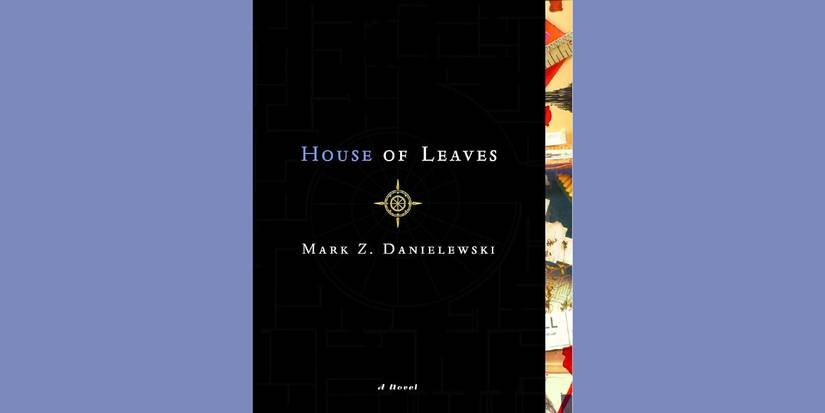
“This is not for you.” This labyrinthine book revolves around The Navidson Record, an apparently nonexistent documentary about a family that discovers something impossible about their Virginia home: its interior measurements are larger than its exterior dimensions. From there, things get much worse. A dark hallway appears where no hallway should exist, leading into an enormous interior space whose dimensions refuse to obey physical reality. The house itself is a cosmic horror anomaly.
To hammer that home, author Mark Z. Danielewski refuses to tell this story conventionally. Instead, he weaponizes the book medium itself. Footnotes multiply, narrators contradict one another, pages become increasingly bizarre, and at certain points the reader has to physically rotate the book to continue, the text sprawling in mad directions. Needless to say, all this quickly earned House of Leaves a cult following. It's one of the most inventive horror novels of its era.
6 'King Sorrow' (2025)

“The problem with inviting the unnatural into your life is it might decide to stay.” Comparisons with Stephen King are basically unavoidable when discussing Joe Hill, and not simply because King is his dad. Hill has spent his own career demonstrating a similar capacity to combine enormous supernatural concepts with three-dimensional characters, and that's once again on display in King Sorrow. In it, a group of college friends turns to occult forces after landing in serious trouble.
Their solution involves summoning a dragon. Unfortunately, calling King Sorrow into the world proves considerably easier than getting rid of him. The consequences stretch across decades, allowing Hill to follow his characters as they grow and change (or don't). He keeps the plot brisk and compelling the whole way through, serving up more than a few banger set-pieces (including a dragon battling fighter jets).
5 'Something Wicked This Way Comes' (1962)

“And that was the October week when they grew up overnight, and were never so young anymore.” This one deserves credit for its impact on King; he has cited it as a major influence. In Something Wicked This Way Comes, a mysterious carnival comes to a small Illinois town. Best friends Will Halloway and Jim Nightshade are fascinated by Cooger & Dark's Pandemonium Shadow Show, particularly after discovering a carousel capable of altering a person's age depending upon which direction it travels.
However, there are genuinely malevolent forces at play here. For instance, the carnival's Mr. Dark understands that almost everyone nurses some private resentment or festering wound that can be exploited. Ray Bradbury's lush, poetic prose is far removed from King's more conversational style, but both writers know how to turn small-town America into a battleground between ordinary people and pure evil.
4 'The Exorcist' (1971)
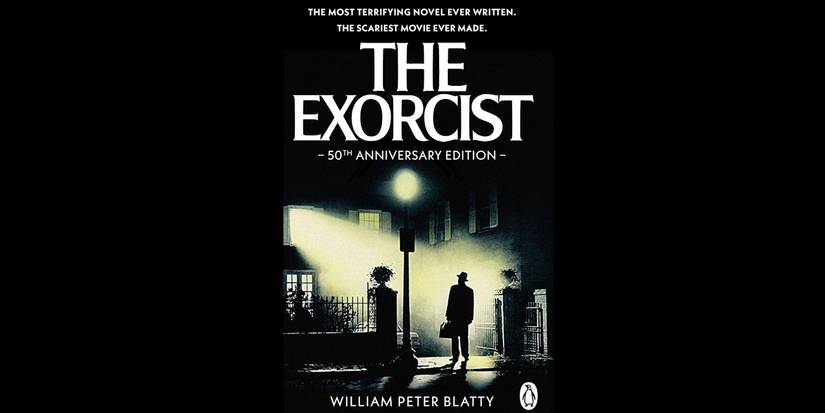
"The beginning of the horror passed almost unnoticed.” Few horror novels have invaded popular culture as completely as The Exorcist. William Peter Blatty's novel became orders of magnitude more famous thanks to the movie adaptation, but the original book remains a profoundly disturbing experience in its own right. What begins with strange noises and inexplicable behavior gradually develops into the apparent demonic possession of 12-year-old Regan MacNeil. The supernatural horror is effective because it builds at a relatively restrained slow burn.
Even Father Damien Karras, the priest eventually brought into the case, is struggling with his faith and initially approaches the possibility of possession with skepticism. The novel therefore makes belief itself part of the conflict. Consequently, rather than simply being a tale of gore and monsters and jump scares, The Exorcist is a statement on doubt and guilt, helplessness and the limits of knowledge.
3 'Dracula' (1897)

“Listen to them, the children of the night. What music they make!” We have to turn the clock back a full century to get to this classic, one that continues to exert a gravitational pull over all vampire fiction. Bram Stoker's novel didn't invent the bloodsucking monster, but it created the version that would dominate popular culture. On top of that, it's simply a solid book, and much more accessible than most from its era.
The opening journey to Castle Dracula works incredibly well. Jonathan Harker realizes that his aristocratic host isn't merely eccentric and that the isolated castle has effectively become his prison. The novel then expands into an epistolary collection of diaries, letters, newspaper reports, telegrams, and other documents as Dracula's influence spreads to England. All in all, Dracula is tense, dramatic, creepily sensual, and surprisingly rich in themes, with a lot to say about the clash between tradition and modernity.
2 'Ghost Story' (1979)

“What was the worst thing you've ever done?” King has described Peter Straub's Ghost Story as the best book from the wave of 1970s horror writing of which he himself was a part. It's about four elderly men in a small town who regularly gather to drink, talk, and tell one another ghost stories. Behind those comfortable meetings, however, lies something none of them particularly wants to discuss. Decades earlier, the men were involved in the death of a mysterious woman named Eva Galli.
Now, after another member of their group dies, nightmares and inexplicable events suggest that whatever happened in their youth hasn't remained buried. Straub steadily expands what initially resembles a traditional haunting into something considerably stranger, moving between different periods and perspectives, and crafting a memorable, complex antagonist. Psychological depth is at a premium here, but the book doesn't scrimp on frights either.
1 'The Haunting of Hill House' (1959)

“No live organism can continue for long to exist sanely under conditions of absolute reality.” Although quite different in plot to the TV show, The Haunting of Hill House is perhaps the most perfect haunted house story ever written, in part because it's so ambiguous. Eleanor Vance is invited to the mansion as part of an investigation of reported paranormal activity. Hill House seems to offer escape, independence, companionship, and perhaps even somewhere she might belong.
That longing makes what follows considerably more disturbing. Doors refuse to remain open, terrifying noises echo through the building at night, messages appear on walls, and the house seems to develop an increasingly intimate interest in Eleanor herself. Writer Shirley Jackson rarely explains exactly what is happening, forcing readers into the same unstable position as her protagonist. Her prose is brilliant throughout, and it's amazing just how scary his book is even when nothing overtly spooky is happening.
Collider Exclusive · 8 Questions · 2 Minutes What Is Your Biggest Horror Nightmare? Elm Street · Chucky · Scream · The Conjuring
Four horror franchises. Four completely different ways of scaring you. One waits until you fall asleep. One makes sure nobody believes you. One is already in your group of friends. And one is in the house with your family. Answer eight quick questions about how you actually watch horror, and find out which nightmare was built for you.
😴Elm Street(Freddy Krueger)
🧸Chucky(Child's Play)
📞Scream(Ghostface)
🕯️The Conjuring(The Warren Files)
01
Which horror scene makes you cover your eyes? Four classic images. One of them is worse than the others for you.
02
You are home alone and you hear a noise. First thought? Everybody has one. It arrives before you have decided anything.
03
Which horror movie rule would you break first? Everybody thinks they would survive. Almost nobody actually does.
04
Something genuinely frightening happens. What do you do? Not in a film. In your actual living room, tonight.
05
How do you actually watch a horror film? Be honest about this one. Nobody is checking.
06
Somebody offers you serious money. Which do you still refuse? The amount does not matter. There is one on this list you are not doing.
07
Which feeling stays with you a week after the film? Good horror does not stop when the credits do.
08
Something wakes you at 3am. What is the worst possibility? Eight questions in, this is the one that decides your nightmare.
The Lights Just Went Out Your Nightmare Is…
Four franchises, four completely different ways of getting underneath your skin. This is the one built out of your particular fear, why it works so well on you, and what it would leave behind.
Elm Street
Your nightmare does not wait outside the door. It waits for you to close your eyes, which you are going to have to do eventually, because nobody has ever won that particular argument.
- Freddy is horror's cruellest idea: a threat that lives in the one place you cannot guard, cannot lock, and cannot avoid forever.
- You are the one who is fine during the film and wide awake at two in the morning. Your own head is where this does its damage.
- These films understood exhaustion as a horror engine. The kids on Elm Street do not lose because they are weak. They lose because they are tired.
- You can lock every door in the house. You still have to sleep.
Chucky
Your nightmare is not really the doll. It is the face of the person you tell, and the way they decide, very kindly, that you have imagined all of it.
- Chucky works precisely because he is absurd. That is the trap: the more accurately you describe him, the less anybody is going to believe you.
- You are the one shouting at the screen because the characters are not listening. You know that feeling from real life too.
- The franchise is at its best when the adults in the room are the real obstacle, and you have met those adults.
- By the time somebody finally believes you, you will have handled most of it on your own.
Scream
Your nightmare has your number, knows your name, and has almost certainly been inside your house before. The worst part is that you already know them.
- Scream is the only one of these where the killer takes the mask off and turns out to be somebody who was at the party.
- You are the person who calls the twist out loud before it lands. You watch people the same way you watch films.
- The franchise made the rules of horror part of the plot, which means the survivors are the ones paying attention. You would be paying attention.
- Everybody is a suspect, including the person who just offered to walk you home.
The Conjuring
Your nightmare is not really about you. It is about the people asleep down the hall, and the feeling that whatever is here is not interested in leaving.
- The Conjuring films are domestic horror. The house, the family, the perfectly ordinary room that quietly stops feeling ordinary.
- Your instinct is to get everybody into one room. Your fear is protective rather than personal, which is rarer than it sounds.
- This is the one franchise where belief is the weapon. The people who come through it are the ones who are not alone and refuse to be.
- Whatever is here did not come for you. It came for the household, and you are the one standing in the hallway.
KioskNews shows a cleaned-up reading view extracted from the publisher’s page — the original always lives on their site, not ours.