Kids who whisper to toys are practising key real-life skill, psychology says
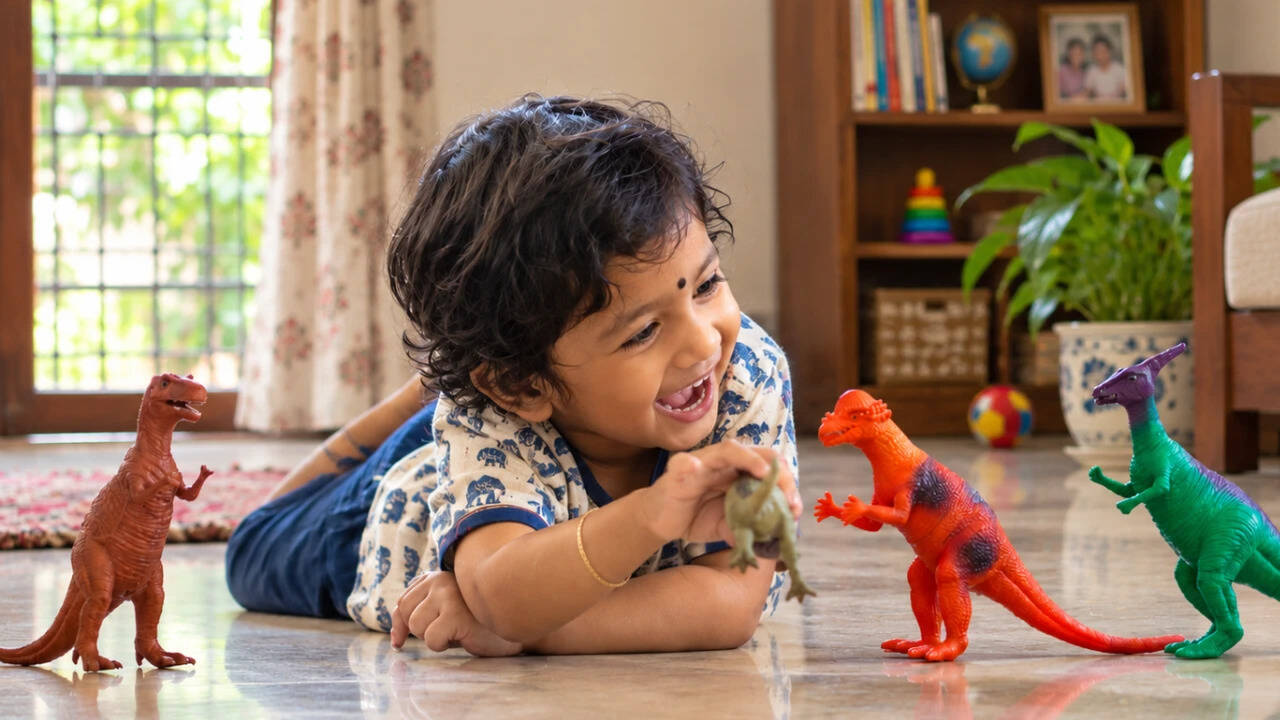
Quiet conversations with toys may help children practise an important real-life skill
“Come here. Sit down. Why did you do that?” A child may be saying these things not to a parent, sibling or friend, but to a teddy bear sitting on the bed. Sometimes the voice becomes softer.
Sometimes the child answers for the toy, waits for a moment and then continues the conversation.To an adult, it can look like the child is simply lost in pretend play. But researchers who study children's language and play have found that these moments can reveal something more interesting: children often use pretend situations to practise the language and social patterns they are still learning to use in everyday life.
22 Sept 2026 | 10:49
Does your toddler behave differently with grandparents than with you? What’s the biggest difference?
This is particularly noticeable when children give their toys different roles - a baby who needs comforting, a friend who has done something wrong, a teacher who is asking questions or a patient waiting at a pretend doctor's clinic.The toy may be silent. The conversation is not.
Why do children talk to toys in the first place?
One explanation comes from the idea of private speech — speech children use aloud while playing, solving a problem or guiding themselves through an activity.
Research has repeatedly linked private speech with self-regulation. A 1998 study observing children aged 3 to 5 found that private speech was particularly common during open-ended and fantasy play. The researchers suggested that make-believe activities can provide children with opportunities to use language to guide themselves.
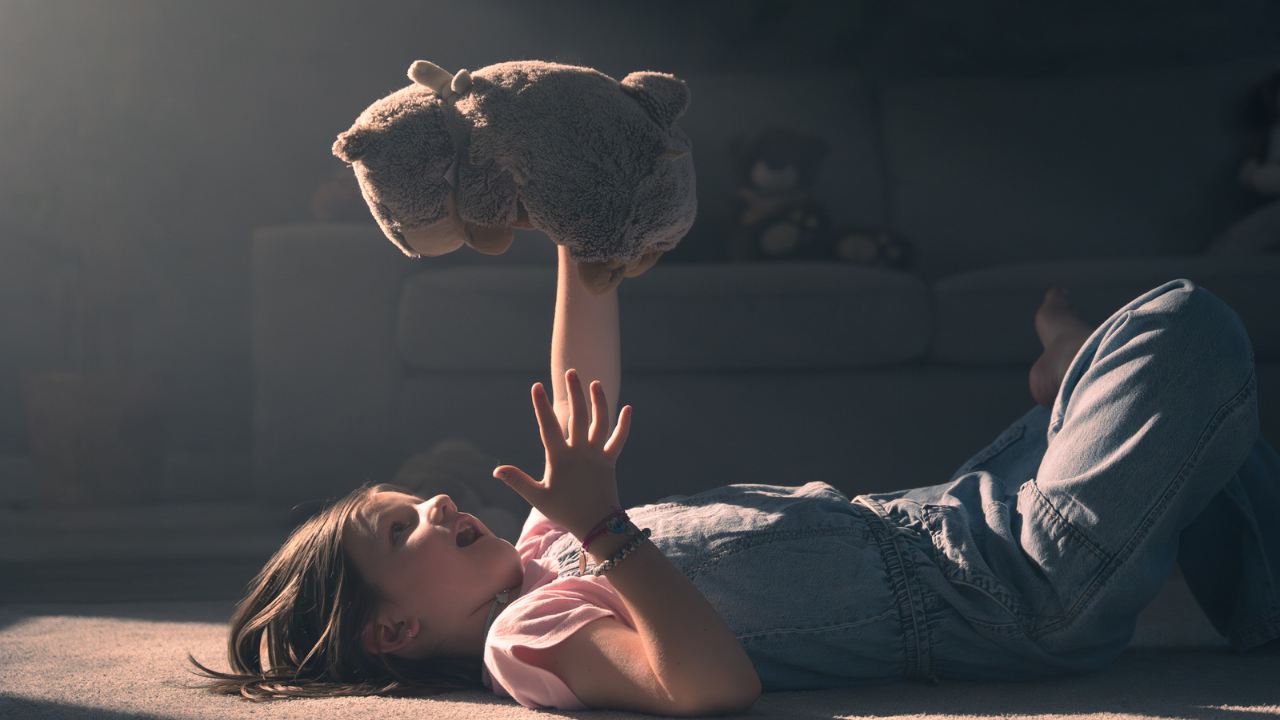
Pretend conversations with toys can give children space to experiment with language.
A later experimental study involving 47 preschool children similarly found that children used more private speech when activities were presented as sociodramatic play than when they were framed as ordinary task completion.
The playful condition was also associated with greater motivation.So when a child whispers, “Now we have to go to the doctor,” while moving a stuffed animal across the room, the words may be doing more than filling the silence.The child could be deciding what happens next, keeping the imaginary story going and giving themselves a script for the role they are playing.
The toy becomes a safe conversation partner
Pretend play also gives children something they do not always have in real conversations: complete control over the interaction.A child can make the teddy bear ask a question and then decide how to answer it. They can make the doll cry and practise comforting it. They can make one toy angry and another apologise.There is no real friend interrupting them. No adult correcting their sentence. No embarrassment if the answer comes out differently the second time.Research on social pretend play has found that children gradually become more capable of using language to create shared meaning during play.
In a study of children aged 2 to 5, researchers observed increasingly sophisticated ways of coordinating pretend play as children grew older — from attracting attention and repeating ideas to using descriptions and connections between different parts of the imaginary story.That matters because real conversations also require children to do these things: introduce an idea, respond to another person, stay with a topic and understand what the other person is trying to communicate.
Whispering to toys can be one way children practise expressing thoughts and feelings.
And sometimes, the child is practising feelings too
Listen closely to pretend conversations and parents may notice something else.A child might say:“Don't be scared. Mama will come.”Or:“You are angry because I took your car.”Or:“It's okay. You can tell me.”These are not necessarily sophisticated lessons in emotional intelligence. But they show children experimenting with language around emotions, relationships and other people's perspectives.A study of 50 preschoolers found a strong association between pretend play and children's use of language about mental states — including what people know, want or feel.
The researchers examined children's play conversations and found that pretend play was related to both the frequency and nature of this kind of talk.In other words, pretending that a doll is frightened or that a teddy is hiding something can give children opportunities to play around with the idea that another character can have a different feeling, thought or piece of information.
The interesting part: the child may be rehearsing without knowing it
Parents may sometimes hear a child repeat phrases they have heard adults use.“First, we have to finish this.”“Can you please wait?”“It's not okay to hit.”“Tell me what happened.”The child may be reproducing a familiar conversational pattern through play.That does not mean every sentence spoken to a toy will automatically become a real-world communication skill. Researchers caution against treating pretend play as a simple training programme for social or language development. Children's language abilities are influenced by many factors, including their interactions with adults and peers.But research does suggest meaningful links between pretend play and language.A 2020 study following 119 preschool children found that some measures of pretend play were associated with linguistic complexity, and performance on a pretend telephone task at the first time point predicted receptive vocabulary at the later assessment. The researchers pointed to the symbolic and social characteristics of pretend play as possible links between the two areas.
So should parents join every conversation?
Not necessarily.Sometimes the most useful thing an adult can do is let the child continue.If a child is quietly feeding a doll, giving it instructions or having a whispered argument between two toy characters, there may be no need to step in with questions such as, “What are you doing?” or “Why is the doll saying that?”Parents can watch and allow the story to develop.If the child invites them in, however, joining the imaginary world can create another opportunity for conversation.Instead of taking over the story, parents can follow the child's lead.“What happened to the teddy?”“Where is she going?”“What do you think he will say?”Such questions leave room for the child to build the conversation rather than simply answer an adult's question.
What parents should notice
The next time a child whispers to a toy, the interesting part may not be who the child is talking to, but what the child is doing with the conversation.Are they taking turns between different characters? Are they asking and answering questions? Are they trying out words they have heard adults use? Are they comforting a toy, negotiating between two characters or explaining what someone is feeling?These little details can show how children use play to explore language, relationships and everyday situations.And perhaps that is why a quiet conversation between a child and a stuffed animal can sometimes sound strangely familiar.The child may not be talking to the toy because they believe it can answer. They may be using the toy to work out what to say when a real person eventually does.
KioskNews shows a cleaned-up reading view extracted from the publisher’s page — the original always lives on their site, not ours.