Puteri Umno could be the voice of reason Umno needs, if it actually lives its ‘politics of trust’ — Rabi’ah Aminudin
SEPTEMBER 18 — Women make effective political leaders by most of the standard measures political scientists use, including constituency service, cross-party cooperation and, in study after study, lower tolerance for corruption once in office. What they don’t get, almost anywhere, is a fair share of the seats.
Women held just 27.5 per cent of parliamentary seats worldwide as of the start of this year, according to the Inter-Parliamentary Union, a pace so slow that gender parity in the world’s legislatures is still roughly 75 years away. Malaysia sits below even that modest global average, not above it.
Women hold 13.5 per cent of seats in the Dewan Rakyat, short of the 30 per cent floor the country itself signed up to under the 1995 Beijing Declaration, and the country has never had a female prime minister or female menteri besar. Every major party has more distance to cover here than its convention speeches tend to admit, Umno included.
That’s not just an equity argument. Political culture itself gets better when more women hold seats. A study of more than 125 nations found that legislatures with more women see less corruption, even after accounting for a country’s wealth, culture and institutions.
It’s not that certain countries happen to elect women and also happen to be cleaner; the representation itself seems to matter. A separate analysis pooling hundreds of studies found something similar in governing style: more women in office tends to mean more collaboration and less of the score-settling that creeps in when women are scarce in the room.
None of this means any one woman is automatically better than any one man. It’s about what changes when a room stops being so lopsided, and what that looks like in practice.
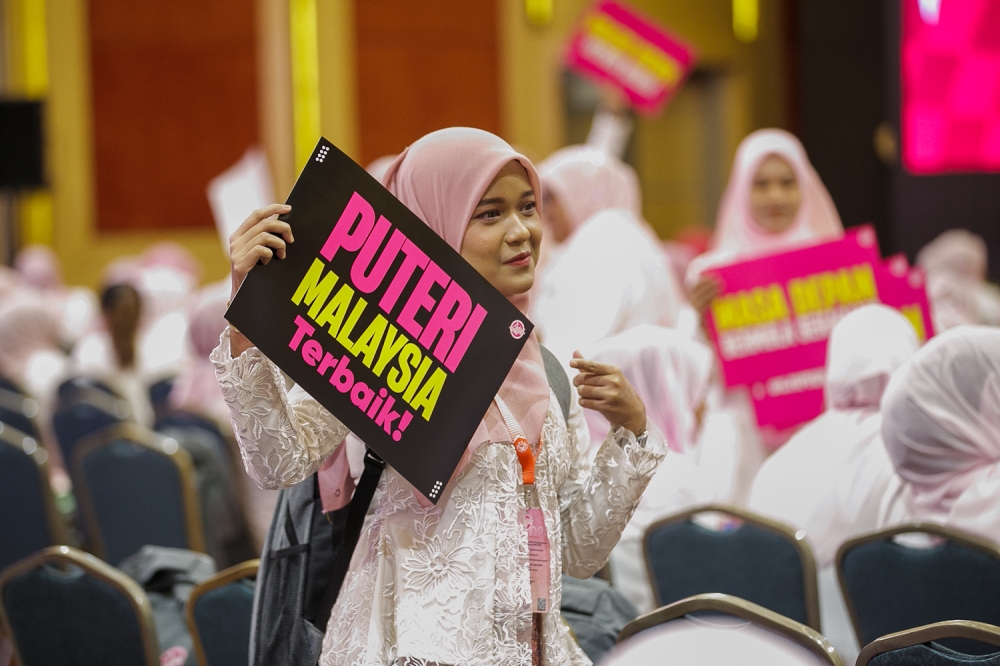
A delegate holds up a placard reading ‘Puteri Malaysia Terbaik!’ during the Puteri Umno General Assembly at the World Trade Centre in Kuala Lumpur on September 10, 2026. — Picture by Raymond Manuel
I saw a version of it firsthand, sitting in Dewan Tun Hussein Onn as an observer at this month’s Puteri Umno general assembly, watching a wing built entirely around women’s political advancement try to say how it actually plans to lead.
The wing’s chief, Datuk Nurul Amal Mohd Fauzi, laid out a framework she called “Politik Kepercayaan”, or the politics of trust. Her point, once you strip away the applause lines, wasn’t complicated: trust isn’t something you ask for; it’s something you earn by showing up and doing what you said you’d do.
It doesn’t get built during campaign season. It gets built in the small stuff, long after anyone’s watching, like a party member following up on a complaint months after an election is over.
My first instinct, sitting through it, was to file the whole thing under assembly-season sloganeering. Every wing rolls out a tagline each year, and most of them are forgotten by the time the next morning’s papers come out.
This one might hold up differently, but only if Puteri Umno actually treats it as a standard rather than a headline. What makes it worth watching is what it’s responding to.
Umno’s credibility problem was never really about ideology. It was the space between what the party said it would do and what it actually did, a gap wide enough that senior Umno figures have themselves pointed to money politics and internal warlordism as the cause.
Measured against that specific failure, the “politics of trust” idea reads as a sharper answer than a typical convention speech usually offers.
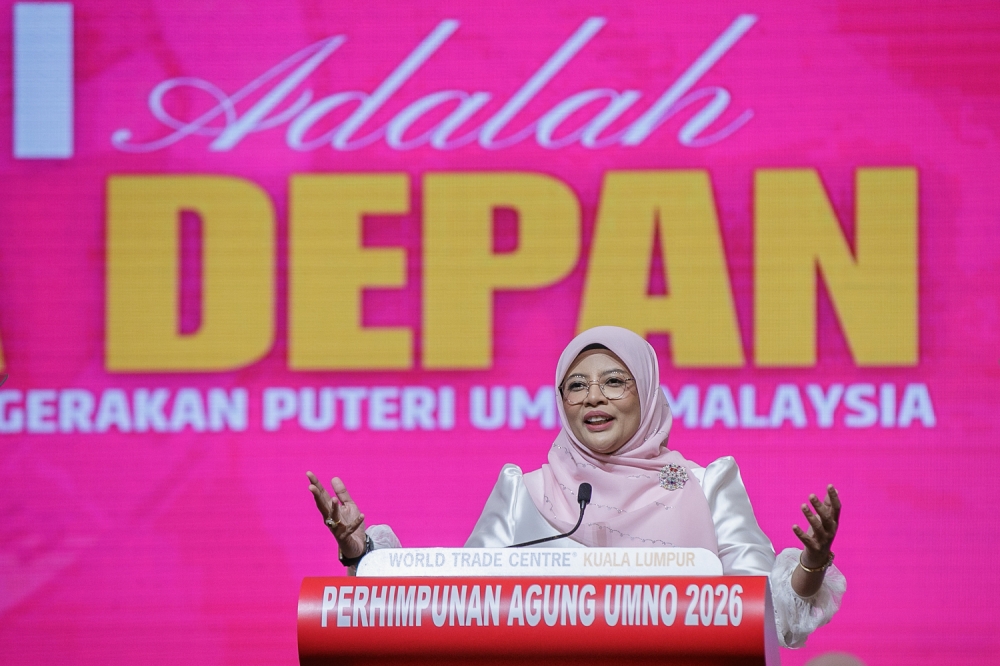
Puteri Umno chief Datuk Nurul Amal Mohd Fauzi delivers her policy speech during the Puteri Umno General Assembly at the World Trade Centre Kuala Lumpur on September 10, 2026. — Picture by Raymond Manuel
Start with the refusal to over-promise. Nurul Amal was explicit that leaders should say plainly what the party can deliver now, what will take longer and what might not happen at all.
Giving up a rhetorical advantage like that is rare in politics. It also happens to be the one thing that still works with voters, younger ones especially, who’ve stopped expecting manifestos to survive contact with government.
Then there’s the claim that trust gets built between elections, not during them. Hasnor Hafiza Hussin’s version of it was almost anti-campaign: show up and follow through whether or not there’s a vote to win.
If Puteri Umno’s branches actually behave this way, checking in on complaints when nothing is on the ballot, that would be a real break from a culture that mostly shows up when it needs something.
The harder idea is about mistakes. The framework asks leaders to own their errors out loud, on the bet that admitting “we got that wrong” builds more credibility than managing the problem quietly away.
That’s easy to say in a hall full of supporters; it’s harder to keep up the first time it costs someone their seat.
Umno’s youth and grassroots wings haven’t traditionally been where its more deliberate voices sit; that’s usually been left to senior figures. But Puteri Umno, positioning itself as honest about its limits, treating criticism as information rather than attack and judging itself by what it delivers rather than how loudly it announces things, would be behaving differently from the factional norm.
That’s close to what “voice of reason” actually means here. It is not a policy position, just a refusal to fake it.
It also matches a pattern researchers find elsewhere. Honesty about limits, follow-through outside campaign season and owning mistakes instead of deflecting them are the same behaviours that show up in the research wherever more women hold office.
The overlap isn’t a coincidence but the framework working as designed.
A more practical argument sits underneath the rhetorical one, and it circles back to where this piece started. Grooming leaders before a seat opens up, which is what Puteri Umno called for, is slower than the usual scramble that follows a vacancy.
Given how thin the pipeline for women in Malaysian politics already is, a wing planning its bench years out isn’t just managing succession. It’s closing the exact gap the national numbers point to, one candidate at a time, instead of waiting for the party to notice it at nomination time.
None of this proves itself in a speech. It gets tested the first time an admitted mistake actually costs the party something, the first time the wing has to criticise its own side’s money politics instead of describing the problem in the abstract, and the first time a critic says something genuinely unwelcome instead of easy to applaud.
Malaysian politics has heard versions of this pledge before. Most didn’t survive past the news cycle that covered the announcement.
There’s a limit built into the structure, too. Puteri Umno is one wing inside a much larger party. However sincere its intent, it can’t fix a culture problem that runs well beyond its own membership, and it wouldn’t be the first framework to win good coverage at the assembly and quietly disappear before the next one.
Whether that happens is an open question. My read is that nobody in that hall, including the people giving the speeches, fully knows yet either.
What’s true is that the idea itself is better than simply asking people to believe, and Malaysian politics could use more of it. Puteri Umno now has to decide whether it’s willing to be held to its own standard once the cameras are gone.
* Rabi’ah Aminudin is an associate professor at the Department of Political Science and Madani Studies, International Islamic University Malaysia.
** This is the personal opinion of the writer or publication and does not necessarily represent the views of Malay Mail.
KioskNews shows a cleaned-up reading view extracted from the publisher’s page — the original always lives on their site, not ours.