Russia may launch a nuclear-armed satellite far sooner than we thought
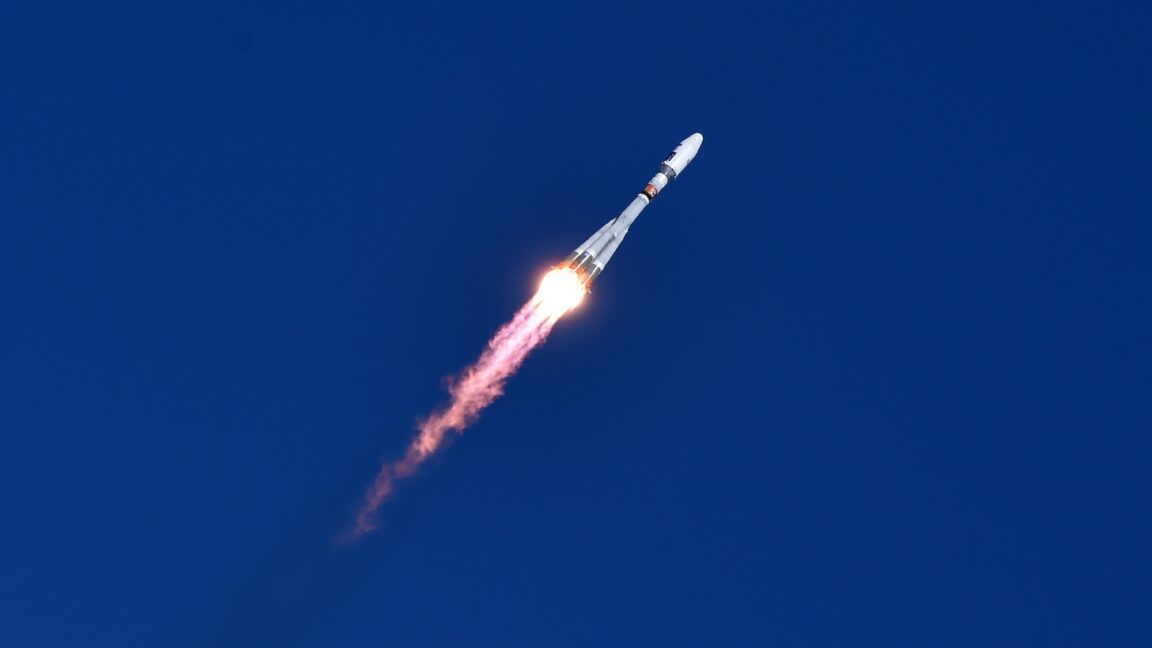
Western intelligence officials worry that Russia could launch a nuclear-armed satellite into orbit before the end of the year, suggesting the country’s development of a satellite-killing weapon of mass destruction is more advanced than previously thought, German media reported Monday.
The orbiting nuclear weapon would threaten thousands of satellites in low-Earth orbit, including military and commercial communications networks like Starshield and Starlink. A nuclear-armed satellite would also put at risk Western military surveillance satellites and human spaceflight platforms like the International Space Station. A nuclear detonation in orbit would be indiscriminate, also knocking out Russia’s own spacecraft and Chinese satellites.
US lawmakers briefed on government intelligence first disclosed Russia’s ambition to deploy a space-based nuclear weapon in early 2024. At the time, US officials said Russia had launched a test satellite in 2022 to test the effects of radiation on space hardware and pave the way for a future nuclear-armed craft, but that Russia had not yet sent a nuclear weapon into orbit.
Reporting from three German news outlets—public broadcasters NDR and WDR and the Munich-based newspaper Süddeutsche Zeitung—indicates Russia’s launch of a nuclear-armed satellite could be imminent. The report says Western intelligence agencies, including the German Armed Forces and Federal Intelligence Service, believe Russia is preparing to deploy the weapon in space this year. Several NATO countries have exchanged their findings on the matter.
Ready and waiting
The nuclear-armed satellite, designated Sputnik-S, has been in storage in the greater Moscow area for years, the German news report said. German Space Command believes the satellite could be launched as early as December. Once in orbit, a nuclear weapon could loiter for months or years, ready for detonation on the command of Russian military forces.
The Kremlin dismissed the report. “Given the number of qualifiers like ‘allegedly’ and ‘possibly’—not to mention the fact that the claims are attributed to some unspecified source—they are hardly worth taking seriously,” said Dmitry Peskov, spokesperson for Russian President Vladimir Putin.
If it goes ahead, the launch would violate the 1967 Outer Space Treaty, which prohibits the deployment of weapons of mass destruction in space. Russia is a party to the treaty, but the Russian government vetoed a draft UN Security Council resolution in 2024 seeking to reaffirm the prohibition on weapons of mass destruction in space.
German Chancellor Friedrich Merz did not address the timing of the potential launch when asked about it at a press conference Monday.
“The news that Russia is planning to arm space with nuclear weapons is not new, but that doesn’t make it any less shocking,” Merz said. “It shows the extent to which Russia is apparently prepared to escalate the situation.”
The German news reports published Monday come a month after the US military’s Defense Intelligence Agency highlighted the threat of a Russian nuclear-armed satellite.
“Russia is developing a satellite designed to carry a nuclear weapon despite its obligation to comply with the 1967 Outer Space Treaty,” the DIA said in a public report on challenges to security in space. “A space-based capability such as this could cause rapid and sudden loss or degradation of thousands of satellites operated by countries and companies around the world, as well as to the vital communications, navigation, scientific, meteorological, commercial, and national security services they provide.
“Beyond its immediate effects, a nuclear detonation in space would also leave lingering radiation belts, which could persist for years and damage satellites that initially were only temporarily disrupted,” the DIA said.
The Pentagon increasingly relies upon satellites to support military operations. US forces have used satellites for navigation, strategic communications, missile warning, and surveillance for decades. The US military is now launching satellites to support real-time targeting of missiles, aircraft, and land and sea vehicles, incorporating space platforms into a wider array of offensive and defensive operations.
In September, the Pentagon confirmed the Space Force has placed unspecified weapons in orbit. There is no international ban on conventional weapons in space.
Leaders in China, which has the second-highest number of operational satellites, have not made any public statements on Russia’s nuclear-armed satellite program. China would be most impacted by a nuclear detonation in orbit after the United States. Russia has comparatively fewer satellites in orbit, and its military spending in recent years has focused on fighting the war in Ukraine rather than modernizing its space program.
If Russia does launch a nuclear-armed satellite, it would be an escalation of the country’s already-bellicose behavior in orbit. Russia has tested what US officials say is a kinetic anti-satellite weapon and is now operationalizing the system, according to a top US Space Force general. The weapon works by firing projectiles from one satellite toward another.
Russia has also launched military satellites into orbits near the US government’s most sophisticated Keyhole-class spy satellites. Last month, a Russian satellite approached very near a commercial radar reconnaissance satellite owned by Finnish company ICEYE. The Russian spacecraft flew within “tens of meters” of the ICEYE satellite, which provides surveillance imagery to the Ukrainian military, before backing away, a US official said.
The kinds of weapons Russia has demonstrated so far would take out only a small number of satellites. A proliferated constellation like Starlink or the Pentagon’s new airborne and ground targeting satellites could absorb such an attack. A nuclear detonation would threaten entire networks.

Stephen Clark is a space reporter at Ars Technica, covering private space companies and the world’s space agencies. Stephen writes about the nexus of technology, science, policy, and business on and off the planet.
KioskNews shows a cleaned-up reading view extracted from the publisher’s page — the original always lives on their site, not ours.