Opinion: Opinion | Bimol Akoijam Case, And Congress's Convenient Amnesia For Sexual Harassment
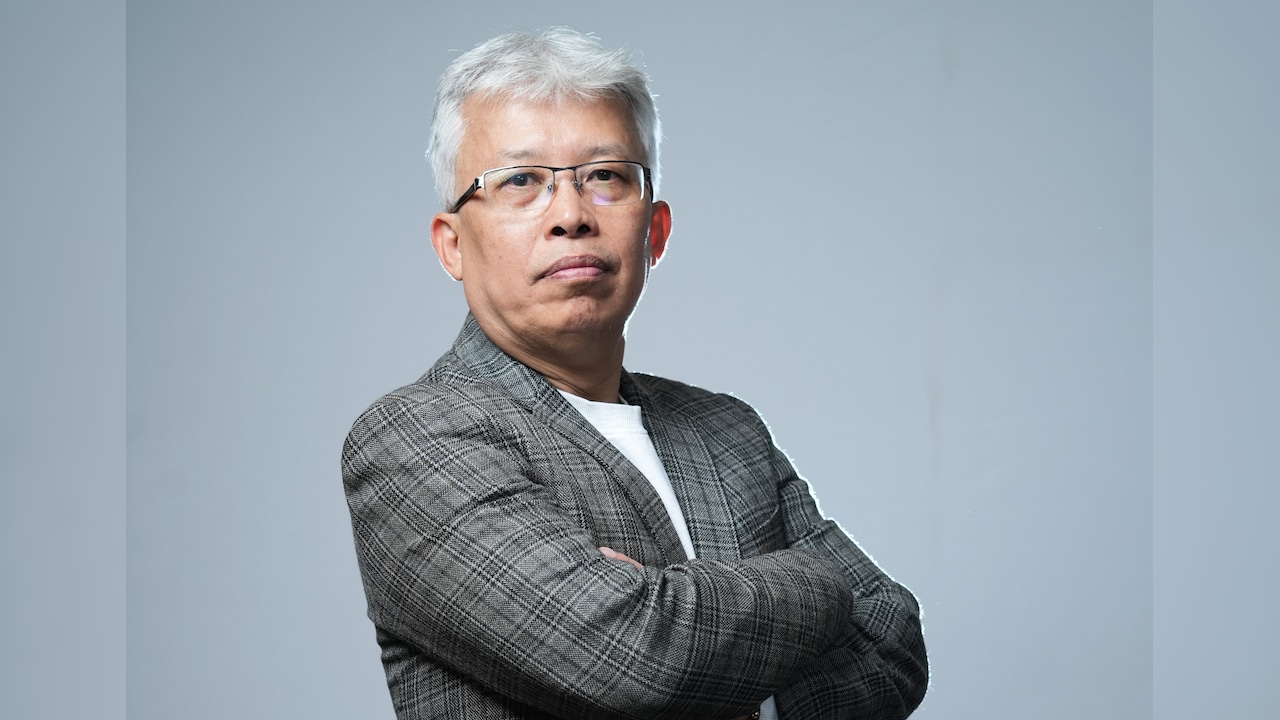
Bimol Akoijam, Congress Member of Parliament from Manipur, was dismissed from his academic position at Jawaharlal Nehru University on October 9 after an internal probe found him guilty of sexual harassment charges brought by at least 11 women students. Akoijam termed the allegations a political witch hunt, refused to step down as MP, and vowed to clear his name through the legal process.
His reaction has been on expected lines. After all, a person accused of sexual misconduct will rarely, if ever, not deny the charges. And if that person happens to be in politics, he will almost certainly claim that the accusations are merely a malicious conspiracy to taint him and destroy his credibility as a public servant.
Unfortunately, the Congress's response to the charges against Akoijam is also exactly that which one might expect from the playbook of a cynical political body - quick to demand resignations in case of allegations of sexual harassment against its opponents, and equally quick to resort to diversionary arguments when similar accusations are levelled against one of its own.
"If he is guilty, hang him," said Congress spokesperson Renuka Chowdhury in a television interview, making it clear that the party did not give much credence to the sexual harassment charges against Akoijam, or indeed, the findings of JNU's internal committee, and was happy to let him continue as MP until and unless a court of law pronounced a definitive verdict of guilt on him.
The Congress party's stand in this regard is steeped in double standards. Public memory is short, of course, but as recently as 2023, it went all guns blazing with its demand for the resignation of Brij Bhushan Sharan Singh, then BJP MP and chief of the Wrestling Federation of India, after six women wrestlers accused him of being a habitual sexual harasser and molester. The Congress railed against the BJP government at the Centre, saying that it was trying to shield Singh, and supported the women wrestlers who took to the streets and protested for months because the Delhi police were not even filing an FIR against the powerful MP from Uttar Pradesh.
Singh declined to resign as MP, insisting that he was innocent and the charges were - you guessed it - politically motivated. And the BJP ignored calls for his resignation, the way Congress has in the case of Akoijam (in August this year, a lower court in Delhi acquitted Singh of sexual harassment charges, but four women wrestlers have filed a legal challenge against the decision). Needless to say, now the roles have been reversed, and it is the BJP that is clamouring for Akoijam's scalp, quite forgetting its own nonchalance when Singh was similarly accused in 2023.
There have been veiled suggestions that the two cases cannot be equated since Brij Bhushan Sharan Singh is a strongman from the Hindi heartland with several criminal cases against him, and Bimol Akoijam is a scholar and an academic. However, the fact is that a person's level of scholarship or refinement or professional mettle has no bearing whatsoever on his alleged acts of sexual misconduct. The sexual abuse of women in the workplace or, for that matter, in academia arises out of a powerful man's conviction that he can get away with molesting a woman physically or verbally on account of his institutional clout. It is embedded in his belief that because of the power asymmetry between himself and the woman, he is entitled to look upon her as his prey, ask her for sexual favours, touch her inappropriately, or subject her to sexually offensive remarks. It is patriarchy at its ugliest, male entitlement at its crudest.
The laws against sexual harassment in the workplace and the institutional mechanisms for addressing complaints have been hard-won not only because of patriarchy's grip on power structures, but also because even today, many women hesitate to complain about the predatory behaviour of influential men. They hesitate because they are afraid of being stigmatised and facing blowbacks in their careers. This is precisely why charges of sexual harassment must be treated with utmost gravity - since it usually takes a lot for a woman to go public with them. Recently, senior Supreme Court advocate Indira Jaisingh said that several women judges privately admit to having been sexually harassed by their male counterparts, but that they prefer to remain silent rather than call out the offenders.
At the height of the #MeToo movement, which went around the world like wildfire over 2017-18, many powerful men were brought down by accusations of sexual harassment brought against them by legions of women. The impunity they had enjoyed, sometimes for decades, vanished overnight, and they suddenly found themselves held accountable for the sexual misdeeds they had committed in the workplace. Today, that seems like so much water under the bridge. Despite the phenomenal triumph of the movement, it seems that few lessons have been learnt. Whether it is in the West or in India, the sexual harassment of women carries on apace - in the corporate world, in the arts, films, academia, sport, the judiciary, and so on.
Even so, there has been one positive outcome of the movement and also of laws such as the Sexual Harassment of Women at Workplace (Prevention, Prohibition and Redressal) Act, 2013. Organisations are now far more diligent about addressing charges of sexual harassment from their women employees. The mechanisms of redressal are in place, and the alleged perpetrator is usually asked to step down from office until his guilt or otherwise can be determined. Yes, the existing power equations may still try to interfere with the process, the outcome may on occasion turn out to be weighted in favour of the accused rather than the accuser, but at least there is a fair chance that the accused will not be allowed to brazen it out and carry on regardless because of his power and position in the organisational hierarchy.
India's political establishment cannot afford to remain outside the ambit of this trend. A politician who faces charges of sexual harassment from multiple women cannot be permitted to remain in public office, citing the excuse that the legal probe against him has not been concluded, as yet. Let him step aside until he is exonerated. That is the right and honourable way. Of course, one realises that honour is not a quality that is greatly valued amongst India's political class. But a party such as the Congress, which claims to hold itself to loftier standards of ideals than those of its opponents, begins to sound hollow and inauthentic when it seems unbothered about letting an alleged sexual offender continue to represent it in Parliament.
(Shuma Raha writes on gender and culture and is the author most recently of the novel, 'The Sea Has the Answers')
KioskNews shows a cleaned-up reading view extracted from the publisher’s page — the original always lives on their site, not ours.