10 Best Classic Film Noir Movies That Defined the Genre, Ranked

Andrea M. Ciriaco is a long-time script reader and former entertainment editor who specializes in classic movies and Hollywood history. She was a student film critic at Kent State University for three years and worked at Warner Bros Studio in Burbank and The Safran Company for several years. Based on her vast taste and range of knowledge, many consider Andrea to be a walking IMDb who knows dozens of underrated movies and is a vital assesst to any trivia night. While movies are her expertise, Andrea is also a diehard fan of iconic shows including The Sopranos, Boardwalk Empire, Rod Serling's The Twilight Zone, Will & Grace and South Park. Some of her favorite filmmakers are Walt Disney,John Huston, Fritz Lang, Alfred Hitchcock, John Ford, Mel Brooks, Quentin Tarantino, Martin Scorsese and Howard Hawks.
Sign in to your Collider account
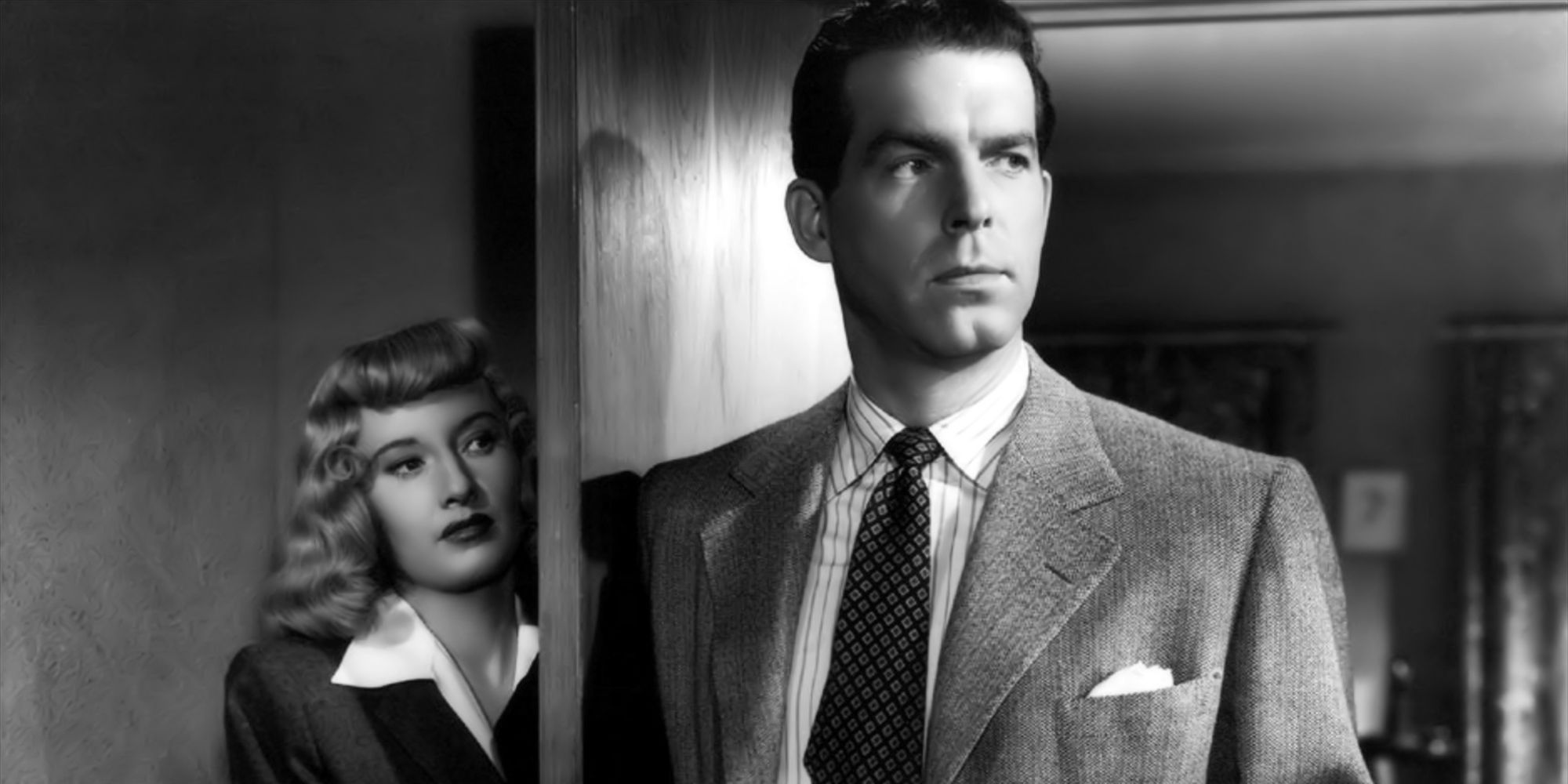
Emerging during the 1940s, classic film noir transformed American cinema by replacing heroic ideals with moral ambiguity, cynical antiheroes, and deadly seductions, and rose to prominence with classics such as The Maltese Falcon, Double Indemnity, and Out of the Past. Today, film noir remains one of Hollywood’s most intoxicating eras and is a genre where the line between hero and villain is perpetually blurred, and romance almost always ends in disaster.
Whether through the cynical quips of a hard-boiled detective or the manipulative charm of a femme fatale, the classic noir era delivered some of the most enduring stories in cinematic history that defined the genre. From hard-boiled detectives navigating corrupt city streets like in The Big Heat to ordinary men seduced into ruin by lethal femmes fatales like in Billy Wilder's iconic noir Double Indemnity, these are ten noir masterpieces that are the epitome of classic film noir.
11
10 'Murder, My Sweet' (1944)

Edward Dmytryk’s Murder, My Sweet is a pivotal noir classic based on Raymond Chandler’s novel Farewell, My Lovely, starring former song-and-dance man Dick Powell as the tough, battered private eye Philip Marlowe. The movie follows Marlowe, who, after being hired by an ex-con, Moose Malloy (Mike Mazurki), to track down his former girlfriend, stumbles into a complex web involving stolen jade, blackmailers, and a deadly femme fatale. One of the film's greatest strengths is Dmytryk's use of innovative visual techniques to represent subjective psychological states on screen.
When Marlowe is knocked unconscious or drugged, Murder, My Sweet uses surreal, dreamlike montages, swirling black smoke, and distorting lenses to put the viewer directly inside his disoriented mind, which became a trademark of the genre. Harry J. Wild’s contrast-heavy cinematography utilizes stark shadows and neon reflections to build an oppressive, rain-soaked Los Angeles landscape. Murder, My Sweet set the aesthetic and narrative bar for hard-boiled detective noirs throughout the rest of the decade.
9 'The Killing' (1956)

Stanley Kubrick’s early masterpiece The Killing offers a masterclass in non-linear narrative structure and fatalistic noir storytelling. Sterling Hayden stars as a career criminal, Johnny Clay, who orchestrates a minute-by-minute heist to steal two million dollars from a racetrack cashier's window. Rather than telling the story chronologically, Kubrick jumps backward and forward in time, showing the heist from the perspective of each co-conspirator, essentially defying the traditional tropes of the genre.
The film highlights noir’s focus on human flaws, as Clay's meticulously planned operation is undone by jealousy, greed, and sheer bad luck. A stark, documentary-style voice-over tracks the clock with cold precision, reinforcing the feeling that time itself is a trap. Lucien Ballard’s crisp black-and-white cinematography captures gritty, unglamorous settings—from cluttered apartments to backroom betting parlors. In short, The Killing is an essential noir classic that illustrates a core theme of the genre: no matter how brilliant the scheme, fate and human weakness ensure catastrophe.
8 'The Big Heat' (1953)

Fritz Lang’s The Big Heat pushed the boundaries of the film noir genre and is credited as one of the most brutal and unyielding police noirs to ever grace the silver screen. Glenn Ford stars as Dave Bannion, an honest homicide detective whose investigation into a fellow officer’s suicide leads him to uncover widespread collusion between high-ranking city officials and a crime syndicate led by a notorious gangster, Mike Lagana (Alexander Scourby).
Lang’s film exposes the terrifying vulnerability of domestic life when confronted by organized crime and systemic corruption. Gloria Grahame steals the picture as Debby Marsh, a mob girlfriend whose face is disfigured by boiling coffee—a shocking moment that underscores the film's harsh violence and also turns the tables on the genre's conventional depiction of a femme fatale. The Big Heat strips away slick Hollywood polish to reveal a bleak universe where enforcing justice requires the hero to become nearly as cold and ruthless as the villains he hunts, cementing it as one of the genre's greatest and most influential contributions.
7 'The Big Sleep' (1946)

Howard Hawks’ adaptation of Raymond Chandler’s novel, The Big Sleep, demonstrates that noir atmosphere, dialogue, and character chemistry can matter far more than a tidy plot. Humphrey Bogart stars as Chandler's legendary private eye, Philip Marlowe, who is hired by the wealthy General Sternwood (Charles Waldron) to settle the gambling debts of his rebellious daughter, but shortly after taking on the case, Marlowe soon finds himself in a labyrinth of more than just an average run-of-the-mill case of blackmail.
The narrative is famously complex, so much so that neither the screenwriters nor Chandler knew who killed one of the drivers, but its power lies in its relentless, intoxicating mood. Bogart and Lauren Bacall generate crackling screen chemistry, exchanging rapid-fire, double-entendre dialogue that pushed the boundaries of studio censorship. Hawks fills the frame with cigarette smoke, torrential rain, and low-lit interiors that reflect an utterly corrupt society, which is the foundation of any solid film noir movie.
6 'The Third Man' (1949)


Carol Reed's British noir classic The Third Man transfers American noir sensibilities to the shattered, post-World War II ruins of Allied-occupied Vienna and is celebrated for Robert Krasker's groundbreaking cinematography and Anton Karas’ famous zither score. The story follows a down-on-his-luck novelist, Holly Martins (Joseph Cotten), who travels to Vienna to see his friend Harry Lime (Orson Welles) about a potential job opportunity. When Martins arrives, he discovers that Lime was recently killed in a freak accident, leading him to conduct his own investigation into his friend's untimely death.
Krasker's work utilizes expressionist visual techniques, such as striking Dutch camera angles, looming shadows, and stark street lighting, to mirror the moral disorientation of a divided city, and is a notable feature of the film. Welles’s legendary performance as Lime is a chilling portrait of sociopathic charm, exemplified by his famous "cuckoo clock" speech on the Ferris wheel. By exploring black-market corruption, moral compromise, and political cynicism, The Third Man not only captures the deep existential disillusionment of mid-century Europe but also the heart of the film noir genre.
Collider Exclusive · Villain Personality Quiz Which Criminal Mastermind Would Be Your Nemesis? Lecter · Joker · Moriarty · Chigurh
Four of the finest criminal minds ever put on screen. One of them would look at you and see something worth their time. Eight questions decide which one comes for you, why they picked you, and what they would want when they arrived.
🍷Lecter
🃏Joker
♟️Moriarty
🪙Chigurh
01
What would a criminal mastermind notice about you first? Great villains choose their opponents carefully. Something about you got their attention.
02
How do they make first contact? The introduction tells you everything about what is coming next.
03
What do you actually believe about right and wrong? Every nemesis is really an argument about the thing you believe most.
04
What finally gets under your skin? Everybody has a pressure point. Finding yours is the whole plan.
05
They have made their move. How do you fight back? This is the part of the film where the audience finds out who you are.
06
What would they use against you? A good villain never brings a weapon you have not already handed them.
07
What do they actually want from you? The money is never the point. Something else always is.
08
How does it end between the two of you? Eight questions in, this is the one that decides who comes for you.
The Case File Is Complete Your Nemesis Is…
Four criminal masterminds. One of them was always going to be yours. Here is who comes for you, why they picked you out of everyone available, and what they want from the encounter.
Hannibal Lecter
Your nemesis does not want to beat you. He wants to know you completely, and he is patient enough to wait for it. The frightening part is how good the conversation is.
- Lecter is the most dangerous kind of opponent: the one who finds you interesting. He never raises his voice, because he has never needed to.
- You keep a great deal to yourself and you are careful about what you show. That reserve is exactly the door he would knock on.
- The films understood something other thrillers missed. The horror is not the violence. It is being perfectly understood by the wrong person.
- He would be unfailingly polite about all of it. That is the worst part.
The Joker
Your nemesis is not after money, territory or revenge. He is after a demonstration, and you are the person he has chosen to prove his point on.
- The Joker only picks opponents who believe in something. Your decency is not a defence against him. It is the entire reason he showed up.
- He has no plan you can predict and nothing you can take away, which removes every tool you would normally reach for.
- His whole argument is that you are one bad day away from being him, and you would spend the rest of your life proving him wrong.
- He would call it a magic trick. You would call it the worst night of your life.
Moriarty
Your nemesis respects you, which sounds flattering until you work out what it means. He chose you because nobody else was worth his time.
- Moriarty is the original criminal mastermind, the template every later one borrows from: a mind the equal of the hero's, pointed the wrong way.
- You enjoy being the cleverest person in the room. He is counting on exactly that, and he has already built the room.
- This is the rare nemesis who would be genuinely disappointed if you lost badly. He needs the game to be worth playing.
- It ends the way these things always end. Two people, one problem, and only one way down.
Anton Chigurh
Your nemesis has no personal interest in you whatsoever, and that is precisely what makes him unsurvivable. You are not a rival. You are a stop on the way.
- Chigurh does not negotiate, gloat or explain. He arrives, he asks one question, and the answer was decided long before you opened your mouth.
- You trust yourself to handle things. He is the one problem in the world that has no interest in how capable you are.
- No Country for Old Men rewrote the screen villain by removing the thing audiences quietly rely on: the sense that talking might work.
- Call it. He will wait.
5 'Sunset Boulevard' (1950)
.jpg?q=49&fit=crop&w=825&dpr=2)
Billy Wilder’s Oscar-winning noir masterpiece, Sunset Boulevard, turns film noir’s lens directly on Hollywood itself, treating the film industry as the ultimate corrupting force and exposing the dark side of fame and fortune. William Holden stars as an aspiring writer, Joe Gillis, who agrees to write a comeback script for a former silent film star, Norma Desmond (Gloria Swanson), but as Desmond tightens her grip around Gillis, he realizes that he's made a deal with the devil.
Wilder brilliantly blends melodrama with noir pessimism in Sunset Boulevard, making it a standout entry in the film noir genre. One of the film's most stunning qualities is the cinematography by John F. Seitz, whose use of extreme camera angles, deep shadows, and low lighting transforms Desmond's estate into a gilded prison. While Holden gives an outstanding performance, Swanson runs away with the show with her haunting performance that blurs the line between fantasy and reality. Even years later, Sunset Boulevard remains a scathing critique of an industry that exploits human ambition and discards its idols, and is without a doubt a defining noir in American cinema.
4 'The Maltese Falcon' (1941)
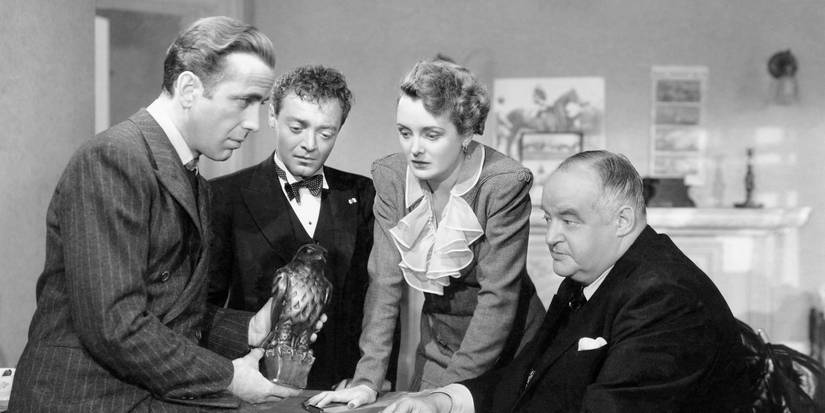
John Huston made his directorial debut with the 1941 noir classic, The Maltese Falcon, which is based on Dashiell Hammett's essential detective novel of the same name, and is considered to be the greatest detective noir of all time. Humphrey Bogart stars as a private eye, Sam Spade, who is hired by a mysterious woman (Mary Astor) to track down her runaway sister. Shortly after taking the job, Spade finds trouble around every corner and eventually crosses paths with a group of seedy characters who are all in search of a priceless jewel-encrusted statue known as the Maltese Falcon.
The Maltese Falcon ultimately launched an entire era of hard-boiled cinematic storytelling and essentially provided the foundational blueprint for the classic detective noir, making it a staple in the film noir genre. Bogie's performance as the calm, cool, and collected Spade not only created the definitive private investigator archetype but also proved his worth as a popular leading man with an undeniable box-office draw. The Maltese Falcon was a major hit and went on to receive three Academy Award nominations for Best Picture, Best Supporting Actor for Sydney Greenstreet, and Best Adapted Screenplay.
3 'Out of the Past' (1947)
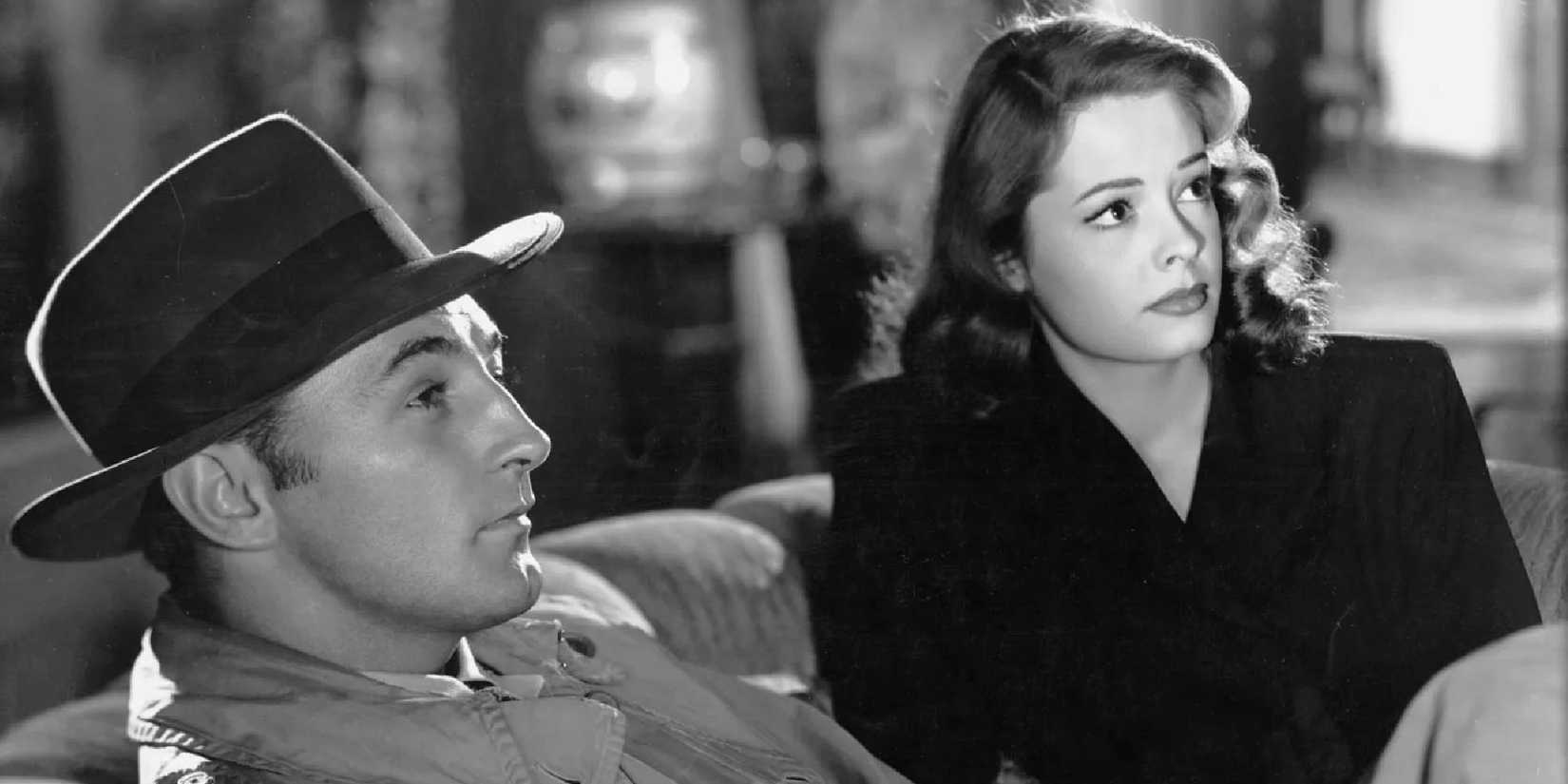
Jacques Tourneur’s Out of the Past is arguably the purest distillation of noir's central obsession: the impossibility of escaping one's history. Robert Mitchum stars as Jeff Bailey, a quiet small-town gas station owner attempting to live a simple life until his past as a private detective catches up with him. Dragged back into the orbit of ruthless gangster Whit Sterling (Kirk Douglas) and the hypnotic, lethal Kathie Moffat (Jane Greer), Bailey is caught in a web of double-crosses and eventually comes to terms with the fact that a man can never outrun his past.
The film masterfully contrasts the bright, idyllic rural landscapes of the small mountain town with the dark, shadow-drenched urban nightlife of San Francisco and Acapulco. Nicholas Musuraca’s high-contrast chiaroscuro lighting and the script's hard-boiled, razor-sharp dialogue create an overwhelming feeling of fatalism that never seems to waver. Mitchum’s weary, laconic delivery encapsulates the quintessential noir antihero, a man who knows he is doomed yet walks forward anyway. Greer's performance as the manipulative Moffat is not only the definition of a deadly dame but is also credited as one of the greatest femme fatales of the genre's classical era.
2 'Laura' (1944)
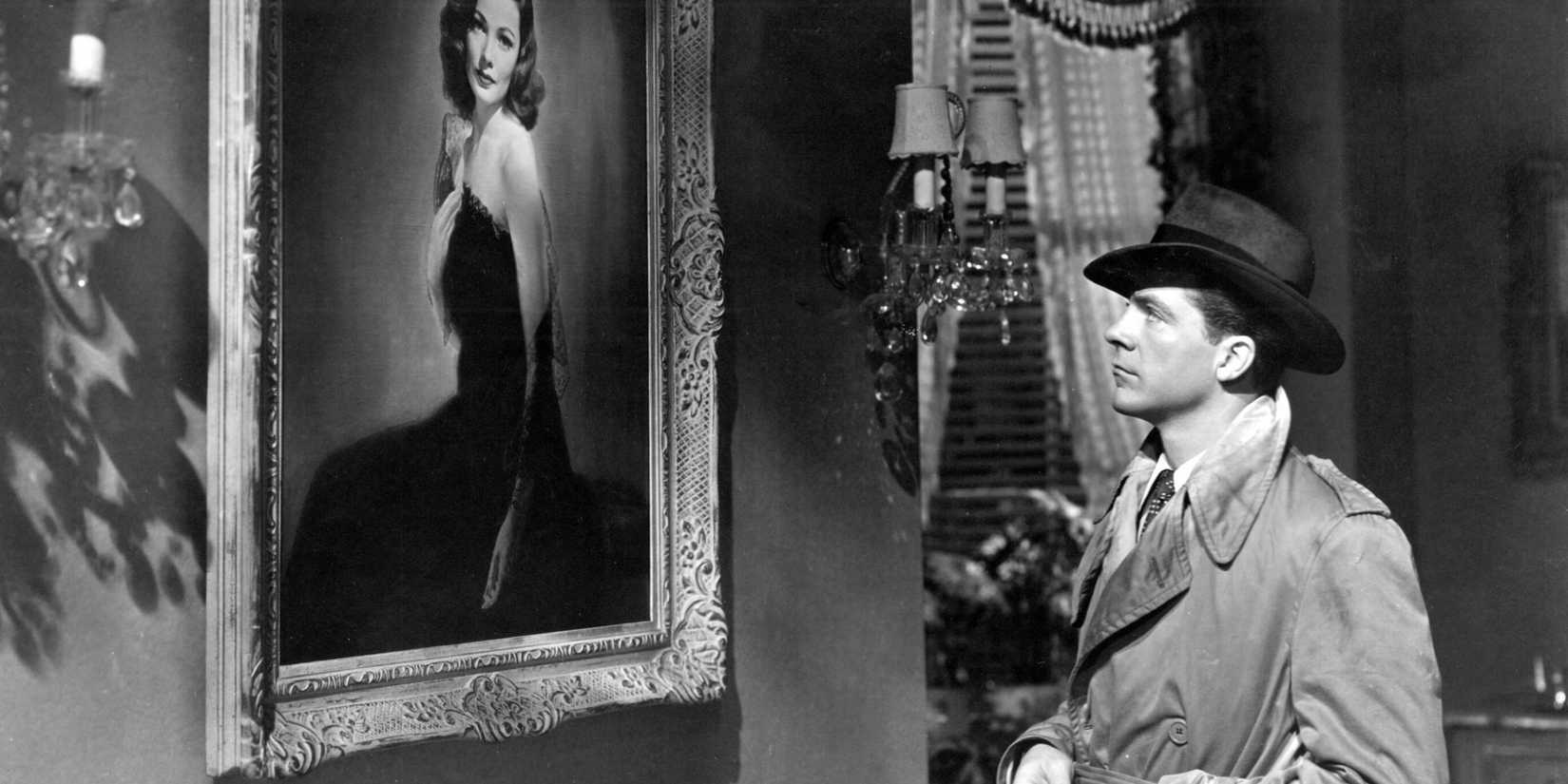
Otto Preminger’s Laura is one of the greatest noirs of the 1940s, bringing noir’s dark sensibilities out of rain-soaked alleys and into the sparkling, razor-witted world of Manhattan’s high society and features an unexpected midway plot twist that ultimately sets it apart from other noirs. The movie follows a detective, Mark McPherson (Dana Andrews), who is tasked with investigating the brutal murder of a glamorous advertising executive, Laura Hunt (Gene Tierney). As McPherson speaks to Hunt's friends and associates, he starts to fall in love with the beautiful victim, succumbing to her spell that many other men had fallen victim to at one time or another.
The film noir genre typically deals with physical corruption, but Laura defies the rules of the genre and instead focuses on intellectual and emotional rot hidden behind elegant silk dresses, art collections, and polished banter. Joseph LaShelle’s Oscar-winning cinematography creates an eerie, dreamlike atmosphere where the line between reality, memory, and illusion constantly dissolves. By turning the detective into a voyeur who falls in love with a corpse, Preminger crafted a sophisticated study in obsession that proves noir’s lethal cynicism can flourish just as easily in air-conditioned penthouses as in low-rent hotel rooms.
KioskNews shows a cleaned-up reading view extracted from the publisher’s page — the original always lives on their site, not ours.