Action On Ground Must Match Targets: Pollution Body On Punjab Stubble Burning
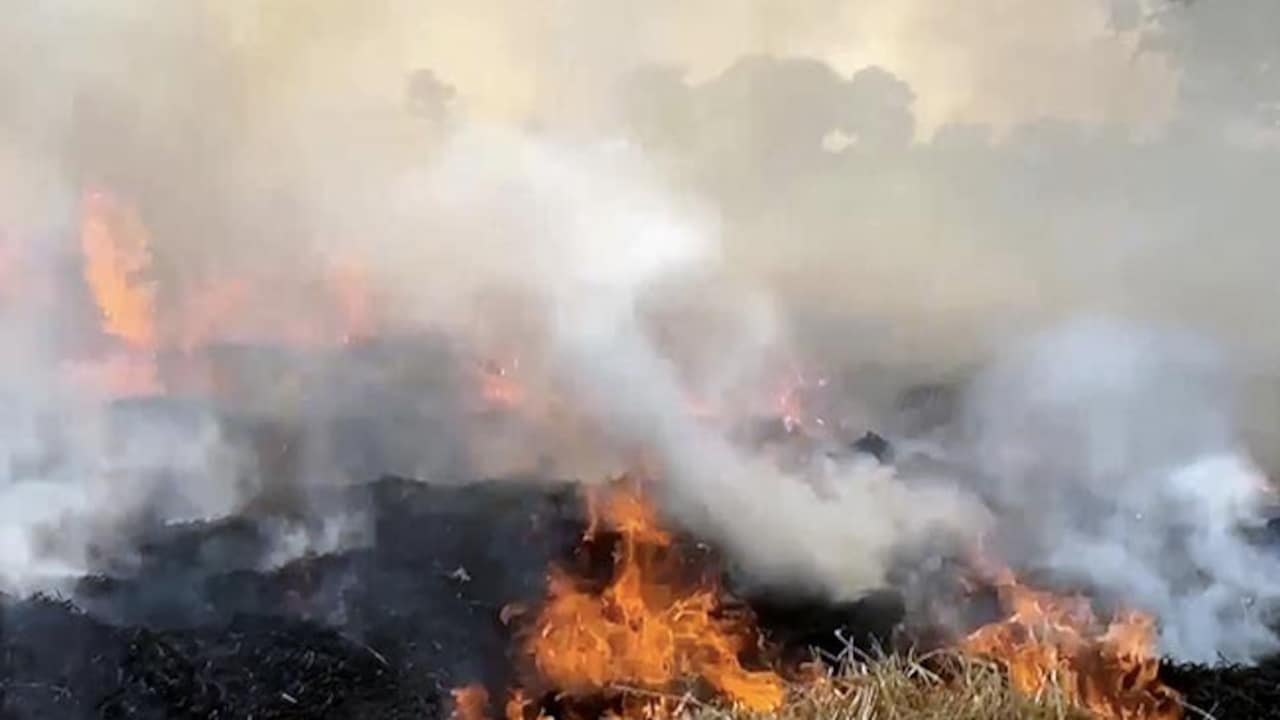
Targets on paper must translate into action on the ground. That was the message from the Commission for Air Quality Management (CAQM) to Punjab officials as a high-level team reviewed measures to prevent stubble burning in three districts on Saturday.
The team visited Sangrur, Patiala and Malerkotla districts, where it assessed the preparedness of local administrations and interacted with farmers, some of whom flagged difficulties in using crop residue management machinery.
The review comes amid the ongoing paddy harvesting season, when the burning of crop residue in Punjab and neighbouring states contributes to air pollution across Delhi-NCR.
The team, comprising CAQM Technical Member Dr SD Attri and Scientist-C Vijay Kumar, held a meeting with Deputy Commissioners, Senior Superintendents of Police (SSPs), officials of the Punjab Pollution Control Board (PPCB), Agriculture Department and flying squads of the Central Pollution Control Board (CPCB) in Sangrur.
The meeting focused on the measures taken by district administrations to manage paddy straw and prevent farm fires.
The officials were asked to ensure that their commitments to prevent stubble burning were reflected in action on the ground.
Farmers Flag Machinery Challenges
During a visit to Gharachon, identified as a stubble-burning hotspot in Sangrur, the CAQM team interacted with farmers who highlighted difficulties in using crop residue management machinery.
The district administration briefed the team on arrangements made to ensure the availability of such machines to farmers.
The officials also visited Bassiark, Kapial and Jhaneri villages in Sangrur's Bhawanigarh tehsil to assess the implementation of measures to manage crop residue.
In Ahmadabad village of Malerkotla, the team witnessed a demonstration of a super seeder, a machine used to manage paddy straw without burning it.
Farmers assured the officials that they would not burn crop residue and would instead use machinery to manage it in their fields.
17,000 Tonnes Of Paddy Straw To Be Used As Fuel
The team also inspected a paper and duplex board manufacturing unit on Dhuri Road in Malerkotla that uses paddy straw as fuel in its boiler.
Representatives of the unit, which has a boiler capacity of 20 tonnes per hour, informed officials that around 17,000 metric tonnes of paddy straw would be used annually.
At Nadampur village in Sangrur's Bhawanigarh, the CAQM team visited another facility where paddy straw is converted into biomass pellets for use as fuel in thermal power plants.
Such facilities provide farmers with an alternative to burning crop residue by creating industrial demand for paddy straw.
The commission asked officials to continue close monitoring and coordinate efforts to prevent stubble-burning incidents.
It also stressed that the measures implemented on the ground must match the targets committed to by district administrations under their action plans.
KioskNews shows a cleaned-up reading view extracted from the publisher’s page — the original always lives on their site, not ours.