Vale, Chris Dickman: Australian science grieves the loss of a giant of ecology and conservation
Australia has lost one of its most distinguished ecologists and conservation champions, Emeritus Professor Chris Dickman.
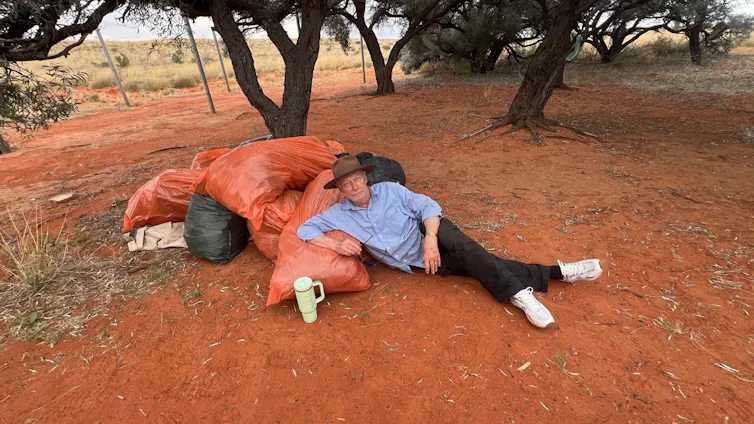
Chris’s achievements and legacy are vast, much like his beloved Simpson Desert that he and his research team – known as “the ratcatchers” – have studied for well over 30 years. He and his team would camp out under the stars, carefully trapping and monitoring the desert’s animals and plants.
Without Chris, we wouldn’t know just how important even small but ferocious predators are in structuring ecological communities. One example is the brush-tailed mulgara, which preys on and regulates numbers of other predators, including the lesser hairy-footed dunnart.
Chris touched many in both his personal and professional roles. The authors of this article each knew Chris for many years.
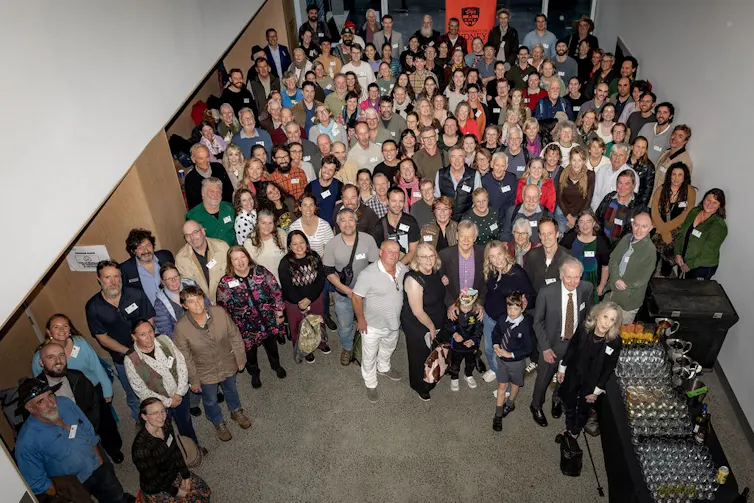
Chris was honoured in a celebratory forum and festschrift, a collection of written tributes, in June that was attended by about 200 people and another 140 online. He died on November 17, 2026.
Science and service
Chris’s impressive career was marked by a dedication to the scientific field and service to the wider community.
He was an internationally renowned leader in wildlife conservation who studied everything from the small marsupial Antechinus to dunnarts, long-haired rats, mulgaras, quolls, sandy inland and spinifex hopping mice and the Tasmanian devil, to name but a few species.
His work shed light on the remarkable lives these animals lead as well as the challenges they face, including feral cats and foxes. Chris was among the first to draw attention to the contentious issue of dingo management by bringing experts together for a scientific forum.
With Lily van Eeden, Chris also led a team of researchers who first estimated three billion animals had been affected by Australia’s 2019-20 bushfire crisis, garnering global attention.
A living legacy
What follows are our personal reflections about Chris. We hope they help convey who he was, both as a person and a professional.
Glenda Wardle
Professor of Ecology and Evolution, University of Sydney
Chris was a true intellect, polymath and gentleman of science. He welcomed me to the University of Sydney in 1995 and led by example in all aspects of academic life. It would be hard to find a better role model.
Over several decades we shared a commitment to discovering the ecological secrets of the red sand country of the Simpson Desert. We faced adversity in the field through floods, fires and flies, but would always smile and keep working.
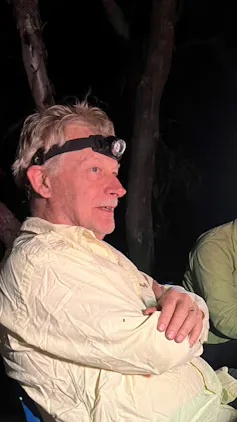
I will miss the hilarious stories we shared around campfires with the many wonderful students and volunteers that joined our research efforts. Together, we would dig and delight in the way the desert came to life, particularly after big flooding rains. I will miss Chris’s writing, which was both edifying and entertaining. I will remember him when listening to the Simon and Garfunkel song, The Sounds of Silence.
Aaron Greenville
Senior Lecturer of Spatial Agricultural and Environmental Sciences, University of Sydney
It was 1998 and I was a young second-year zoology student. We had just finished a lecture that sounded like an in-person BBC wildlife documentary. The lecturer was Chris Dickman.
Soon after, Chris encouraged us students to join the Royal Zoological Society of New South Wales and I promptly signed up. Little did I know that moment would change my life.
His enthusiastic, kind and generous nature has supported many a student, colleague and friend. His door was always open, regardless of how busy he was. Chris’ passion for the Simpson Desert was contagious and persuaded many people, including myself, to make a trip to the desert year after year. Chris led by example, creating a supportive and caring environment that has ultimately shaped how I lead my own research and teaching programs.
Chris was a true gentleman scientist, mentor and friend. I will miss him greatly.
Euan Ritchie
Professor of Wildlife Ecology and Conservation, Deakin University
As a young PhD student, I attended the 2003 annual scientific meeting of the Australian Mammal Society in Sydney. At the time, Chris Dickman was president of the society. I was instantly struck by a few of his qualities, which in the years since have greatly shaped my own career.
Chris and his team were diligently uncovering the dynamics of the mighty Simpson Desert. Their work underscored the importance of long-term, systematic monitoring of wildlife to documenting the complex lives of mulgaras, dunnarts, native rodents and other sand-dwelling denizens. This is no mean feat, especially in an environment as unpredictable and ever-changing as the Simpson.
Chris was also a master communicator. He spoke with such clarity and with his distinctly dulcet tone, both qualities that gave his science such impact.
Most notably, Chris was incredibly generous with his time. He would ask me about my research and was always genuinely interested in what I had to say. He made young scientists like myself feel like we belonged, particularly in academia where imposter syndrome is rife. His mentorship and kind, thoughtful and supportive nature has helped me and many others pursue careers in ecology and conservation. For this, we are all forever grateful.
Associate Professor of Global Ecology, University of Sydney
I was so lucky to have Chris as a lecturer during my undergraduate studies at The University of Sydney.
I fondly remember my first field trip with Chris, which involved sampling small mammals in the ancient forests of Barrington Tops in New South Wales, also known as Dungog. My peers and I slid around in the mud, attempting to reach the sampling sites, and learnt about the history of the area and its inhabitants. These early experiences shaped me as an ecologist.
I also had the privilege of working with Chris as a masters and then PhD student. I would approach him with so many ideas, some better than others. Chris always listened but, in his own style, would gently guide me in the right direction and towards fascinating topics. In our time together, we asked and answered questions about dingoes in the Tanami, foxes and cats in the Simpson, wolves in the United States and scavengers in Australia.
I owe Chris so much for his time and support. And I will forever treasure the memories of our adventures, alongside an appreciation for his knowledge and kindness.
Vale, Chris, our dear friend, mentor and colleague.
We farewell Chris here with an excerpt from his forthcoming festschrift, a collection of reflections written in his honour:
For science at its very best is not a solitary quest — It helps us see, to care and to learn what we all share
Know that in the shimmering moonlight on a distant dune crest or beside a dry creek’s trace,
The scientist with the stellar moustache was listening, and learning, with patience, skill and grace.
KioskNews shows a cleaned-up reading view extracted from the publisher’s page — the original always lives on their site, not ours.