Popular EV, battery perks at risk as razor gang debates new cuts
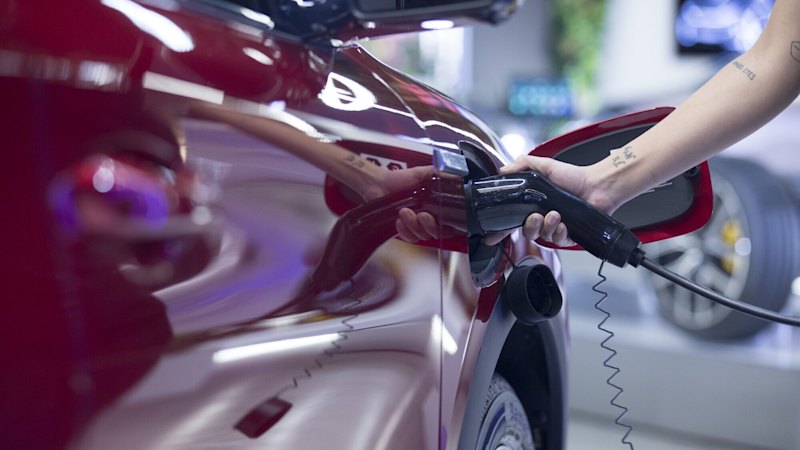
Tax breaks for electric vehicles and home batteries could be on the chopping block as Labor looks for billions in spending cuts to lower inflation, while Treasurer Jim Chalmers pushes for AI adoption among small businesses to revive productivity growth.
Labor is under internal and external pressure to develop policies to help the Reserve Bank combat inflation after five rate hikes this year spurred by the war in Iran, the data centre boom, high federal and state spending and weak domestic productivity that has limited growth.
Sources in the government briefed on preparation for December’s mid-year budget said subsidies for household batteries and EVs could be pared back further, although no final decisions have been made and either may still be untouched as ministers weighed up the policies that have helped push toward ambitious climate targets.
The cabinet’s expenditure review committee is also seeking to defer spending in parts of the infrastructure budget and other areas, the sources said. However, the contentious Victorian Suburban Rail Loop, which Prime Minister Anthony Albanese supports against the wishes of some colleagues, is viewed as off limits due to the timing of the Victorian election this month.
Sources said the government was also trying to make savings in the public service after the Commonwealth bureaucracy’s wages bill rose by 7 per cent last week. This masthead previously reported ministers were searching for Senate-proof cuts after the Coalition and Greens blocked recent attempts to reduce near-record levels of government spending.
Labor is also looking for more savings on the use of contractors, a common accounting move that economists have suggested is not a proper saving because full-time workers are required to do the work that consultants would have completed.
The December budget review has been imbued with increased political importance since inflation has risen above expectations and anxiety has grown about poor productivity stopping the economy from growing without overheating.
The measures being contemplated suggest Albanese will not make a major break from the government’s economic strategy. Sources close to the process said it remained unclear – following a flurry of meetings earlier this week before Albanese departed to the COP climate summit in Turkey – whether Labor could achieve more savings than new spending, creating net savings.
The EV tax break has driven up EV uptake and helped Labor move towards its climate targets. But the price of fuel created by the war in Iran has created its own incentive to buy EVs, and Labor could drop the subsidy entirely. Treasury estimates the policy will cost $1.35 billion this year – 15 times more than its initial forecast.
The Cheaper Home Batteries program has helped bring down wholesale electricity prices by reducing evening peak demand on the grid. It was drastically reined in before last year’s mid-year budget after its estimated cost blew out to more than $14 billion. The Australian Financial Review reported that Treasury was working on options to wind the scheme back.
There was a push to rein in both programs even more in the May budget, but ministers trod cautiously before the long-run impact of the war in Iran were known.
UNSW economics professor Richard Holden said the government could eke out savings of more than $10 billion over the forward estimates if it drastically scaled back both green subsidies.
“It could actually add up to real money over the forwards,” he said. He added the government could do little to alleviate inflation in the short-run because fiscal policy took time to kick in and any measures would either require parliamentary approval or have an impact some time into the future.
Asked about both programs on Sunday, Albanese said: “We’ll have budget announcements when we make them. We work them through in an orderly way. But the program, for example, on Cheaper Home Batteries, has benefited 600,000 Australian households and small businesses.“
In Antalya, Turkey for the UN climate conference, former prime minister Malcolm Turnbull said subsidies for EVs and battery should be means-tested.
While he thought that subsidies were useful launch initiatives, “there is always a problem with subsidising worthwhile things, that you might actually be subsidising people to do something they would otherwise have done anyway.”
Adjacent to the budget update, ministers have started to discuss a broader shake-up of economic policy, with a focus on productivity measures to boost living standards. Economists such as Saul Eslake and HSBC’s Paul Bloxham are already warning that recession is a real chance next year.
One minister, who did not want to be named, said Albanese and Chalmers wanted to lean into AI. The Productivity Commission has cited it as the best hope to boost efficiency levels that have languished along with similar nations for years.
Amid concern about Australia’s slow uptake of AI in small and medium businesses, one option being looked at by Labor is a plan to encourage technology diffusion across firms. China has put a huge focus on pushing AI tools across the economy to yield gains.
Albanese made a splash on new AI safety regulations before departing Australia this week, putting the hard word on AI companies to prove to voters that Australia, unlike the US, would not let frontier labs dictate terms. But on the whole, Labor has tried to talk up the benefits of AI as it seeks tens of billions in investment from firms such as Anthropic and Open AI.
Putting AI at the centre of a new productivity agenda would help make the case to voters that the data centre build-out, which is putting upward pressure on inflation in the short term, could have a long-term yield for Australian prosperity.
Cut through the noise of federal politics with news, views and expert analysis. Subscribers can sign up to our weekly Inside Politics newsletter.
KioskNews shows a cleaned-up reading view extracted from the publisher’s page — the original always lives on their site, not ours.