‘I survived for a reason’: Aberfan fights to preserve memory of disaster 60 years on
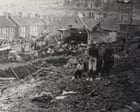
David Davies was eight years old when he survived the coal tip slide that killed a generation of children in the Welsh village of Aberfan. Most years the disaster’s anniversary passes quietly, he says; much of the community chooses to spend the day reflecting and mourning in the privacy of their homes.
His own recollection of what happened on the cloudy autumn morning in 1966 is hazy. His father, one of the volunteers who uncovered the corpses of more than 100 children from the buried Pantglas primary school, said that when he was handed his son’s unconscious body, he initially thought he was dead.
He laid the boy down with the growing line of small bodies until someone saw the child’s foot moving and realised he was still alive. He would be one of only a handful of survivors.
Davies, now 68, has returned to the family farmhouse on the northern side of the village after a career as a finance solicitor that took him around the world. As chair of the Aberfan Memorial Charity, he has been busy for more than a year with preparations to mark the 60th anniversary of the disaster on 21 October.

As the date approaches, he and fellow survivors have been thinking about how the tragedy will be remembered as it begins to fade out of living memory. Only nine of the parents who lost children are left, and the youngest is 85.
“There’s been big changes in the village’s population,” he said. “New people have come in, others have left. There needs to be a continued direct connection in the community, and with the new generation … education is very important.”
Dozens of events and exhibitions will mark this year’s anniversary, including the debut of a new concert requiem by Paul Mealor titled Aberfan: From Darkness to Light at Cardiff’s Wales Millennium Centre, and a national tour of The Silent Volunteer, a play about the volunteers from neighbouring coalfield communities who helped Aberfan cope and recover.
Amgueddfa Cymru’s programme of remembrance includes a new exhibit of objects, memories and oral histories linked to the disaster and its aftermath, including the Aberfan clock, a battered timepiece that stopped at 9.13am on the last Friday before half-term – the exact moment the coal spoil struck the school and surrounding houses.
Davies’ classmate Gaynor Madgwick, who was severely injured and lost her brother Carl and sister Marylyn in the disaster, donated schoolbooks, a football and a dress that belonged to her siblings to the exhibit.
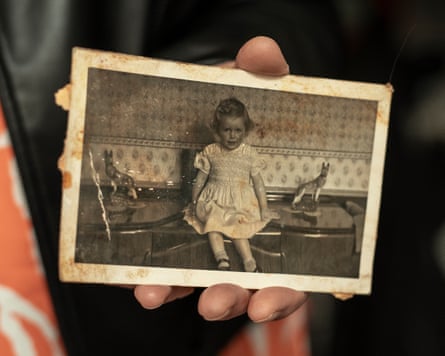
“My dad was a builder, and when he built our house, he put some tokens and things with sentimental value in the walls, like Marylyn’s dress,” the retired social worker said. “We sold the family home a few years ago to a couple that is new to the village. It seemed like time to think about how we are going to preserve the legacy.”
The National Library of Wales has produced new books of remembrance recording the names of the 116 children and 28 adults who died, as the original, believed to have been compiled by a volunteer in the aftermath of the disaster, contained errors.
Together with the Glamorgan Archives, the library has also created an online research portal digitising letters and committee papers, reports, maps, and audio and visual sources for future generations to explore. Most of the material comes from the disbanded Aberfan Disaster Fund and Aberfan Parents and Residents Association, as well as the papers of Erastus Jones, a minister who moved to the village in the aftermath of the disaster and was prominent in the community’s campaign for answers.
Despite a decades-long fight, Aberfan never saw justice for the disaster, in which 100,000 tonnes of coal waste hit the school at 80mph. While a 1967 tribunal found the National Coal Board was to blame for not heeding warnings the tip was unstable, no directors or employees were ever prosecuted. Affected families received next to nothing in compensation (the board’s insurance staff called £500 per dead child, about £12,000 in 2026, a “good offer”).
The government then raided £150,000 from a charitable disaster fund that went towards clearing the remaining tips looming above the village – money that wasn’t returned until 1997, without interest or adjusting for inflation. The same year, government and NCB files related to the disaster were finally made public, exposing the extent to which the board had mismanaged the Merthyr Vale colliery and manoeuvred to evade responsibility, compensation and clearance after the events of 1966.
“Many people in the village spent the rest of their lives fighting for justice,” Davies said.
Sixty years later, there are still 2,000 disused coal tips in the south Wales valleys that pose a significant safety and environmental threat. A 2020 landslip in Tylorstown in the Rhondda valley, caused by heavy rainfall in the climate crisis-charged Storm Dennis, sent 60,000 tonnes of spoil down the mountain, blocking the river and breaking a sewer and a water main.
Another slip in Cwmtillery forced residents to evacuate during 2024’s Storm Bert, after a river of trees and boulders swept off the mountain and into the village streets.

The echoes of Aberfan were obvious. Last year Wales’s Senedd passed legislation setting up a Disused Tips Authority to monitor and manage the dangerous legacy of the country’s industrial past.
The Welsh and UK governments have promised £220m in funding for maintenance and remediation, but the true cost of making the tips safe is estimated to be in excess of £600m.
Sitting in the memorial garden where Pantglas school once stood, with the white graves of the hillside cemetery overlooking the village, Madgwick said she was saddened “lessons haven’t been learned” from the disaster.
“Over the years, through all the pain and trauma, I’ve had to tell myself I survived for a reason. That’s why I give talks to schools and organisations wherever I can,” she said. “Telling our story means it matters.”
KioskNews shows a cleaned-up reading view extracted from the publisher’s page — the original always lives on their site, not ours.