TIMELINE: The road to Duterte’s trial at the International Criminal Court
Editor’s Note: We are republishing this timeline from 2022 to reflect latest developments.
Rodrigo Duterte is going to trial before the International Criminal Court (ICC). Its pre-trial chamber on Thursday, April 23, unanimously confirms all charges against him in relation to the violent war on drugs.
In its decision, the chamber says that there “are substantial grounds to believe that Mr Duterte is criminally responsible for the crimes.”
Government data shows that at least 6,252 people have died at the hands of the police during anti-illegal drug operations as of May 31, 2022. This tally does not include victims of vigilante-style killings, which human rights groups estimate to pull the number up to around 30,000.
Documents obtained by Rappler, however, show that the Philippine National Police (PNP) already recorded 7,884 deaths between July 1, 2016 to August 31, 2020.
Families, human rights groups, and other stakeholders bank on the ICC to bring justice to the thousands of victims, as domestic mechanisms prove to be ineffective in what appears to be a futile quest for accountability.
The Commission on Human Rights (CHR), mandated by the 1987 Philippine Constitution to investigate state abuses, was stonewalled by the Duterte government in its own probes – a recurring treatment even among other groups that try to assist families of victims.
What has happened with the ICC proceedings so far? Rappler lists key events involving the ICC and Duterte’s war on drugs. We will update this timeline as new information comes in.
OCTOBER 13, 2016
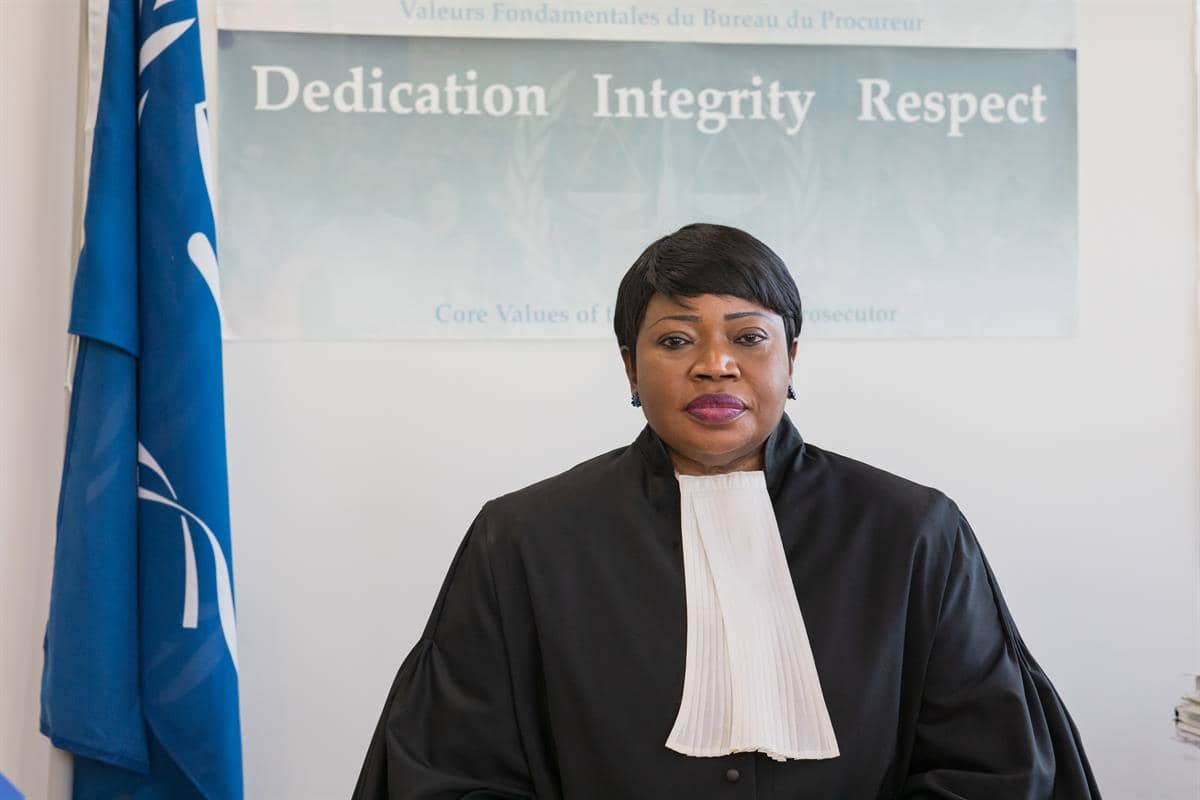
Then-ICC prosecutor Fatou Bensouda says her office is keeping an eye on the incidents in the Philippines as the number of deaths in drug war operations continues to rise almost four months into the Duterte administration.
In a statement, she says her office “will be closely following the developments… and record any instance of incitement or resort to violence with a view to assessing whether a preliminary examination into the situation of the Philippines needs to be opened.”
Without naming any official, Bensouda also warns that “any person in the Philippines who incites or engages in acts of mass violence including by ordering, requesting, encouraging or contributing, in any other manner, to the commission of crimes within the jurisdiction of the ICC is potentially liable to prosecution before the Court.”
NOVEMBER 17, 2016
Duterte threatens to withdraw the Philippines from being a member-state of the ICC.
He calls the international court useless, saying it really is unable to help small countries. This would be the first of many instances when the President would publicly threaten and insult the ICC, including its officials.
APRIL 24, 2017
Filipino lawyer Jude Sabio files a communication before the ICC over the “repeatedly, unchangingly, and continuously” mass murder in the Philippines.
He requests the court to “commit [Duterte] and his senior government officials to the Trial Chamber for trial and that the Trial Chamber in turn, after trial, convict them and sentence them to corresponding prison sentence or life imprisonment.”
Sabio was the lawyer of self-confessed Davao Death Squad (DDS) member Edgar Matobato, who was the first to publicly come out to accuse Duterte of being behind the killings in Davao City as mayor.
In the documents filed, Sabio says he has “direct proof beyond reasonable doubt” that Duterte continued these killings at the national level.
Sabio would later “withdraw” his communication in January 2020, but experts point out this will not affect the ongoing proceedings. He dies on April 12, 2021 due to cardiac arrest.

JUNE 6, 2017
Then-senator Antonio Trillanes IV and Magdalo representative Gary Alejano file supplemental communication before the ICC urging Bensouda to initiate a preliminary examination “to provide a glimmer of hope for the thousands of victims that Duterte’s impunity would soon end.”
The 45-page document the two submitted highlight Duterte’s violent rhetoric, including various pronouncements in which he ordered the killings of suspected drug personalities.
FEBRUARY 8, 2018
The ICC Office of the Prosecutor announces that it has initiated a preliminary examination to determine whether there is sufficient evidence to establish that the case falls under the court’s jurisdiction.
In a statement, Bensouda says her office has decided to pursue this move “following a careful, independent, and impartial review of communications and reports documenting alleged crimes.”
Then-presidential spokesperson Harry Roque says Duterte welcomes this move “because he is sick and tired of being accused of the commission of crimes against humanity.”
MARCH 14, 2018
Duterte announces that the Philippines will withdraw as a member-state of the ICC. In a written statement, the President says he is “withdrawing [the country’s] ratification of the Rome Statute effective immediately.”
But the Rome Statute, the ICC’s founding document, explicitly states that withdrawal shall only take effect “one year after the date of receipt of the notification.” Ceasing to be a member-state will also not affect criminal investigations and proceedings that have been started before the withdrawal came into effect.
MARCH 16, 2018
The Philippine government formally submits to the United Nations its written notice of withdrawal from the ICC. In the letter, the government says its decision to withdraw reflects the country’s “principled stand against those who politicize and weaponize human rights.”
The transmission of the letter officially triggers the one-year waiting period before the withdrawal takes effect.
AUGUST 28, 2018
Families of drug war victims, through another submitted communication, urge then-ICC prosecutor Fatou Bensouda to indict and eventually convict Duterte.
The families, convened under the Rise Up for Life and for Rights network, “call for an end to madness and for [Duterte], who has likened himself to one of the most evil men in history, to be brought before the ICC and be held to account for crimes against humanity.”
The human rights abuses under his administration “threaten the core principles of humanity itself, subsuming individual victim experiences, and even state borders,” the families add.
MARCH 17, 2019
The Philippines officially ceases to be a member-state of the ICC, a year after the Duterte government first gave notice of its withdrawal as signatory to the Rome Statute.
While withdrawing does not hinder the ICC from moving forward with possible proceedings, it will most likely make things difficult for investigators, especially in terms of getting cooperation from the Philippine government.
DECEMBER 5, 2019
Then-ICC prosecutor Bensouda says she aims to finalize her preliminary examination by 2020 so her office can “reach a decision on whether to seek [authorization] to open an investigation into the situation in the Philippines.”
In a report, Bensouda says her office “significantly advanced its assessment” since 2018, adding that they continue to monitor the situation, including reports of threats and harassment against human rights defenders.
NOVEMBER 11, 2020
Arturo Lascañas, former Davao City top cop and self-confessed DDS hitman, signs a Third Agreement on Limited Use of Information with the ICC. The document shows that the ICC Office of the Prosecutor (OTP) will not use as evidence against Lascañas his confessions about carrying out killings ordered by Duterte himself.
This is unprecedented and considered a first in Philippine history. International human rights lawyer Ruben Carranza says this move is a form of use immunity, while former ICC prosecutor Luis Moreno Ocampo says the document means that the OTP is treating the witness as an insider, although he could also be a suspect.
This development, however, only becomes public in November 2021, as part of Rappler’s investigation into Duterte and the Davao Death Squad.
DECEMBER 15, 2020
Bensouda says there is “reasonable basis to believe that crimes against humanity” were committed in the Philippines in connection with Duterte’s war on drugs. These incidents, she points out in a report, occurred at least between July 1, 2016 to March 16, 2019 – a day before the Philippines’ withdrawal from the ICC took effect.
Her office, however, is yet to reach a decision on whether to seek permission to open a formal investigation, given the challenges brought about by restrictions related to the coronavirus pandemic.
JANUARY 22, 2021
Families of drug war victims call on the ICC to hold Duterte accountable for allegedly impeding justice, including instances when he repeatedly threatened Bensouda and the court.
In a supplemental pleading submitted to Bensouda, mothers represented by the National Union of Peoples’ Lawyers say Duterte “should be held accountable for his blatant attempt to pervert the course of justice by intimidating and retaliating against the officials of the [ICC].”
MARCH 16, 2021
The Supreme Court junks a petition questioning the validity of Duterte’s withdrawal from the ICC, including whether he is legally required to get the concurrence of the Senate in doing such act.
The High Court, voting unanimously, dismisses the petition because it has become moot and academic.
It, however, says the government is obliged to cooperate with the ICC even if it has already withdrawn, according to the full document released months after on July 21, 2021. Despite this, Malacañang remains firm in its decision not to cooperate.
JUNE 14, 2021
Then-ICC prosecutor Bensouda applies for authorization with the pre-trial chamber to open an investigation into the killings committed during the war on drugs and in Davao City from 2011 to 2016.
Bensouda, in a report, says “extrajudicial killings, perpetrated across the Philippines, appear to have been committed pursuant to an official State policy of the Philippine government.”
This move comes a day before Bensouda, who has been publicly threatened by Duterte, retires from the ICC on June 15. She is replaced by Karim Khan, who has extensive experience working in international criminal tribunals.
Families of drug war victims earlier call on Bensouda to “issue a warrant of arrest against President Rodrigo Duterte and hold him while trial is ongoing.”
SEPTEMBER 15, 2021
The ICC’s pre-trial chamber greenlights the investigation into Duterte’s war on drugs and killings in Davao City between 2011 and 2016.
In the decision, ICC judges conclude that “there is a reasonable basis for the Prosecutor to proceed with an investigation, in the sense that the crime against humanity of murder appears to have been committed.”
The chamber also observes that “it is also apparent” that killings took place “pursuant or in furtherance of a state policy.”
OCTOBER 7, 2021
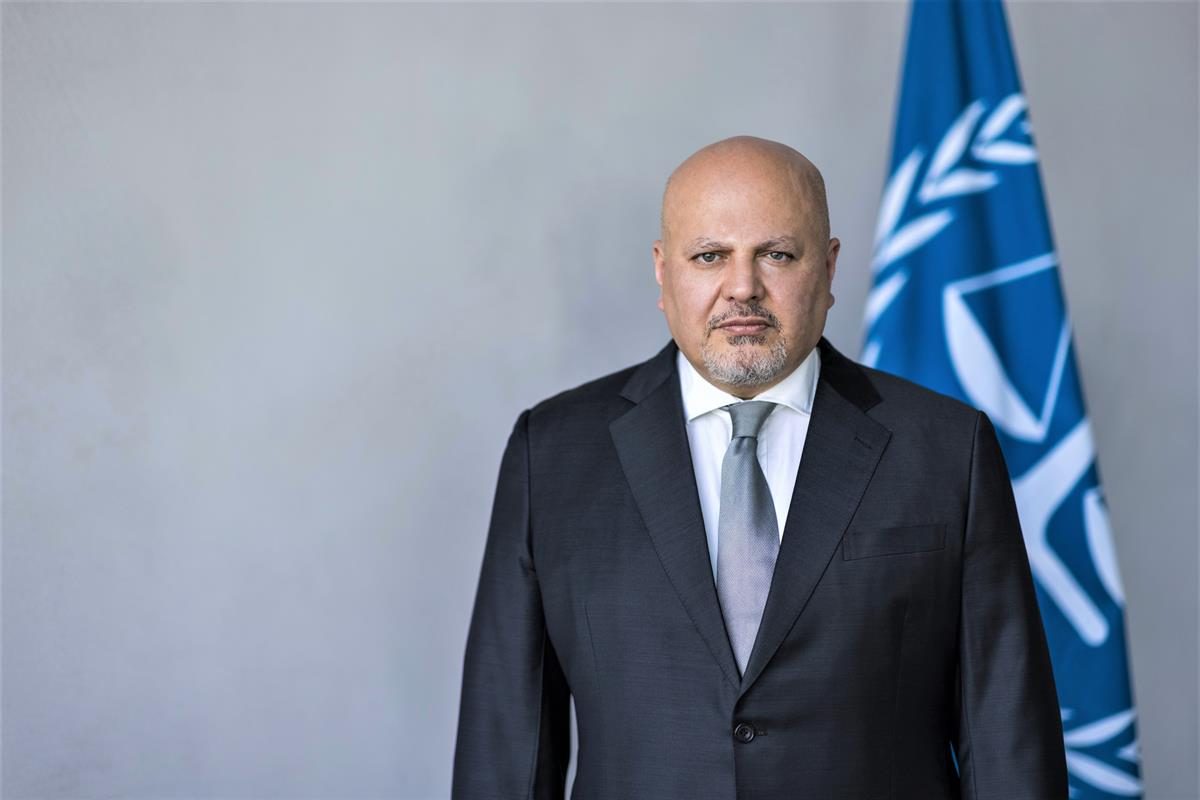
New ICC Prosecutor Karim Khan, who succeeded Bensouda, urges the Duterte government to cooperate with his office in the conduct of an investigation into the killings under the war on drugs, as well as those committed in Davao City between 2011 and 2016.
In a statement, Khan says he remains “willing to constructively engage with national authorities in accordance with the principle of complementarity and our obligations under the Statute.”
The investigation, he adds, seeks “to uncover the truth and aims to ensure accountability,” as well as focus their efforts to ensure a “successful, independent, and impartial investigation.”
NOVEMBER 10, 2021
The Duterte government formally requests the ICC to stop the ongoing investigation into the Philippine situation.
Through a letter signed by Philippine Ambassador to the Netherlands J. Eduardo Malaya, the government avails of an option available under the Rome Statute which allows it to ask the Prosecutor to defer the probe and recognize working domestic mechanisms.
NOVEMBER 19, 2021
ICC Prosecutor Khan announces that his office will temporarily suspend its investigation into the drug war killings in the Philippines but assures the public they will “continue its analysis of information already in its possession as well as new information it may receive.” This move to pause the probe is a matter of procedure.
NOVEMBER 24, 2021
ICC Prosecutor Khan says they will ask the Duterte administration for proof that it is genuinely investigating the killings under the violent war on drugs.
In a statement, he says that “such information must consist of tangible evidence, of probative value and a sufficient degree of specificity, demonstrating that concrete and progressive investigative steps have been or are currently being undertaken to ascertain the responsibility of persons for alleged conduct falling within the scope of the authorized ICC investigation.”
JUNE 24, 2022
Khan files a request before the ICC pre-trial chamber seeking to resume his office’s investigation into the killings under Duterte’s war on drugs and those committed in Davao City between 2011 and 2016. In a 53-page document, Khan says information collated by his office “does not demonstrate that concrete and progressive steps have been taken or are being taken by the competent national authorities.”
He adds that the government failed to show that any individual has been probed “for ordering, planning, or instigating” the killings. He also says there is no indication that “domestic authorities are investigating the alleged systematic nature of these and other killings.”
Khan also says the inter-agency drug war review panel “does not appear to possess powers or authority independent of the [Department of Justice] or have any specific investigative function.” What the DOJ-led panel did appears to be a mere “desk review” that “by itself does not constitute investigative activity.”
JUNE 26, 2022
In response, Justice Secretary Menardo Guevarra says he respects Khan’s view but that “he should have waited for our efforts to bear some fruit.”
He added: “An investigation of this magnitude and complexity cannot be finished in a few months.”
SEPTEMBER 22, 2022
ICC Prosecutor Karim Khan reiterates his office’s request to resume an investigation, adding that the deferral requested by the Philippine government is “not warranted.”
SEPTEMBER 28, 2022
Justice Secretary Jesus Crispin “Boying” Remulla says Khan is doing the court a “disservice” for challenging the Philippine system. The ICC, he insists, “cannot run roughshod over our system and say you’re a lousy country.”
JANUARY 26, 2023
The ICC pre-trial chamber reopens the investigation into the drug war killings. The chamber says it’s “not satisfied that the Philippines is undertaking relevant investigations that would warrant a deferral of the Court’s investigations on the basis of the complementarity principle.”
FEBRUARY 3, 2023
The Philippine government, represented by Solicitor General Menardo Guevarra, files its notice of appeal, asking the ICC to suspend its decision to resume its probe into the killings.
FEBRUARY 18, 2023
ICC Prosecutor Karim Khan asks the court’s appeals chamber to deny the Philippine government’s request to suspend the probe. He argues that the Philippines “has not provided any argument substantiating its request for suspensive effect, nor shown that implementation of the decision would create an irreversible situation or one that would be very difficult to correct or that could potentially defeat the purpose of the appeal.”
FEBRUARY 24, 2023
The principal counsel of the ICC’s Office of Public Counsel for Victims files a request to appear before the appeals chamber to represent the victims’ comments on the Philippine government’s appeal. The office says “the issues on appeal fundamentally affect the general interest of the victims” and that stopping the probe may jeopardize the victims’ rights to “truth, justice, and reparations.”
MARCH 2, 2023
The Philippine government files its motion to block the request of families to be included in the proceedings.
MARCH 21, 2023
The ICC appeals chamber allows victims and their families to submit comments before the court, rejecting the Philippine government’s move to block this effort. In its decision, the chamber says it “considers it appropriate for victims to be involved in these appeals proceedings.”
The chamber instructs the Victims Participation and Reparations Section (VPRS) to “collect and transmit…representations from any interested victims and victim groups” and include these in a report to be submitted by May 22, 2023.
MARCH 13, 2023
The Philippine government’s OSG submits its appeal brief to the ICC, reiterating that the prosecution’s continuation of the probe into the drug war killings lacks legal foundation and “would encroach on the sovereignty of the Republic of the Philippines.”
The government also requests the suspension of the ongoing investigation until its appeal is decided on by the chamber.
MARCH 27, 2023
The ICC appeals chamber dismisses the Philippine government’s motion to suspend the ongoing investigation during appeals proceedings. In its decision, the chamber highlights the “absence of persuasive reasons in support of ordering suspensive effect” that the Marcos administration sought against a court ruling that allowed the probe to continue.
This means that ICC Prosecutor Karim Khan is free to continue his office’s investigation into the violent war on drugs, a move that the ICC pre-trial chamber authorized in January 2023.
APRIL 4, 2023
Prosecutor Khan asks the appeals chamber to reject the Philippine government’s appeal. In his response, Khan says the government failed to prove any error in the court’s decision to resume the probe.
APRIL 11, 2023
The Philippine government asks the appeals chamber for a leave to file a brief reply to Khan’s response.
APRIL 14, 2023
Prosecutor Khan says the points that the Philippine government wants to respond to are “not new” and that it “could reasonably have anticipated them.”
APRIL 18, 2023
The ICC Office of Public Counsel for Victims rejects the bid of the Philippine government to stop the investigation into Duterte’s war on drugs, saying that the Philippines failed to demonstrate that the pre-trial chamber committed any error in making the decision or establish a law error that “materially affected the decision.”
In a document submitted before the appeals chamber, principal counsel Paolina Massidda said that halting the investigation will jeopardize the victims’ rights to “truth, justice, and reparations.”
“Depending on their resolution, victims may be denied the opportunity to uncover the truth, present their views and concerns throughout the proceedings, ensure that those responsible are held accountable, and ultimately claim reparation,” she said.
MAY 2, 2023
The ICC appeals chamber allows the Philippine government to respond to the points raised by Prosecutor Khan on the appeal filed against the resumption of the investigation.
The chamber gives the Philippine government until May 16 to submit its response.
MAY 16, 2023
The Philippine government replies to Khan’s points against the appeal. In its filing, the government again claims that the ICC has no jurisdiction over the killings carried out under Duterte’s violent war on drugs.
MAY 22, 2023
The ICC Registry’s Victims Participation and Reparations Section (VPRS) releases its report based on representations and views submitted by victims and their families. The VPRS receives “five victim representations containing views and concerns expressed on behalf of 350 individual victims and 165 families.”
According to its report, the victims “unanimously and strongly urge” the ICC to allow the resumption of Khan’s investigation into the violent war on drugs, citing continued challenges and inaction on the part of the Marcos administration.
JULY 12, 2023
The ICC announces that its Appeals Chamber will deliver on July 18, 2023 its decision on the appeal lodged by the Philippine government against the resumption of investigation into killings under Duterte’s war on drugs and his alleged death squad in Davao City.
The chamber will determine whether or not ICC Prosecutor Karim Khan can move forward with his office’s probe.
JULY 18, 2023
The ICC appeals chamber rejects the Philippine government’s appeal. This means that ICC Prosecutor Karim Khan’s investigation will continue his office’s investigation into drug war-related killings in the Philippines and the alleged death squad in Davao City under the leadership of Duterte.
Judge Marc Perrin de Brichambaut said the chamber decided by a majority.
NOVEMBER 24, 2023
Marcos says his administration is studying the possible return of the Philippines as a member-state of the International Criminal Court.
“There is also a question, should we return under the fold of the ICC? So that’s again under study. So we’ll just keep looking at it and see what our options are,” he tells reporters, adding that “there are still problems in terms of jurisdiction and sovereignty.”
JANUARY 23, 2024
President Marcos insisted that the Philippines is not cooperating with the ICC.
Days before that statement, former senator Antonio Trillanes IV claimed that ICC investigators entered the Philippines in December and already obtained evidence against former president Duterte. Senator Dela Rosa also urged the President to be transparent about the “real score” of the Philippines’ participation in the probe.
“The Philippine government will not lift a finger to help any investigation that the ICC conducts. However, as ordinary people, they can come and visit the Philippines, but we will not help them. In fact, we are monitoring them, making sure they do not come into contact with any agency of the government. And if they are contacting agencies of the government – police force or local government units, we advise them not to answer,” Marcos said.
FEBRUARY 9, 2024
Remulla “firmly asserts” that the ICC has no jurisdiction over the Philippines, and that the “nation, as a sovereign entity, possesses the inherent right to determine our own legal framework and address internal matters without any interference from external bodies.”
“I would like to emphasize that any presence of international bodies within the Philippines must adhere to our Constitution and relevant laws,” he says, referring to unconfirmed reports that the ICC already went to the Philippines.
FEBRUARY 20, 2024
Marcos says that the ICC probe “opens a Pandora’s box.” He insists that there are still questions about “jurisdiction and sovereignty,” and that he has not “seen a sufficient answer for it.”
“Until then, I do not recognize their jurisdiction in the Philippines,” Marcos says. “I cannot, that seems to be the only logical conclusion that could come from that situation.”
He says, however, that he cannot stop the ICC if it tries to enter the country.
“I don’t approve or deny it but you know, they haven’t done anything illegal,” he says. “Once they do, of course, we will do something about it. But we are an open country, we are not a closed country”
AUGUST 1, 2024
Remulla says his agency will not block the International Police (Interpol) from arresting alleged ICC suspects in the country, highlighting that they are “not in the business of blocking any movement… unless a policy is laid out, which of course will go against our international commitments, that’s why we’re not gonna do it.”
“That is the future issue at hand now. If they issue a warrant of arrest, it’s the Interpol’s job to serve it. And we have an obligation to the Interpol,” he says.
JANUARY 24, 2025
Executive Secretary Lucas Bersamin says the Philippines will respond favorably if the Interpol is asked by the International Criminal Court (ICC) to carry out an arrest warrant in relation to the drug war of former president Rodrigo Duterte.
“If the ICC makes a move, and course the move through the Interpol, and the Interpol makes the request to us for the arrest of delivery of the custody of a person subject to ICC jurisdiction, we will respond favorably or positively to the Interpol request,” he says.
February 10, 2025
The ICC Office of the Prosecutor applies for an arrest warrant against Rodrigo Duterte.
March 7, 2025
The International Criminal Court’s pre-trial chamber issues an arrest warrant against Duterte.
March 9, 2025
Malacañang reiterates its stand about fulfilling its obligation to the Interpol following reports that an arrest warrant has been issued against Duterte.
Presidential Communications Office Secretary Jay Ruiz says they had heard that an arrest warrant has been issued and that the government is “prepared for any eventuality.” PCO Undersecretary Claire Castro also says that “if the Interpol will ask the necessary assistance from the government, it is obliged to follow.”
March 11, 2025
Duterte is arrested at the Ninoy Aquino International Airport Terminal 3, becoming the first former Philippine head of state to be arrested through an order by an international tribunal.
He is flown outside the country and to The Netherlands – the seat of the ICC – before midnight.
March 12, 2025
Duterte arrives in the Netherlands and is transferred to the ICC Detention Center in The Hague.
March 14, 2025
Duterte makes his first appearance via video link before the ICC. The pre-trial chamber confirms that the hearing for the confirmation of charges will be held in September 2025.
May 1, 2025
The Duterte camp files a petition seeking the excusal of Judges Reine Adélaïde Sophie Alapini Gansou and María del Socorro Flores Liera “given the possibility of perceived bias” which would arise “out of the Judges’ prior ruling on substantially the same issue in the Situation in the Republic of the Philippines.”
May 2, 2025
Duterte officially asks the ICC to completely junk its case against him. In a submission, Duterte’s lawyers argue that “there is no legal basis for the continuation of the proceedings” and the court should “order his immediate and unconditional release.”
May 14, 2025
ICC President Judge Tomoko Akana asks the court’s judges to respond to the Duterte camp’s request for excusal.
June 9, 2025
The ICC plenary unanimously rejects Duterte’s request for judges to recuse from the case.
June 12, 2025
Duterte seeks temporary release from ICC detention. His camp says that a country has agreed to accept the former president should his request be granted.
June 24, 2025
The ICC Prosecution “strongly opposes” Duterte’s request for temporary release to his chosen country.
“The continued detention of Mr. Duterte remains necessary because the constituent conditions set out…are met. The Prosecution, therefore, strongly opposes Mr. Duterte’s interim release to [unnamed country],” a filing by the prosecution signed by deputy prosecutor Mame Mandiaye Niang stated.
June 26, 2025
The Department of Justice confirms that the Marcos administration is providing protection and support to the witnesses in Duterte’s ICC case, specifically those who asked for the agency’s assistance.
July 1, 2025
The ICC Prosecution discloses evidence, including witnesses, to Duterte’s defense team as part of the court procedure.
August 7, 2025
Duterte’s counsel files a request to disqualify ICC Prosecutor Karim Khan, citing alleged conflict of interest over his past representation of drug war victims.
August 18, 2025
Duterte’s defense team reiterates its request for his interim release before the ICC.
September 8, 2025
The ICC pre-trial chamber, voting 2-1 with Judge María del Socorro Flores Liera dissenting, indefinitely postpones Duterte’s confirmation of charges hearing after his lawyer argued he was unfit to stand trial.
September 22, 2025
The ICC Office of the Prosecutor charges Duterte with three counts of murder as crimes against humanity.
A 15-page filing signed by Deputy Prosecutor Mame Mandiaye Nian states that Duterte is criminally liable for the murder of 19 victims in Davao City from 2013 to 2016 when he is mayor, the murder of 14 “high-value targets” during his presidency from 2016 to 2017, and the murder and attempted murder of 45 victims during barangay clearing operations across the Philippines from 2016 to 2018.
September 26, 2025
The ICC pre-trial chamber rejects Duterte’s request for interim release. In its decision, the chamber “orders the continued detention” of the former president, adding that “if interim release were to be granted, there is a risk that Mr. Duterte would pose a threat to [potential] witnesses, either directly or indirectly through his supporters.”
The public redacted version of the decision was released on October 10.
November 27, 2025
The court’s appeals chamber denies Duterte’s appeal for interim release.
December 5, 2025
The medical panel releases its report, but not made available to the public.
December 18, 2025
The prosecution team includes in its filings the results of the medical panel’s examination of Duterte.
“Upon completion of their assessments, panel members individually reached the same overall conclusion that, while frail and elderly, Mr. Duterte nevertheless possesses the necessary capacities to meaningfully exercise his procedural and fair trial rights,” the team says.
January 26, 2026
The ICC pre-trial chamber finds Duterte “fit to take part in the pre-trial proceedings,” according to a press release by the court. It also schedules the start of the confirmation of charges hearing on February 23, 2026.
February 23, 2026
The ICC pre-trial chamber begins the confirmation of charges hearing.
February 27, 2026
The confirmation of charges hearing ends.
March 6, 2026
An ICC appeals chamber unanimously rejects Duterte’s plea for interim release.
April 22, 2026
The ICC appeals chamber upholds its jurisdiction over the case, removing the last roadblock to a possible trial.
April 23, 2026
The ICC pre-trial chamber unanimously confirms all charges of crimes against humanity against Duterte and commits the case to trial.
April 24, 2026
The ICC Presidency officially constitutes Trial Chamber III to try Duterte’s case. It is composed of Presiding Judge Joanna Korner of the United Kingdom, Judge Keebong Paek of South Korea, and Judge Nicolas Guillou of France.
May 8, 2026
Nicholas Kaufman requests to withdraw as Duterte’s lawyer. In a letter sent to the ICC, he says, “I hereby respectfully request leave to withdraw as counsel for Mr. Rodrigo Roa Duterte in the case of the Prosecutor v. Rodrigo Roa Duterte.”
According to him, Duterte expressed a “desire to hire replacement counsel” when they visited him on May 7. Kaufman has represented Duterte since his arrest in March 2025.
May 12, 2026
Peter Haynes, former ICC Bar Association president in 2019 with over 20 years of experience handling cases before The Hague, replaces Kaufman as Duterte’s new lawyer.
May 21, 2026
The ICC pre-trial chamber denies Duterte’s request to appeal the confirmation of charges against him in April.
May 22, 2026
According to ICC Trial Chamber III, Duterte failed to meet the requirements for temporary liberty and will stay in custody at the ICC for an additional year.
Every year, the chamber re-evaluates if a detainee’s continued detention remains justified. In its decision, the chamber says it “finds no notable change in circumstances [of Duterte] that warrants the release of the accused, with or without conditions.” It also argues that information about Duterte’s health back then still does not warrant modifying his detention.
May 27, 2026
The ICC trial chamber holds the first of five status conferences — where parties discuss case-related matters before proceeding to a full trial. The prosecution submits 60 to 70 witnesses, 31 insider witnesses, and 197 speeches as evidence.
Concurrently, Duterte’s trial is set for November 30. Duterte may waive his rights to appear in status conferences, but he is required to physically attend the actual trial.
June 23, 2026
The ICC holds its second status conference. During the hearing, the judges warn Duterte’s counsel to refrain from making “inappropriate” comments to the media about the chamber.
Presiding Judge Joanna Korner says during the second status conference, “We see no reason why counsel should feel it necessary to make any comment to the media…. Trials are not conducted by the court of public opinion, but by this court during the course of the proceedings.”
Korner likely refers to interviews where Kaufman reacted to two major decisions: the ICC appeals chamber dismissing Duterte’s jurisdictional challenge and the confirmation of charges.
June 28, 2026
The ICC orders that the funds Duterte had on him during his arrest be frozen. Haynes reveals this detail in a June 26 public document detailing defense responses to the prosecution accessing seized evidence.
The defense argues that the freezing is entirely unnecessary because it “will have no practical impact upon the existing state of affairs.”
September 1, 2026
In another attempt to delay the trial, Duterte asks the ICC to order the prosecution to re-file the cases against him.
In his camp’s August 31 motion, the prosecution’s document containing the charges is said to be “not fit for its purpose,” and the framing of the charges violated Duterte’s right to be wholly informed of the charges against him.
“The accused cannot even begin to make strategic decisions about how to approach this case, because he does not know what case he has to meet,” the camp says.
September 16, 2026
The third day of the status conferences. Duterte attends the hearing in person for the first time. This marks his initial in-person attendance following his virtual participation in the preliminary hearing held on March 14, 2025.
During this hearing, both Korner and Duterte’s camp push back against the prosecution’s plan to submit 15,559 pieces of evidence to expedite the proceedings. After determining that no significant shift in circumstances justified temporary release, the ICC rules that Duterte should continue to be detained at The Hague.
October 8, 2026
The ICC trial chamber finds Duterte fit to stand trial.
While Duterte’s lawyers have repeatedly said he suffers from memory impairment, experts report that he is capable of understanding the charges and the evidence, understanding the purpose of the proceedings, following the course of the proceedings, and instructing his defense counsel.
October 13, 2026
The ICC trial chamber conducts its fourth status conference, where Duterte is physically present again.
Korner discloses the trial schedule, which will run from 5pm-11pm Manila time (10 am to 4 pm in The Hague). They also continue trimming the list of evidence from the last status conference. In response, the prosecution says the list has already been restructured to focus on key information.
November 2, 2026
The ICC wraps up its fifth and final status conference ahead of the November 30 trial. This time, Duterte does not appear before the court. The hearing finalizes the schedule and the order of opening statements of both the prosecution and defense counsel.
November 24, 2026
Just days before the start of the trial, the Supreme Court (SC) dismisses consolidated petitions questioning Duterte’s arrest by a majority vote.
The SC explains in its decision that a writ of habeas corpus — an extraordinary legal remedy used against illegal detention — is enforceable only within the Philippines; hence, “The Philippine courts cannot enforce the writ since he is already in the custody of the International Criminal Court (ICC) in The Hague, the Netherlands.”
KioskNews shows a cleaned-up reading view extracted from the publisher’s page — the original always lives on their site, not ours.