Can China help end ‘neither war nor peace’ Iran deadlock before Xi-Trump summit?
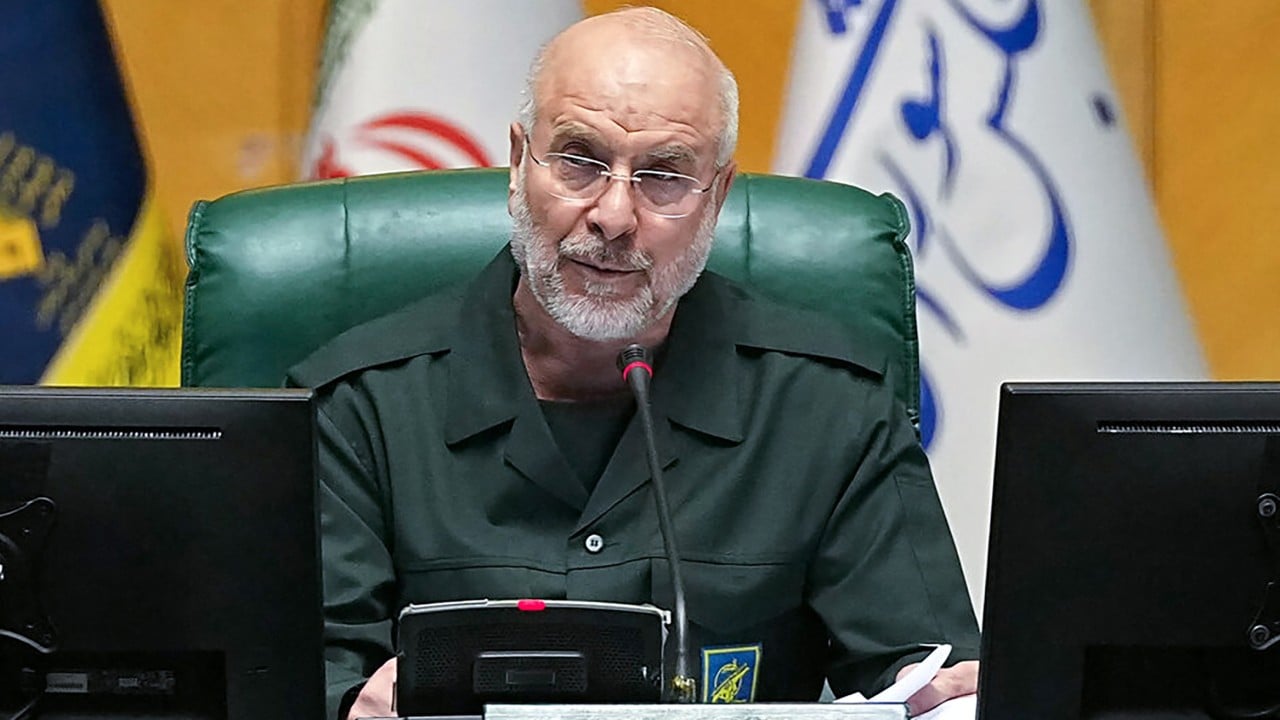
Iran has again pointed out the potential role of China in ending its “neither war nor peace” impasse with the United States and pledged concrete steps to deepen ties with Beijing ahead of an expected in-person meeting between Chinese and American leaders next week.
Tehran has underscored its growing reliance on Beijing as Washington doubles down on economic sanctions, according to experts who note that China’s role is, and will remain, significant in regional diplomacy.
Iran’s parliament speaker Mohammad Bagher Ghalibaf highlighted China’s potential for easing regional tensions, stating that Beijing’s diplomatic initiatives could foster stability and shape a new regional order.
01:01
Houthi attack on Saudi airport kills 12, injures hundreds
“China’s role in ending the war and the situation of ‘neither war nor peace’ is significant,” he said in an article published on Tuesday.
Ghalibaf, who in April led Iran’s delegation in the first US peace talks in decades and became the country’s special envoy to China the following month, said Iran’s supreme leader had issued detailed instructions, rather than broad recommendations, concerning ties with Beijing.
Tehran also planned to establish a high-level body to oversee cooperation and strategic coordination with Beijing, Ghalibaf said.
Jodie Wen, a fellow at Tsinghua University’s Centre for International Security and Strategy who specialises in the Middle East, said Tehran’s statement held Beijing up as a neutral mediator that maintained high-level dialogue with the US while preserving constructive ties with both Iran and Arab nations.
Wen said Ghalibaf’s remarks also sent a message to regional nations such as Oman and Saudi Arabia – which had borne the fallout of the US-Israel war on Iran and had increasingly ramped up high-level engagements with Beijing – that Iran held equal capacity for deep engagement with Beijing.
“Tehran doesn’t want Gulf states coordinating with Beijing while its own interests are sidelined,” she said.
“This is fundamentally a contest for voice and leverage. Under the circumstances, everyone wants a seat at the table rather than being on the menu.”
Wen said that while the move was not an all-in bet on China, Tehran knew it could not pin its hopes entirely on detente with the US. Deepening ties with Beijing would hedge against the fallout if negotiations with Washington ultimately collapsed, she said.
Ghalibaf’s statement came days after Beijing’s special envoy, Zhai Jun, visited Iran for in-depth talks with its leadership.
China’s foreign ministry said that during the visit, Zhai underscored the need for a peaceful resolution and respect for all nations’ sovereignty and security – a theme Beijing repeated during high-level talks with Saudi Arabia and Oman last week.
In its statement issued on Monday, the ministry said China was also willing to help countries build a new regional security architecture and promote long-term peace and stability.
Niu Xinchun, director of the China-Arab Research Institute at Ningxia University, viewed Ghalibaf’s remarks as a “natural response” to Washington’s mounting economic pressure on Iran.
“There is a prevailing view in the US that the success of economic sanctions against Iran hinges entirely on China, Iran’s largest trading partner,” Niu said.
“With Tehran’s economic and trade ties with the US, Europe and many Arab states now largely severed or severely disrupted, China’s importance to the Iranian economy has become all the more pronounced.”
In August, Washington launched what it termed an “economic onslaught” against Iran – pairing new sanctions with warnings to Tehran’s trading partners – and has since widened its scope to Iranian airlines and foreign firms servicing them.
Beijing has not followed suit, condemning the measures as “illegal unilateral sanctions” that are unauthorised by the UN Security Council.
Last week, Washington imposed fresh financial penalties on eight Canada-based money services firms for allegedly easing transactions with sanctioned Iranian entities.
Meanwhile, the US Central Command has announced its latest plan, dubbed “Iron Gate”, aimed at cutting off Iran’s land routes to move advanced weaponry and other technology. Coming on the heels of a decisive midterm rebuke of US President Donald Trump, the administration has framed the stepped-up campaign as a way of curbing Tehran while downplaying the likelihood of resuming military conflict.
Both Wen and Niu said China could play a role in regional diplomacy and that the expected summit between US and Chinese leaders during the Apec summit next week would have a positive impact on the Middle East conflict.
Wen said Beijing remained a “stabilising factor” in the situation, and talks between Trump and Chinese President Xi Jinping – which would be the duo’s third meeting this year – would “undoubtedly reduce strategic miscalculation” and foster de-escalation.
“If regional countries make substantial headway and ultimately need China to act as a guarantor, Beijing is willing to step up.”
02:53
US midterm elections: What the results mean for mainland China, Taiwan and foreign policy
Tehran was again looking to China and Russia to guarantee a deal with the US, non-state-affiliated outlet Iran Observer reported last week. Iran’s ambassador to China floated a similar idea in April.
Saudi broadcaster Al Hadath last month said a draft proposal by mediators called for the direct US–Iran talks to resume and an international enforcement mechanism to be explored, potentially with China as a guarantor.
But Niu said he remained sceptical of China’s ability to act as a guarantor and that enforcing compliance would be difficult if either side violated the agreement.
“If an all-out military conflict erupts between the United States and Iran, China can do very little; if negotiations get under way, however, Beijing can play a constructive role.
“Still, I do not see China taking the lead … Whether a deal can be reached ultimately hinges on Iran and the US.”
KioskNews shows a cleaned-up reading view extracted from the publisher’s page — the original always lives on their site, not ours.