Pasifika pride finds a home at Rugby League World Cup: ‘Passion brings us together’
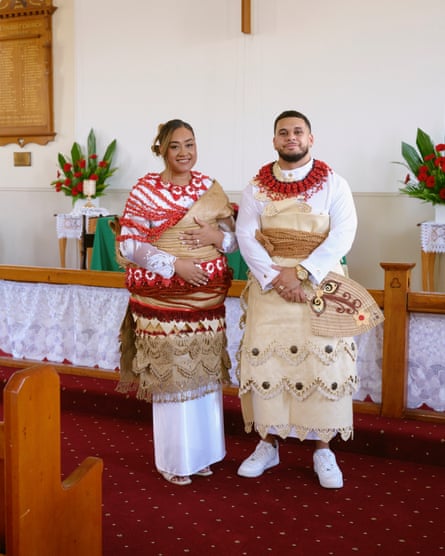
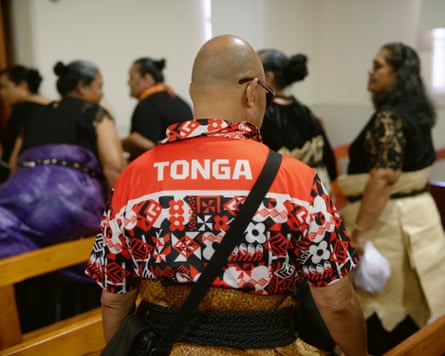
At Harold Wood Uniting Church in Auburn, Viliame and Talita Latu are the centre of attention. The local Tongan congregation, which revitalised the 116-year-old church building in 1997, is celebrating the couple’s first Sunday church service as husband and wife.
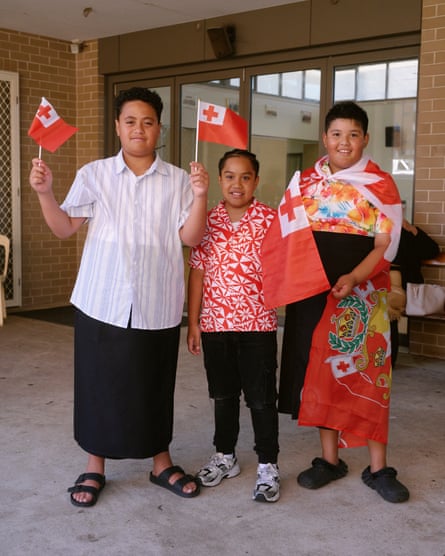
But the number of Tongan flags fluttering from cars outside show the pair aren’t the only thing on people’s minds this week. Tonga’s representative rugby league team, Mate Ma’a Tonga, handily beat Lebanon’s Cedars in front of more than 25,000 fans at Commbank Stadium in Parramatta the Friday before in the Rugby League World Cup. In a case of terrible timing, the match clashed with the couple’s wedding day.
“The game was on my wedding night! Made it hard for me to watch it,” says Viliame, who goes by Laka. “In the video of our wedding reception, there are going to be so many people watching the game on their phones,” Talita adds. “There was someone on their iPad, too.”
Despite the usual hand-wringing about blowout scorelines between wildly mismatched sides in the pool stage, this year’s World Cup has already produced enough unforgettable moments to lay claim to being the best ever. The tournament opener, where Australia pipped a ferocious New Zealand at the death 24-22, was a classic that sold out Allianz Stadium. A fast and courageous Fiji took the Kangaroos all the way, going down 36-22 in a result that flattered the defending champions. Tonga made history in their first Cup game, beating England for the first time.
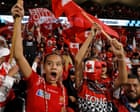
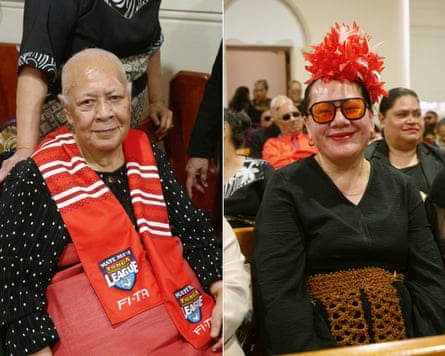
Even before the tournament kicked off, western Sydney had well and truly caught World Cup fever. Parramatta Road is a sea of Ford Raptors, delivery vans and garbage trucks bearing Tongan, Samoan, Fijian, Lebanese and New Zealand flags. Team jerseys and national colours are becoming part of the unofficial dress code at church services. Samoa and Penrith Panthers winger Brian To’o broke the internet the week the tournament began, ripping his shirt off and doing the splits onstage in front of thousands of Samoa supporters at a fan day in Mount Druitt.
Demand for tickets has been so great it has caught organisers flat-footed. A plan to move Sunday’s Tonga-Samoa blockbuster from Commbank to Accor Stadium at Olympic Park, which the NRL believes would have brought in 60,000 fans, was only unsuccessful because it would have clashed with pre-booked concerts.
Aisea Taufa, one of the congregation’s lay preachers, says plenty of congregants missed out.
“We tried to book [tickets for the Samoa game], but we were too late. It sold out two weeks ago,” he says.
Supporters who can’t get to games are flocking to off-field fan events instead. Rugby league legends of Lebanese heritage like Hazem El Masri, Tim Mannah and Josh Mansour led thousands of Cedars fans on a march through the Parramatta CBD before the Tonga game, complete with drums and a contingent of Tongan fans joining in the dabke. (“Pauline Hanson is in cardiac arrest [right now],” reads one of the top comments on the Cedars’ Instagram.)
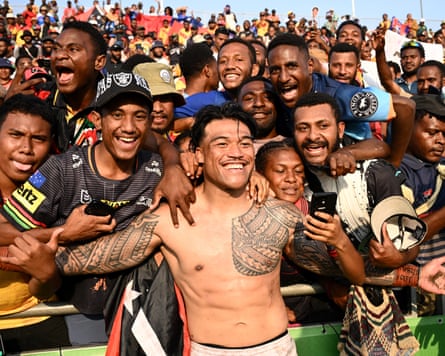
“When the fans marched to the stadium, they marched as a group. We didn’t let Lebanon march by themselves, we all went together,” Laka says. “That passion, it brings us together as a community.”
While Lebanon are yet to post a win (though hopes are high ahead of their meeting France on Sunday), their fanbase has been one of the most passionate of the entire tournament. Speaking to Triple M after the Tonga game, lock forward Jalal Bazzaz explained why.
after newsletter promotion
“Our little nation, we’ve been through a lot,” Bazzaz said. “To get out there with the boys, the brotherhood, and give a little hope to our little nation, it means the world to us.”
Tongan fans can take more bragging rights than most for this World Cup’s success. It was superstar North Queensland Cowboys forward Jason Taumalolo who breathed life back into international rugby league when he decided to represent Tonga rather than New Zealand at the 2017 tournament. While Taumalolo attracted plenty of criticism at the time, he and other Pasifika players who chose to represent their heritage rather than cashing paycheques from Australia or New Zealand kickstarted the Pacific-nation revolution that has made this year’s tournament so compelling.
“[Taumalolo] did that to inspire the younger generations who are coming through now,” says Laka. “He showed that it’s not all about the money. It’s about representing your home country, the place where your family’s from.”
Given Tonga and Samoa’s unbeaten runs, anticipation is at fever pitch ahead of their meeting on Sunday, with fans believing Australia’s decades-long dominance of the international game could be coming to an end.
“Tonga can go all the way,” Laka says. “Our defence against England was so solid. With halves like Isaiya Katoa, we can go all the way.”
“Here on Sunday, it’s gonna be red,” Taufa vows. “This week, we’re the Church of MMT.”
KioskNews shows a cleaned-up reading view extracted from the publisher’s page — the original always lives on their site, not ours.