Brian Dubiski: ‘Everything I do is about Madison. It’s a big reason I did this game at Wembley’
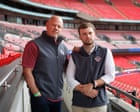
On Saturday afternoon, as he looks out at the crowd of 60,000 he has helped entice to Wembley Stadium, Brian Dubiski’s dream will become a reality. But, as Arizona State and Kansas make history by playing the first US college football game in Britain, Dubiski will think most of his daughter, Madison, who was crushed to death at the age of 23.
Madison and nine other people were trampled and suffocated by a crowd at a Travis Scott concert in Houston in November 2021. Dubiski now dedicates his life to keeping people safe at sporting events and concerts and, since December, Wembley is one of the stadiums that follows the protocols he introduced.
As the chairman, CEO and co-founder of Union Jack Classic, which has planned and organised Saturday’s game, Dubiski will sit in the Royal Box at Wembley. His memories of Madison will also be sparked by the sight of the cheerleaders for both teams – for his daughter also used to be a cheerleader.
“I think Madison would be extremely proud of our work,” Dubiski says on a tranquil morning in London. The powerfully built 57-year-old, who played college football for Texas Tech, pauses. “As much as I wake up every day trying to honour my daughter, while trying to ensure she did not lose her life in vain, it can overwhelm you. It’s a hard line to walk because, emotionally, I don’t think I’ll ever heal. But everything I do is about representing Madison. It’s a big reason I did this game at Wembley.”
Before we talk about college football, which is second only to the NFL as the most popular sport in the US, Dubiski revisits the terrible day of his daughter’s death. As the enthusiastic texts from Madison and her brother, Ty, lapsed into silence and local television began to report on trouble at the Astroworld festival hosted by Scott, Dubiski remembers his “really bad feeling”.
After thousands of ticketless fans stormed the gates and the crowd surged towards the stage, Madison and Ty were separated and, without any coherent safety procedures in place, nearly 5,000 people were injured.
When news reached Dubiski he raced to the hospital where his daughter had been taken. He stumbled into a catastrophe: “I could hear Madison’s mother, Michelle, screaming. Your stomach sinks and your heart breaks and it’s like a slow-motion black-and-white horror movie, walking through the hospital halls at 2am. I remember the doctor looking up at me and just shaking his head. My knees buckled and I fell.”
I have already met his hugely likable son, Ty, who survived the tragedy and is now working alongside him on Saturday’s game. But in a quiet office Dubiski shudders: “Ty walks in and all he could hear was me screaming ‘no’ in this horrible, deep cry. He knew what it meant before he even saw us in the room where Madison was covered in a white sheet.
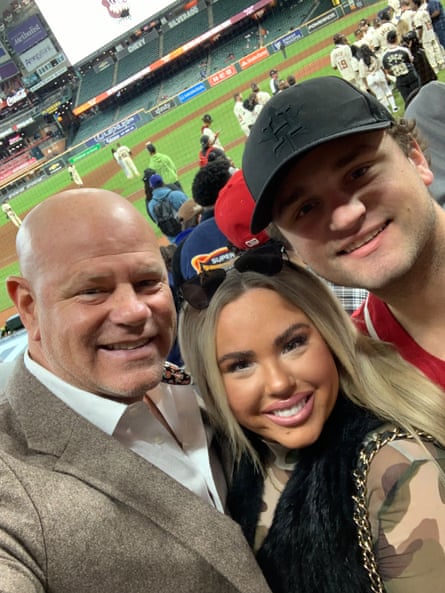
“ Ty walked up to her, upset and crying, apologising for not being able to help her. It’s a traumatic experience that will haunt us for ever.”
Dubiski still imagines the last minutes of Madison’s life. “Everyone rushed to the main stage when Travis Scott came out. It created a crowd crush and there’s nothing you can do in that situation. Ten people died and we need to be candid. The autopsy reports all say they died of compressive asphyxiation. But the coroner would not share the autopsy with me because he said I would never recover as a father if I looked at it that deeply.
“That’s a haunting thought, imagining what Madison went through and how, as a parent, I couldn’t help her, and how she must have been terrified.”
He explains: “There is a 1,600‑page report from the Houston police department and their conclusion states that all 10 deaths were preventable and what happened was foreseeable. My daughter, who I don’t ever get to see again, hug, kiss, see her laugh, walk her down the aisle when she gets married, be a grandfather to her children, is gone because the safety protocols were not dealt with properly.”
The concert promoters paid undisclosed amounts to settle the legal cases brought by the families, but Dubiski says: “I was upset the city of Houston, and the state [of Texas], didn’t do more. But we’re working with a lot of those entities now to help prevent another occurrence.”
Rather than surrendering to grief, Dubiski developed his Showstop Procedure course. It helps stadiums control crowds safely through a certified framework that enhances critical decision-making at dangerous flashpoints. “Our training covers much more than just crowd crush – it could be fire, terrorism, the weather, anything that puts people at risk.
“When we began we were floored there was no formalised training and education specific to crowd safety. That’s why we developed our course and created the certification, which we got approved through the International Institute of Risk & Safety Management. It’s the only globally accredited course that deals with this specific issue.”
Apart from Wembley Stadium adopting Showstop’s protocols, Dubiski and his team are working with Celtic, Manchester City and Southampton to improve their safety measures.
The family also set up the Pink Bows Foundation in honour of Madison and he says: “The first pillar is crowd safety, while the second is our creation of a safe space at an event when you’re overwhelmed or anxious in a crowd. We have a big bright-pink tent with really nice furniture inside. It’s serene and we have mental health behavioural advocates ready to help anyone.”
after newsletter promotion
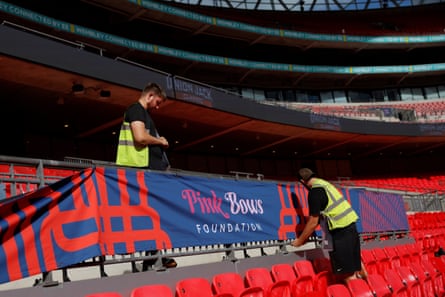
As he reflects on the foundation being called Pink Bows, Dubiski offers a tangled smile: “Madison loved pink. After the tragedy someone put a pink bow up for Madison on the fence and it just grew. Other people began putting pink bows out in an area where people brought candles and flowers, not just for Madison, but for the other nine souls that were lost. All of a sudden, people began putting pink bows on their doors and trees across Houston.
“Everyone was appalled and distraught. When the pink bows went viral across the United States it gave us a bit of hope, in a really dark place, and we created the foundation.”
Wembley and Dubiski’s company have struck a three‑year deal, with the option of a fourth year, if the Union Jack Classic games are the expected success. Looking ahead to the inaugural game, Dubiski describes Arizona State as “a great football team” while “Kansas has played football as long as any university collegiate football team in the United States, for over a hundred years”.
Dubiski believes “college football correlates very closely to European football, with that tribalism where you are born into the club your grandfather rooted for. It’s the same in college football. You live and die by your team. If you win, it’s a celebration. If you lose, you lay in bed and feel sorry for yourself. The partisan crowds separate it from the NFL and some college football stadiums are bigger than NFL stadiums.”
Fifteen thousand fans are flying in from America and Dubiski stresses that “college football is ready to be shared with the rest of the world”.
But the effect of his daughter remains and Dubiski looks up as he remembers how “when we finally went into Madison’s apartment after months, we found a note left on the counter. It said: ‘Those who do well must also do good … always give back.’”
Days away from a milestone in college football, which he has engineered, Dubiski speaks softly now: “My life has changed for ever and I don’t know how to get it back. Everyone deals with trauma and loss differently and there are lots of days where I don’t want to do this. It’s been thrust upon me and I have an obligation to my daughter. But I often say, if the roles were reversed, Madison would use her voice until somebody listened to her advocating for change.
“The game itself has been great for me because there were points after this happened where you question your existence. Your soul is shattered. But the foundation has been a good platform for our family to fall back on and really make a difference in a positive way. It’s a way for us to honour Madison and also feel like we’re keeping people safe.”
-
For more information on the Pink Bows Foundation visit https://pinkbowsfoundation.org
KioskNews shows a cleaned-up reading view extracted from the publisher’s page — the original always lives on their site, not ours.