Prabowo accuses MSCI of trying to intimidate Indonesia after market rout
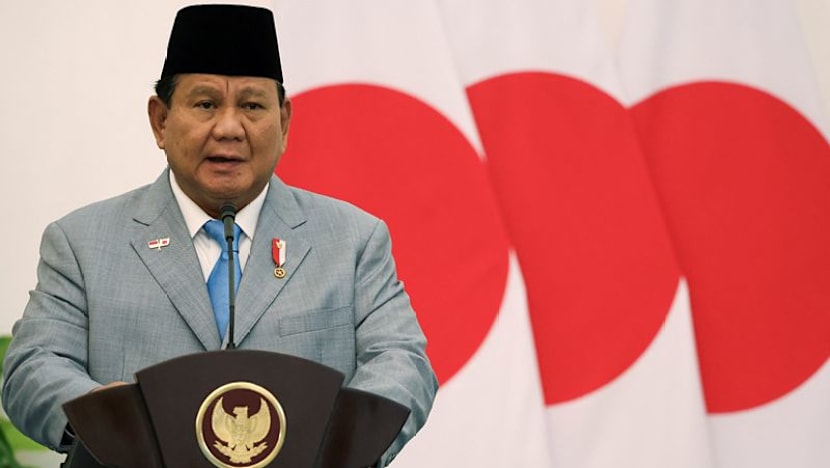
MSCI warned last week it was considering demoting Indonesia's equities to "standalone" market status, triggering a record-breaking market rout.
21 Oct 2026 07:54PM (Updated: 21 Oct 2026 07:55PM)
JAKARTA: Global index provider MSCI was trying to "intimidate" Indonesia but the country would not be afraid, President Prabowo Subianto told his Cabinet on Wednesday (Oct 21), striking a combative tone in his first public reaction to last week's downgrade warning.
MSCI ratcheted up the pressure on Jakarta by announcing that it could demote Indonesia's equities to "standalone" market status, claiming the country had not done enough to crack down on coordinated trading practices in its stock market.
The surprise announcement triggered a record-breaking two-day stock market rout, with a downgrade threatening to cause massive capital flight and cut the US$1.5 trillion G20 economy off from major emerging market index flows.
"The MSCI ... intended to intimidate us," Prabowo told a gathering of his Cabinet that was broadcast on the government's official YouTube channel.
"I simply say to the MSCI: the Indonesian nation fears no one and will not be cowed," he continued, adding: "We possess strength, we have courage, we are willing to make sacrifices, and we refuse to surrender."
MSCI, in an emailed reply to a request for comment, said that its decisions follow transparent and rules-based methodologies.
"MSCI will continue to monitor developments in the Indonesian market and engage with market participants and authorities," it said.
Prabowo, a former special forces commander, has often used strongly nationalist language since coming to power in 2024, suggesting foreign powers were determined to destabilise Indonesia, the world's largest Muslim majority country and a global commodities powerhouse.
His speech on Wednesday also made reference to outside interference in Indonesia, though he did not elaborate.
Other senior Indonesian political figures have also reacted strongly to MSCI's warning.
On Tuesday, former Indonesian trade minister Muhammad Lutfi claimed on his Instagram account that Singapore state investors Temasek and GIC were involved in pressuring MSCI to issue the warning to Indonesia.
GIC and Temasek have rejected the allegations.
"The allegations about GIC and our staff are untrue," a GIC spokesperson told CNA in a statement.
GIC said its investment decisions are not driven by index classifications or top-down views of a market. Instead, it looks at the fundamentals at a company level or asset level.
"We have been invested in Indonesia for over 30 years across asset classes and will continue to invest where we find good, bottom-up, risk-adjusted opportunities," said GIC.
Separately, Mr Fock Wai Hoong, Temasek Global Investments' head of Asia Pacific (excluding China and India), said at a press conference on Wednesday that the allegations by the former Indonesian minister are baseless.
"No one from Temasek, neither the institution nor the individuals working for the institution, have ever reached out to MSCI in order to influence any decisions they have ever made around any exchange across the region," he said, describing the claims as "patently untrue".
Last week, senior economic minister Airlangga Hartarto also said there was "a big question mark" over why MSCI had not discussed the possible downgrade during meetings with Indonesian officials in Bangkok just days before.
Hanif Dhakiri of the National Awakening Party, who sits on the parliamentary committee overseeing finance affairs, demanded that MSCI's methodology be transparent, objective and consistently applied across countries.
"We should not be defensive in the face of criticism, but neither should we accept judgements without examining their basis and objectivity," he told Reuters.
Said Abdullah, a lawmaker from the opposition PDI-P party, said on Sunday Indonesia should take MSCI's concerns seriously, but argued that the index provider's judgements should not be beyond scrutiny.
"MSCI's executives are not prophets delivering divine revelations, like apostles writing sacred texts, who can claim a monopoly on flawless truth," Said added.
KioskNews shows a cleaned-up reading view extracted from the publisher’s page — the original always lives on their site, not ours.