Travel: Traveling eastern Taiwan in style
With fine dining, mountain views and a cultural stop in Yuli, the Shanlan turns a railway journey into the destination itself
By Tyler Cottenie / Contributing Reporter


For most train journeys, where you are going is the main consideration. On the Shanlan train (山嵐號) in eastern Taiwan, however, it’s not the “where” but the “how” that matters.
On this pricey but meticulously crafted train journey running between Hualien and Taitung County’s Chihshang (池上), what you’re paying for isn’t to get from Point A to Point B, but rather a sensory, aesthetic and cultural experience.
On the platform, the train stands out vividly next to the other Taiwan Railway carriages. Its exterior is painted in a yellow-green gradient intended to blend harmoniously with the ripening rice paddies of the East Rift Valley floor and the mountains rising up on either side.
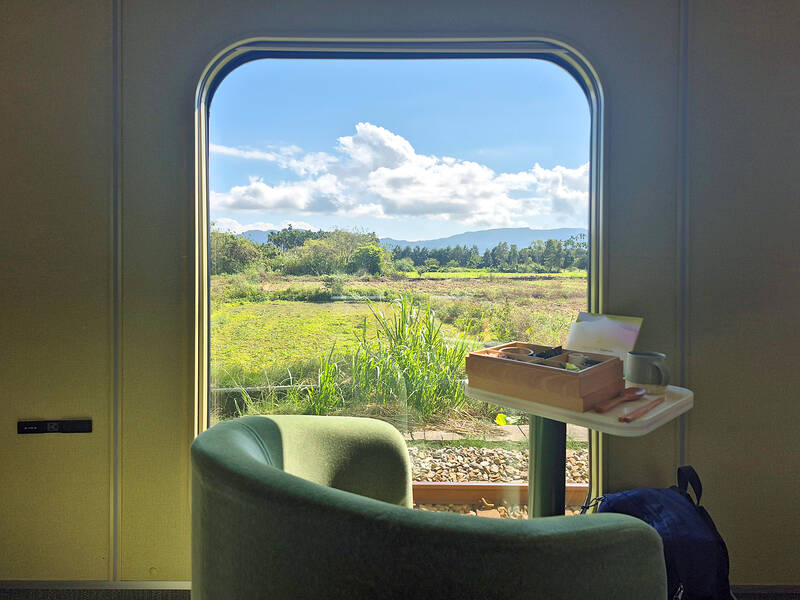
Large windows give passengers a fantastic view of the passing scenery.
Photo: Tyler Cottenie
Stepping on board, I was met with the faint aroma of sandalwood and an interior with a gentle yellow-green color palette to match the exterior. Textured flooring and walls combined with indirect lighting give everything a soft appearance, while the swivel seats are upholstered in a soft green velvet. Large windows beside each seat give each passenger an excellent view of the passing scenery.
The first stop was at Shoufeng Station (壽豐), where we could get out for a few minutes, cross the road, and get a good look at the train on the elevated platform perfectly framed with the Central Mountains in the background, mirroring the plastic Shanlan train ticket.
After boarding the train again, we continued south toward Yuli (玉里), still an hour away. In the meantime, it was time for what could be called the main event of the journey: lunch.
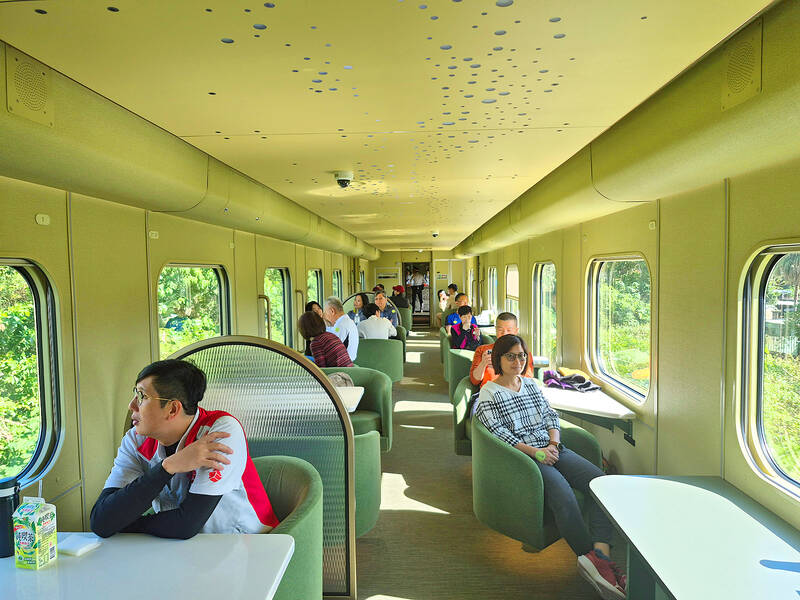
Shanlan’s interior is decorated in a soft, soothing green color palette.
Photo: Tyler Cottenie
THE DINING EXPERIENCE
The dining experience is undoubtedly one of the highlights of a trip on Shanlan. Though the lunch is served in a wooden box like the traditional Taiwan Railway lunchbox, the similarity ends there. Great effort has been made to make the experience feel like fine dining in a high-end restaurant, from the ambiance to the service to the quality of the ingredients.
Every passenger has a wide, sturdy tabletop on which to place their food. Meals are served from a meal cart by carefully trained wait staff and accompanied by a freshly poured hot beverage in a sturdy stoneware mug that blends harmoniously with the train’s interior. Wooden utensils are presented in a cloth pouch and can be taken home as a souvenir.
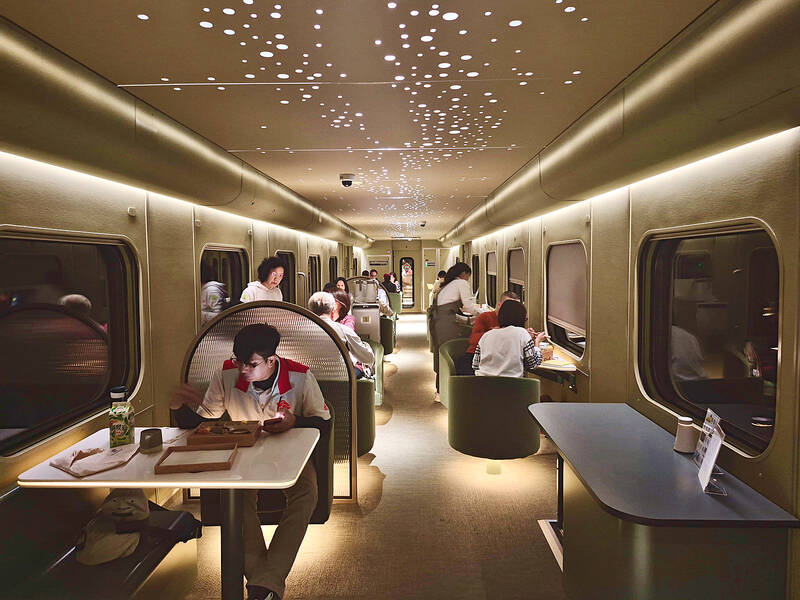
The train changes lighting when it enters a tunnel.
Photo: Tyler Cottenie
The presentation of the food in its wooden lunchbox is a work of art. The carefully selected culinary color palette, accented by delicate garnishes and aesthetic ceramic serving dishes, is sure to spur on your appetite.
About 10 minutes into the meal service, the train enters a series of tunnels and another design feature of the train comes to light, quite literally. Small holes spaced throughout the ceiling light up and transform the dark journey through the railway tunnel into a whimsical starry-night experience. It is this attention to detail in both the environment and the passenger experience that makes Shanlan such a unique ride.
And so, with views of the rice paddies and forested peaks of the East Rift Valley alternating with the artificial stars of the tunnel sections, the train rolls onward to Yuli as passengers enjoy their meals. Ingredients are locally sourced from Hualien and Taitung where possible: taro, seafood, tea, red quinoa and Chihshang rice are all featured on the current menu. Abai — leaf-wrapped millet dumplings common in southern Taiwanese indigenous cuisine — also make an appearance.
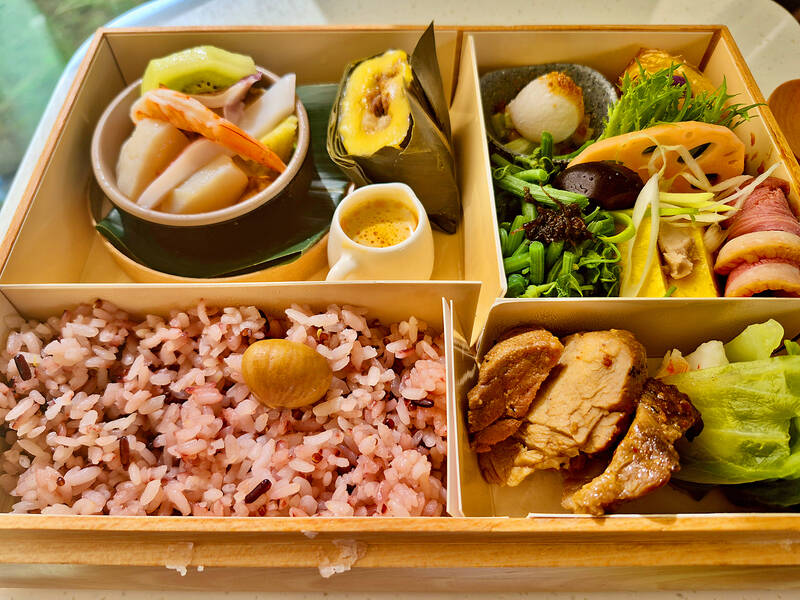
Lunch on board the Shanlan.
Photo: Tyler Cottenie
An experience on Shanlan is designed to immerse passengers in the natural and cultural world of eastern Taiwan. This extends beyond the colorful exterior of the train, the panoramic views and the local cuisine, to the cultural tour at the journey’s longest stop, in Yuli.
THE CULTURAL HEART OF THE TOUR
A local tour guide was waiting just outside Yuli Station to take Shanlan passengers on a walking tour of the town, explaining some of the history of local culture, industry, businesses and buildings along the way. Passengers are free to leave the tour and explore the town on their own if they wish, with strict instructions to return to the station before the departure time. The northbound Shanlan makes its long stop at Fuli (富里) instead of Yuli.
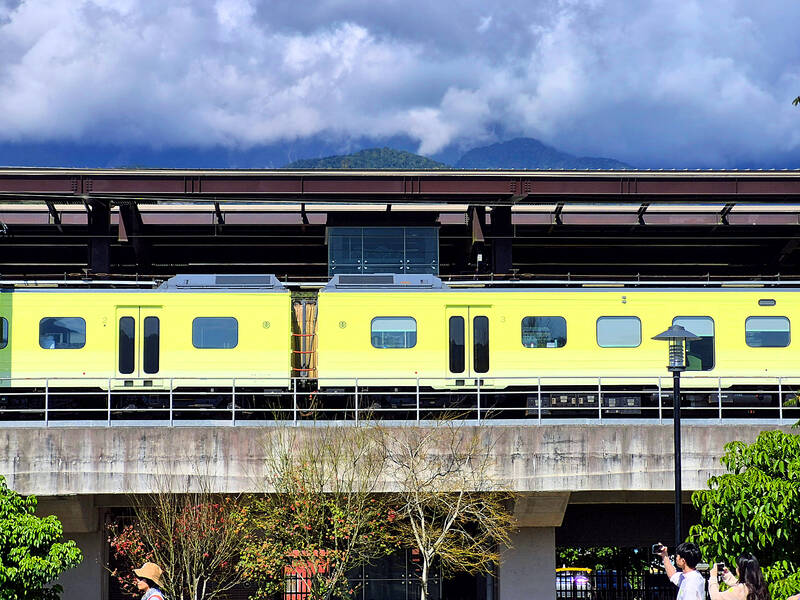
The train’s gorgeous yellow exterior contrasts with the Central Mountain Range behind it at Shoufeng Station.
Photo: Tyler Cottenie
If you can understand Chinese, the Lion Travel local tours on the tourist trains are worth following, and they usually leave you a few minutes for exploring on your own at the end. If you cannot understand Chinese, however, you’re better off just walking around on your own for an hour.
I stayed with the tour long enough to learn about the former theater building that is now a Poya store, and then set out on my own to find Yuli’s most sought-after stinky tofu. Every time I had passed through Yuli before, the vendor wasn’t operating at that time of day, but this time it was open and I was feeling lucky. Unfortunately, it was a weekend and the queue was about 45 minutes long, so yet again my plan to try this food was foiled.
As a consolation, however, I was treated to other local delicacies from Yuli after getting back on the train. During this final 40-minute leg to Chishang, three gorgeous Japanese-style desserts on a deep-green stone platter were served to each passenger. They are creations of The Town Studio (九日良田) in Yuli, which sources ingredients from local producers.
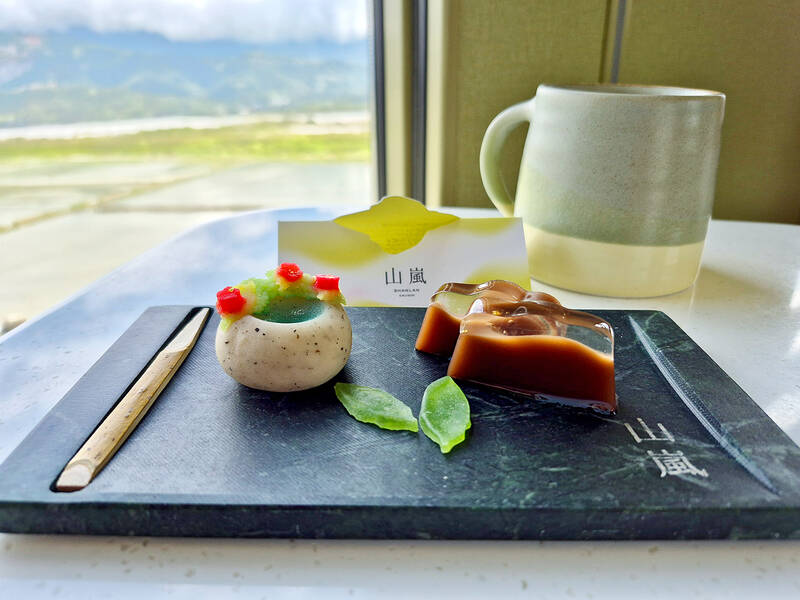
The trip ends with exquisite desserts sourced locally.
Photo: Tyler Cottenie
A SWEET ENDING
There was a round namagashi adorned with tiny red candy flowers, two green crystal candies with a crunchy exterior and jelly interior, and two yokan (a gelatinous block made of red bean, agar and sugar and a frequent souvenir bought in Yuli). I missed the significance of the namagashi, but the leaf-shaped jelly candies clearly represented the forested hills on both sides of the East Rift Valley, while the yokan were shaped like a row of mountains, a miniature version of the Central Mountain Range passing by outside the windows on the west side of the train, and a reproduction of the shape of the Shanlan train ticket.
When I noticed the speck of gold leaf buried inside the transparent layer at the top, I immediately thought of the Dutch coming to eastern Taiwan looking for gold in the mountains in the 17th century, and the abandoned gold mining projects of the 20th century. Whether this was an intentional nod to the trace amounts of gold in Taiwan’s mountains or just a bit of decorative flair, I’m still not sure.
Admiring these creative desserts as the cloud-shrouded mountains and verdant rice paddies rolled by outside my window was as enjoyable as actually eating them, which I did only reluctantly, as it seemed a pity to destroy these works of art.
After dessert and another cup of local tea, the train pulled into Chihshang and we disembarked. The train would make the return journey to Hualien about an hour later with a new cohort of passengers. There was still quite a bit of time left in the day and I used it to rent a bicycle and follow the tourist route around a nearby lake and among the rice paddies. There is a lot to do with a half-day in Chihshang, making it a cleverly chosen end point for the Shanlan.
For your information
IF YOU GO
>> Shanlan runs Thursday to Sunday, leaving Hualien in the morning and returning in the late afternoon. Tickets are one-way and cost NT$3,900. In the summer, the train runs between Tainan and Changhua, but try to go in the winter as the rift valley scenery is much better. Only a few spots remain from now until the end of December, so book soon. >> Shanlan tickets can be booked online directly through Lion Travel’s Web site (Chinese only) at https://event.liontravel.com/zh-tw/railtour/shanlan. For English booking service, try asking through Lion Travel’s English service page at https://www.liondomestic.com/en-us/railtour-planning or visit a Lion Travel office in person.
KioskNews shows a cleaned-up reading view extracted from the publisher’s page — the original always lives on their site, not ours.