In the hypersonic arms race, North and South Korea are now arguing over soot
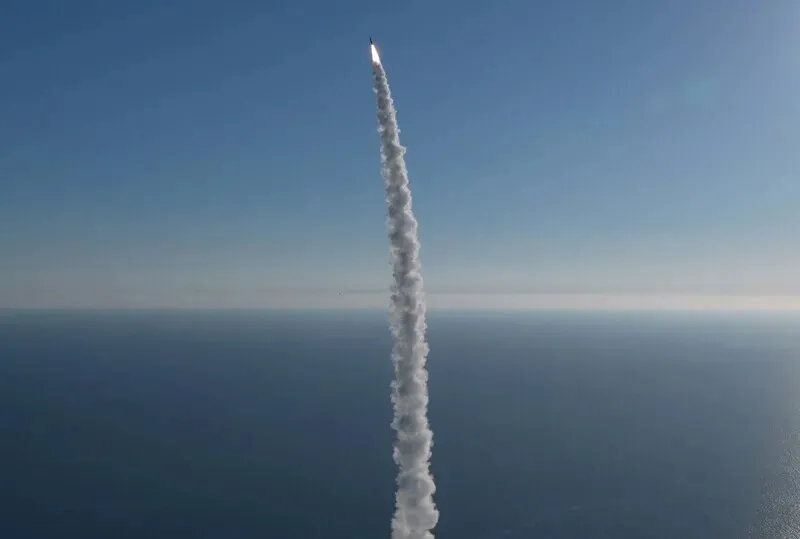
An image of the first test launch of South Korea’s homegrown hypersonic glide vehicle on Oct. 8, 2026, released by the Blue House on Oct. 9. (courtesy Blue House)
As South and North Korea race to develop hypersonic missiles, the two sides have become embroiled in an unusual technical dispute over whether extreme heat causes soot to form on the exterior of a hypersonic glide vehicle, a weapon widely seen as a potential game changer in modern warfare.
It is highly unusual for the two Koreas to spar over each other's technical know-how at a specific stage of weapons development.
A bilateral exchange Sunday over Seoul’s recent launch of such a missile showed a switch in roles, as Pyongyang previously would brag about its technical achievements after a missile launch and Seoul would counter by calling them "deception and exaggeration."
Jang Chang-ha, the head of the North's Missile Administration, on Thursday said photos showing no soot on the exterior of a hypersonic missile South Korea launched "may serve as evidence proving that the gliding vehicle failed to make a hypersonic flight, contrary to the ROK’s announcement.”
His argument was that if a projectile glides in the atmosphere at speeds of Mach 5 or greater in going up and down and left and right, the resulting air friction generates extreme heat of 1,000-2,000 degrees Celsius on the surface, which should leave scorch marks on the exterior.
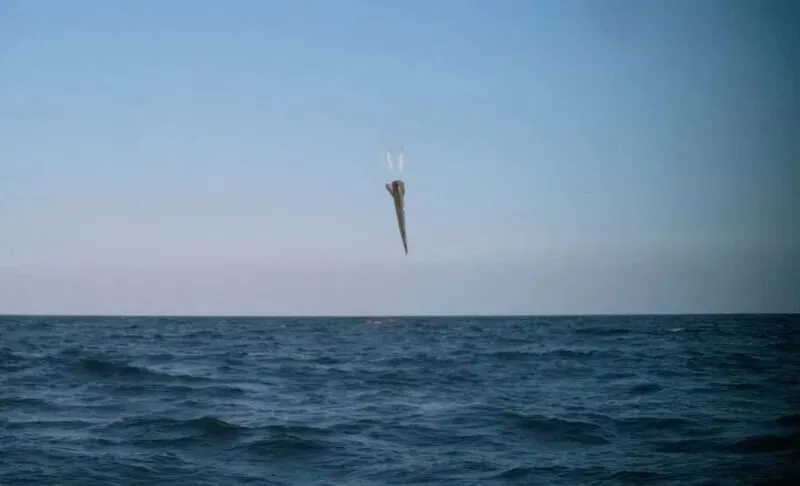
An image of the first test launch of South Korea’s homegrown hypersonic glide vehicle on Oct. 8, 2026, released by the Blue House on Oct. 9. (courtesy Blue House)
On Oct. 8, Seoul announced its first test launch of a homegrown hypersonic missile and released photographs of it the next day.
An official from the Ministry of National Defense in Seoul on Friday morning denied the North's claim.
"The projectile featured a robust structural design based on domestically developed materials with outstanding heat resistance, demonstrating thermal protection performance without charring even in a hypersonic environment. That's technical capability,” they said.
Later that evening, Kim Jong-sik, the first vice director of munitions of the Central Committee of the North's Workers' Party, in a statement ridiculed the rebuttal. "The South Korean Ministry of National Defense's rebuttal that 'it's technology' is so far-fetched as to be embarrassing, something no country’s technical community would find convincing."
This unusual response from Pyongyang appears intended to showcase its technical achievements while justifying its development of advanced weaponry.
The North's Korean Central News Agency on Saturday said that after the test-launch of a submarine-launched strategic cruise missile three days earlier, Pyongyang conducted a live-fire test Thursday of Zam 2.0, a new, ultra-high-speed torpedo weapon system with precision guidance equipped with artificial intelligence.
By Kwon Hyuk-chul, staff reporter; Park Min-hee, senior staff writer
KioskNews shows a cleaned-up reading view extracted from the publisher’s page — the original always lives on their site, not ours.