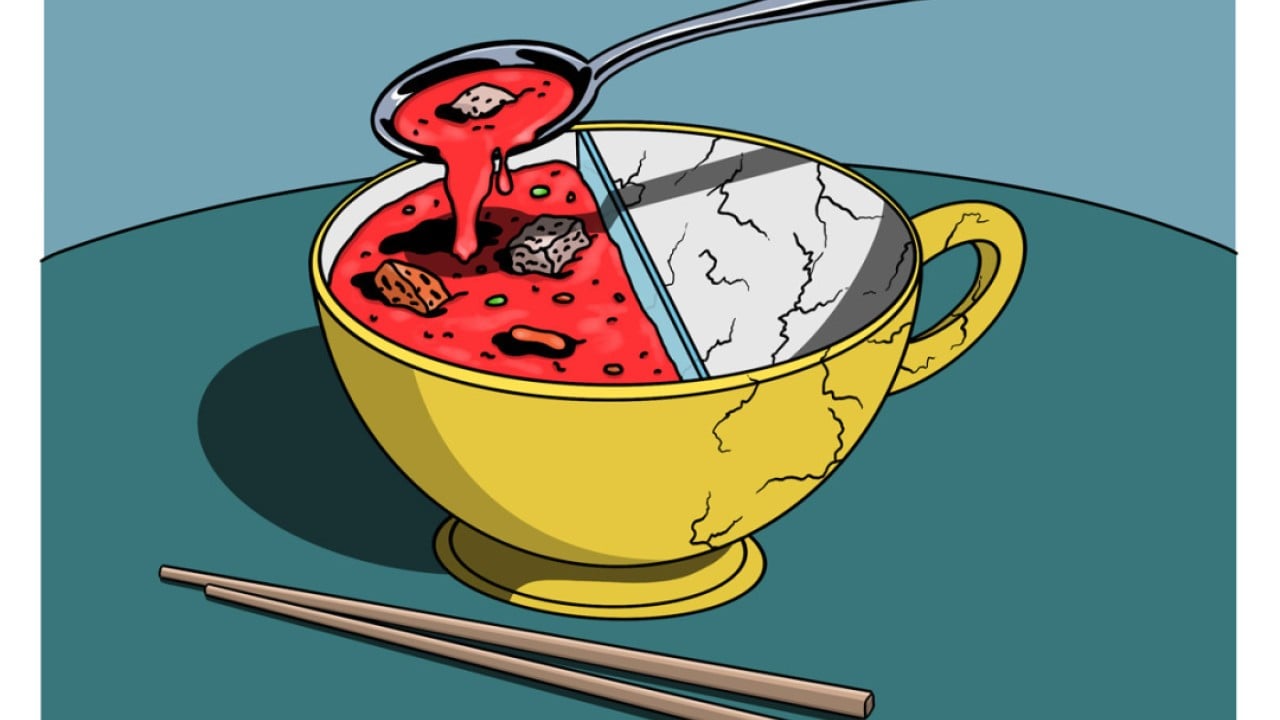
Does Hong Kong’s economy serve the people or profit?
China has lifted nearly 800 million people out of extreme poverty, arguably the greatest achievement in poverty reduction in human history. Even so, no mainland Chinese economist has won the Nobel Prize in Economic Sciences.
Across the Pacific, the United States has produced about 75 per cent of Nobel economics laureates, even as its economy staggers under mounting public debt, chronic fiscal deficits, and recurring financial crises and government shutdowns.
Of the 99 economics laureates ever awarded, only two are from Asia. Amartya Sen was honoured for his contribution to welfare economics and Abhijit Banerjee for his work in alleviating global poverty. Both are from India, not China. Why such an anomaly?
The short answer strikes at the heart of the matter: economics in the West and economics in China serve different purposes and recognise different kinds of achievements.
Western economics serves capital and the capitalist system, emphasising market forces, efficiency, productivity and gross domestic product (GDP) growth. The Nobel economics tradition, which is rooted in Western academic institutions, has largely recognised contributions developed within that intellectual framework.
In China, economics is proudly ideology-driven. It integrates the planned economy with the socialist market economy, where state enterprises and private enterprises compete and complement one another.
For Hong Kong, practising a capitalist economy under the “one country, two systems” framework and increasingly integrating its development with national development, the anomaly raises a question more consequential than who wins a Nobel: what is Hong Kong’s economy ultimately for, and whom does it serve?
11:08
‘Paradise’ for the rich, hell for the poor’: mansions and cage homes reflect Hong Kong disparity
Consider electricity, which is an essential service. Hong Kong’s two power companies operate under government-negotiated schemes of control, which permit a return of 8 per cent on their average net fixed assets. The larger the asset base, the greater the permitted return. All other factors – such as inflation rates, wage movements, general economic conditions and household affordability – don’t even enter the equation.
Even fuel cost risks are passed on to consumers through fuel cost adjustments. It is a profit-guaranteed scheme based on a single variable: capital assets. This is the purest form of economic policy serving capital rather than the people.
Many would argue that economics shouldn’t be viewed through the dichotomy of lifting GDP or lifting livelihood. The benefits of GDP growth will trickle down to the people, they say.
If only it were that simple. Hong Kong is extraordinarily wealthy on paper. The UBS Global Wealth Report 2026 places Hong Kong’s average wealth per adult at just under US$650,000 (HK$5.1 million), the fourth highest in the world. By that measure, an average two-adult household would hold more than HK$10 million in wealth. Hong Kong should be overflowing with prosperity and happiness.
Averages can conceal more than they reveal, though. Put a multimillionaire and a struggling tenant together, and their average wealth looks impressive. As a study from June noted, Hong Kong is the world’s most unequal society in terms of wealth distribution. That explains the gulf between statistical prosperity and the everyday hardships Hong Kong people experience.
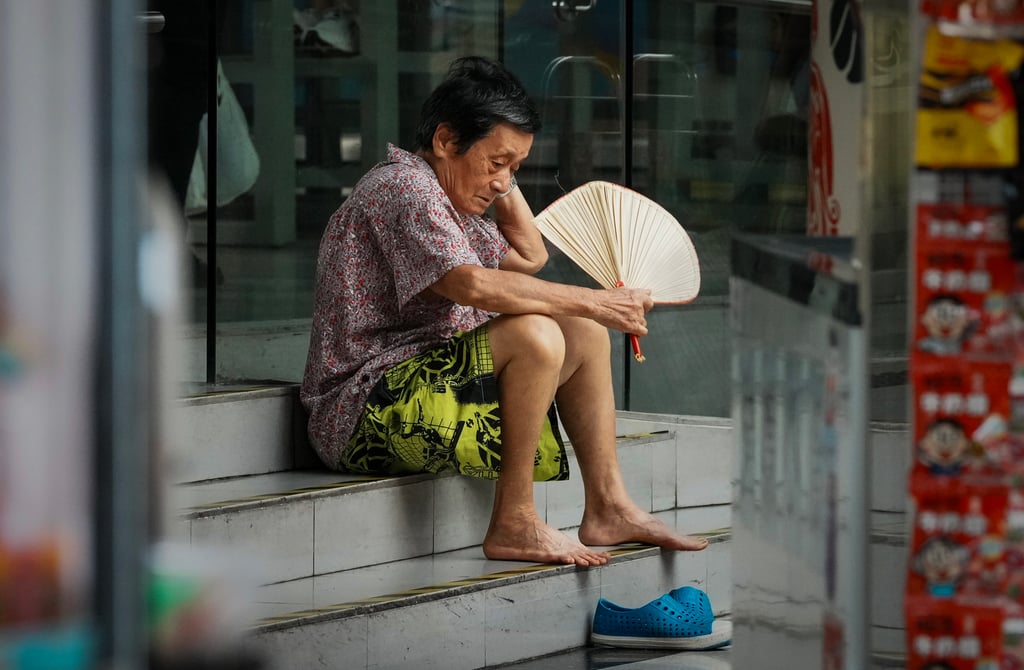
Picture a familiar Hong Kong summer scene. Why are our shopping centres always so crowded, particularly in summer, even when people are not shopping? The answer is that many people living in cramped accommodation are reluctant to turn on the air conditioner because of the high electricity bills, so they stroll through air-conditioned malls, enjoying free air conditioning while clocking up their 10,000 steps.
Comfort, exercise, thrift – all in one outing. This is our Lion Rock spirit: finding happiness amid hardship. However, this celebrated Hong Kong spirit is no excuse for policymakers to leave our citizens struggling in hardship.
Housing offers another telling example. We are told that property prices are determined by supply and demand, and Hong Kong’s land shortage makes exorbitant prices inevitable.
Is land really the issue? Roughly three-quarters of Hong Kong’s land remains undeveloped. Singapore has about only two-thirds of Hong Kong’s land area and roughly four-fifths of our population, yet close to 80 per cent of households live in government housing that is more spacious and affordable than Hong Kong’s dwellings.
The difference between Singapore and Hong Kong is not land but government policy. Hong Kong’s history makes this clear. When property prices plunged amid the Asian financial crisis, the government suspended scheduled land sales and halted new Home Ownership Scheme sales to prop up property prices.
Such resolute policy is rarely seen in Hong Kong, and it worked. Property prices rebounded. But even when property prices returned to reasonable levels, the city government did not interfere and instead chose to let property prices keep rising until they were beyond the reach of most.
The real issue is that government policies – on land, housing and many other aspects – serve capital, not people. The same question of whom economic policies serve illuminates the contrast between Chinese and Western approaches to development.
China’s high-speed rail network delivers public benefits through connectivity, mobility, productivity and national development. The US has abundant capital and technological expertise, yet it hasn’t built a comparable network. US capital flows to AI companies in the hope of ever-greater profits. It does not flow to infrastructure, the huge benefits of which would diffuse across the community rather than to investors.
China does not need a Nobel Prize to validate its economic miracle. However, the Hong Kong government seems to need a Nobel laureate economist to remind it that markets are tools rather than masters, that GDP measures output instead of human well-being and that the economy exists to serve the people, not the other way round.
KioskNews shows a cleaned-up reading view extracted from the publisher’s page — the original always lives on their site, not ours.