OPINION: One emblem, one flag, eleven stalks: A Community of Eleven
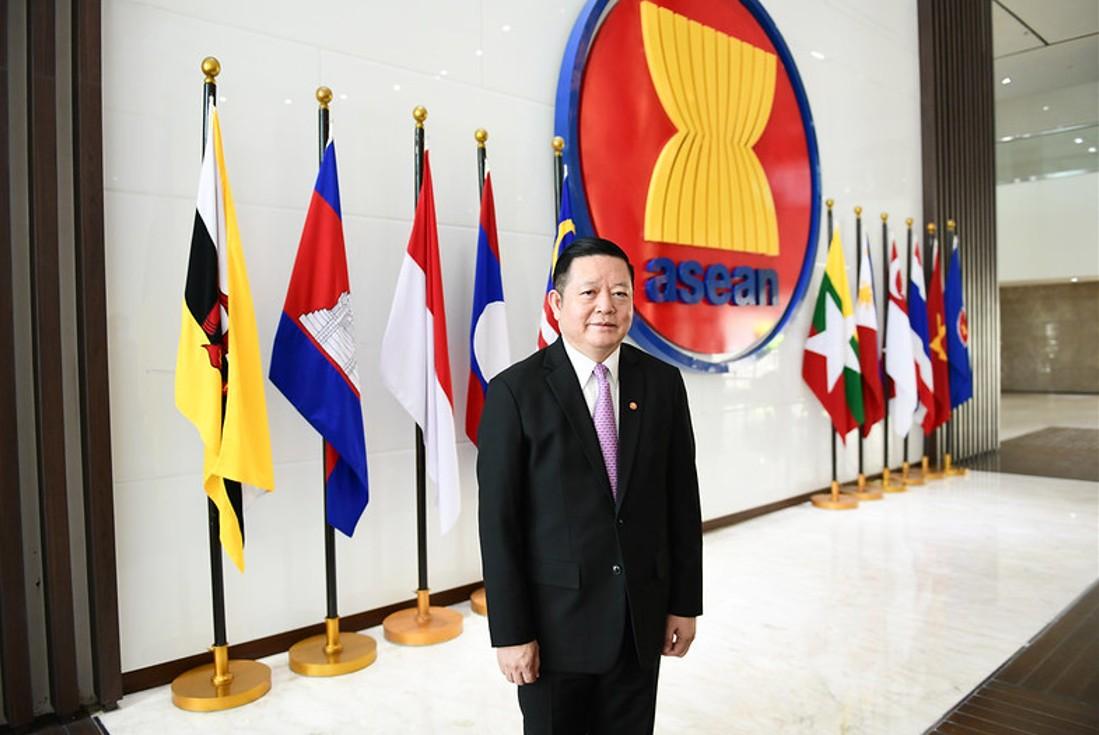
1. On 8 August 1967, the Foreign Ministers of Indonesia, Malaysia, the Philippines, Singapore and Thailand gathered in Bangkok and signed the Declaration that established the Association of Southeast Asian Nations (ASEAN). The Founding Members envisioned ASEAN as the collective will of the nations of Southeast Asia, expressed through joint efforts, mutual respect and friendship in the service of their peoples. ASEAN was sought out to be the foundation that strengthens regional solidarity, cooperation and equality by implementing a framework based on the ideals of peace, freedom, social justice and economic well-being. As a region that is long shaped by colonial histories, Cold War tensions and diverse national trajectories, the Founding Members understood that such a framework required not only institutional arrangements but also a shared symbol that could embody the ASEAN spirit: a stable, peaceful, united and dynamic Southeast Asia grounded in equality and cooperation.
2. The ASEAN Emblem was designed to reflect that aspiration. Its colours are drawn from the principal colours of the Member States’ crests: blue represents peace and stability, red courage and dynamism, white purity, and yellow prosperity. At its centre, the stalks of paddy represent the staple crop that sustains the peoples of the region, the Member States themselves, and the bonds of friendship and solidarity that unite them. These elements are enclosed within a circle signifying ASEAN unity. The design was never intended as mere decoration. It was meant to be a symbol and a living reminder that regional cooperation is rooted in the everyday realities of Southeast Asian societies and that the Association’s strength lies in sovereign states voluntarily working together for common purposes.
3. That vision of a community embracing all of Southeast Asia has guided ASEAN’s growth over nearly six decades. Membership expanded gradually and deliberately, reflecting both new members' readiness and the Association’s commitment to consensus, mutual respect and friendly cooperation. On 26 October 2025, ASEAN formally welcomed the Democratic Republic of Timor-Leste as its eleventh Member State. Through the Cebu Protocol amending the ASEAN Charter, this accession completed the Community of Eleven that the Founding Fathers had long envisaged. With this historic step, the ASEAN Emblem and Flag were updated to reflect the new reality: eleven stalks of paddy, one for each Member State, held within a single circle of unity. The update marks not an end, but a fulfilment of the original aspiration that ASEAN should one day encompass all of Southeast Asia.
4. The updated Emblem represents more than a visual adjustment. It is a visible expression of an ASEAN that has grown into a Community of Eleven while remaining firmly anchored in the principles and aspirations of its founders. It affirms ASEAN’s continued capacity to evolve and remain inclusive without diluting the spirit that has sustained the Association for nearly six decades. The message is simple and clear yet profound: one emblem, one flag, eleven stalks of paddy. ASEAN’s identity has advanced, but its foundations remain unchanged. In an era when many regional organisations face questions of relevance and cohesion, the updated Emblem underscores that ASEAN’s strength continues to derive from its ability to enlarge its circle of membership while preserving the core principles of sovereignty, non-interference, consensus and mutual benefit.
5. A Community of Eleven brings both opportunity and responsibility. It creates a wider sphere of cooperation in trade, investment, tourism, connectivity, education, health, climate action and people-to-people exchanges. It offers greater opportunities for young people, businesses and communities to benefit from regional integration. It also reinforces the promise of “One Vision, One Identity, One Community”: a region in which every Member State has a place at the table and a stake in the common good. The three pillars of political-security cooperation, economic integration and socio-cultural development can now be more fully realised throughout Southeast Asia. For Timor-Leste, membership opens pathways to participate more deeply in, among others, ASEAN’s economic and connectivity initiatives, capacity-building programmes, regional mechanisms. For the existing Member States, it expands the Association’s geographic and demographic reach, enriching the diversity of perspectives that inform and advance ASEAN’s collective positions.
6. In an increasingly complex global landscape, ASEAN continues to serve as the driving force in managing Southeast Asia’s relations and cooperation with the wider world. Centrality is not an abstract claim; it is sustained through consistent regional solidarity and the peaceful settlement of differences and disputes. The Community of Eleven strengthens ASEAN’s ability to uphold this role, ensuring that the region remains the primary driver of community-building and cooperation in this part of the world. External partners increasingly look to ASEAN as a platform for engagement and cooperation because of its inclusive, open, consensus-based character. The admission of Timor-Leste as the new Member State further consolidates this role, demonstrating that the Association remains open to growth and transformation while remaining true to its founding vision and principles. It also reinforces ASEAN’s capacity to contribute constructively to broader regional architectures, from the East Asia Summit (EAS) to ASEAN-centred free trade arrangements.
7. As we approach ASEAN’s 60th anniversary and work towards the implementation of ASEAN 2045: Our Shared Future, the eleventh stalk of paddy reminds us of both continuity and purpose. It does not replace the past, but it builds upon it. It honours the aspirations of the Founding Members while advancing the region’s interests as it is today: broader, more diverse and more connected than at any point in ASEAN’s history. Vision 2045 sets out an ambitious pathway towards a resilient, innovative, dynamic and people-centred ASEAN. Realising that vision will require sustained concerted efforts to narrow development gaps, strengthen resilience against emerging challenges, expand physical and digital connectivity, strengthen partnerships and ensure that the benefits of integration reach all our peoples. The Community of Eleven provides a stronger foundation for these efforts, but it also raises the bar for delivery. The updated Emblem reminds us that symbols must be matched by substance.
8. The practical tasks ahead are clear. ASEAN must continue to deepen economic integration so that businesses and workers across all eleven Member States can participate more fully in regional value chains. It must accelerate connectivity initiatives that link communities, reduce movement costs, and strengthen resilience against disruptions. It must advance cooperation on climate action, disaster management and sustainable development, recognising that the region faces shared vulnerabilities that no single Member State can address alone. It must also invest in the next generations through education, skills development, and people-to-people exchanges that foster a deeper sense of regional belonging. These are not abstract priorities; they are the concrete means by which the Community of Eleven can deliver tangible improvements in the lives of our peoples.
9. The updated ASEAN Emblem stands as a symbol of this shared endeavour and common purpose. It calls on us to translate the spirit of unity into tangible outcomes for the peoples of Southeast Asia. Guided by its Member States, ASEAN looks forward to the continued support of its partners and the international community as it advances as a Community of Eleven. One emblem, one flag, eleven stalks of paddy. Together, let us continue to build a resilient, dynamic inclusive and forward-looking region.
10. The path ahead will not be without challenges, yet ASEAN’s history shows that steady, consistent, collective efforts can overcome differences and deliver real progress. As we mark this new chapter, we reaffirm our commitment to the principles that have guided us since 1967 and to the shared future we are determined to build for the generations to come, together, and for the people of ASEAN.
KioskNews shows a cleaned-up reading view extracted from the publisher’s page — the original always lives on their site, not ours.