6 Snoopy Alter Egos Peanuts Fans Can't Get Enough Of

Vanessa Piña has been writing as a journalist for over two years. As a senior writer, she focuses on timely coverage of the latest anime releases and popular comic franchises.
Sign in to your ScreenRant account
Snoopy was extraordinarily versatile and prolific for a beagle. Throughout the Peanuts comic strips, he adopted numerous alter egos, distinct personalities that embodied everything he wished to be, which led him into all sorts of adventures and lives, often without ever leaving his comfortable spot atop his doghouse. He not only adopted distinct personas based on his mood, the season, or even a specific holiday, but he also took on dozens of professions, all of which he performed quite well in, despite having never gotten actual certifications.
While some of the roles Snoopy adopted, such as Beagle Scout, became a tangible part of his reality, his imaginative alter egos have shown true staying power among fans of the comic strip. Be it because of their iconic designs, in which Snoopy shifts his expression and attitude, incorporating signature accessories, or because of their constant presence across various media and recurring appearances at specific times of the year, Snoopy’s best alter egos are those that fans never tire of and can be recognized at a single glance.
Fierce Vulture
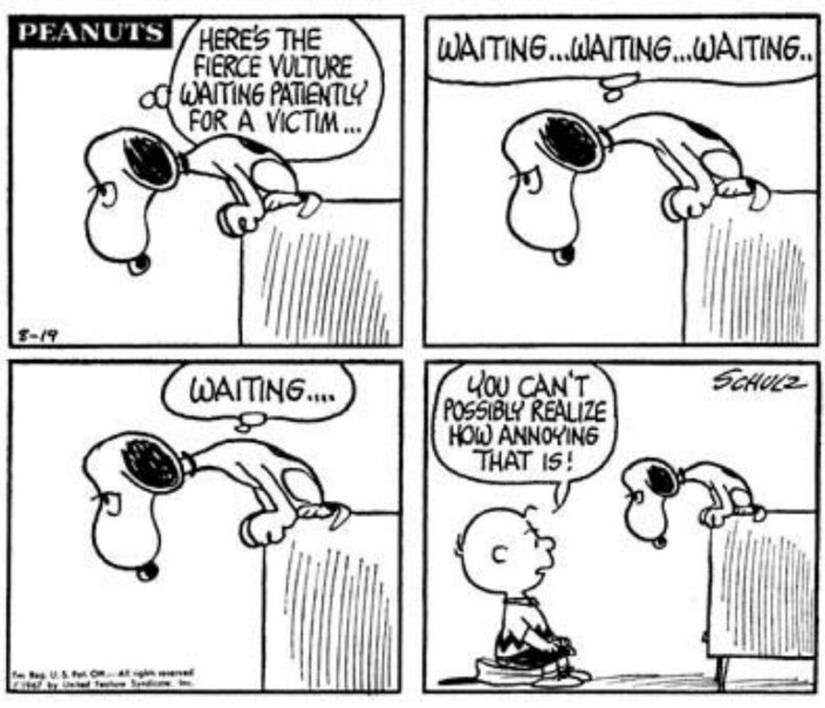
Although Peanuts fans might think that Snoopy has a well-defined identity as a beagle, he could also be quite flexible, having impersonated several animals over the years. However, the most iconic instance is when he began acting like a vulture. This alter ego, known as "Fierce Vulture," features Snoopy perched motionless in high places, whether on his doghouse or even on tree branches, mimicking the behavior of a vulture with his hunched posture and a menacing gaze.
Fierce Vulture first appeared on May 13, 1958, and is one of Snoopy’s most recurring personas, having shown up frequently throughout the comic strip, as well as in specials such as A Boy Named Charlie Brown. A key feature of the Fierce Vulture is that both his pose and his actions are intended to be as vulture-like as possible: he keeps a close watch on people, whom he refers to as "victims," and looks for opportunities to pounce on passersby, such as Linus. However, not everyone finds him as threatening as Snoopy would like.
One of the reasons behind the Fierce Vulture persona is Snoopy's belief that people would respect him more if he were one, though all he actually managed to do was make Lucy question his sanity. But then again, vultures don’t go to a psychiatrist. Unlike other alter egos, he requires no additional accessories, relying solely on his attitude, which makes him a fan favorite Snoopy alter-ego for children to role-play.
The Masked Marvel

Snoopy also embraced the superhero trend by having his own masked alter ego. Calling himself the "Masked Marvel," this persona first appeared on February 9, 1967, eight years after the name had been used by Linus in a comic strip.
Visually, this alter ego is distinguished by the fact that Snoopy wears a black mask, sometimes complemented by a cloak. Masked Marvel seems to boost the beagle’s confidence in his physical abilities since he often dons this attire for sports activities or when he needs to exert his strength, such as in an arm-wrestling match with Lucy van Pelt.
Given Snoopy’s vivid imagination, it’s no surprise that he adopted a superhero persona, though he doesn’t envision himself with the superhuman powers typical of classic comic book characters, instead looking to have drawn inspiration from the world of professional wrestling. Snoopy’s example would be followed by other comic strips, such as Calvin and Hobbes, in which Calvin has his own superhero alter ego: Stupendous Man.
Easter Beagle

Along with Santa Claus, the Easter Beagle is one of Snoopy’s only alter egos related to a specific holiday. In this persona, Snoopy dances around happily, hiding and delivering Easter eggs to children; and although a few related comic strips had already appeared starting in 1968, it wasn't until April 11, 1971, that he was officially dubbed the Easter Beagle.
As the Easter Beagle, Snoopy perks up his ears to resemble those of a rabbit. What makes him so memorable is not only that he becomes a quirky figure in whom Linus believes, much like the Great Pumpkin, but also because of hilarious punchlines, such as the fact that Charlie Brown’s unfortunate luck strikes again, making him the only person to whom Snoopy fails to deliver any eggs.
The strongest proof that this is one of Snoopy’s best alter egos is that it inspired its own television special, It's the Easter Beagle, Charlie Brown, which fans rewatch every year as the holidays approach. Furthermore, the fact that Easter Beagle continued to appear well into the later years of the Peanuts strips speaks to his timeless nature.
Joe Cool

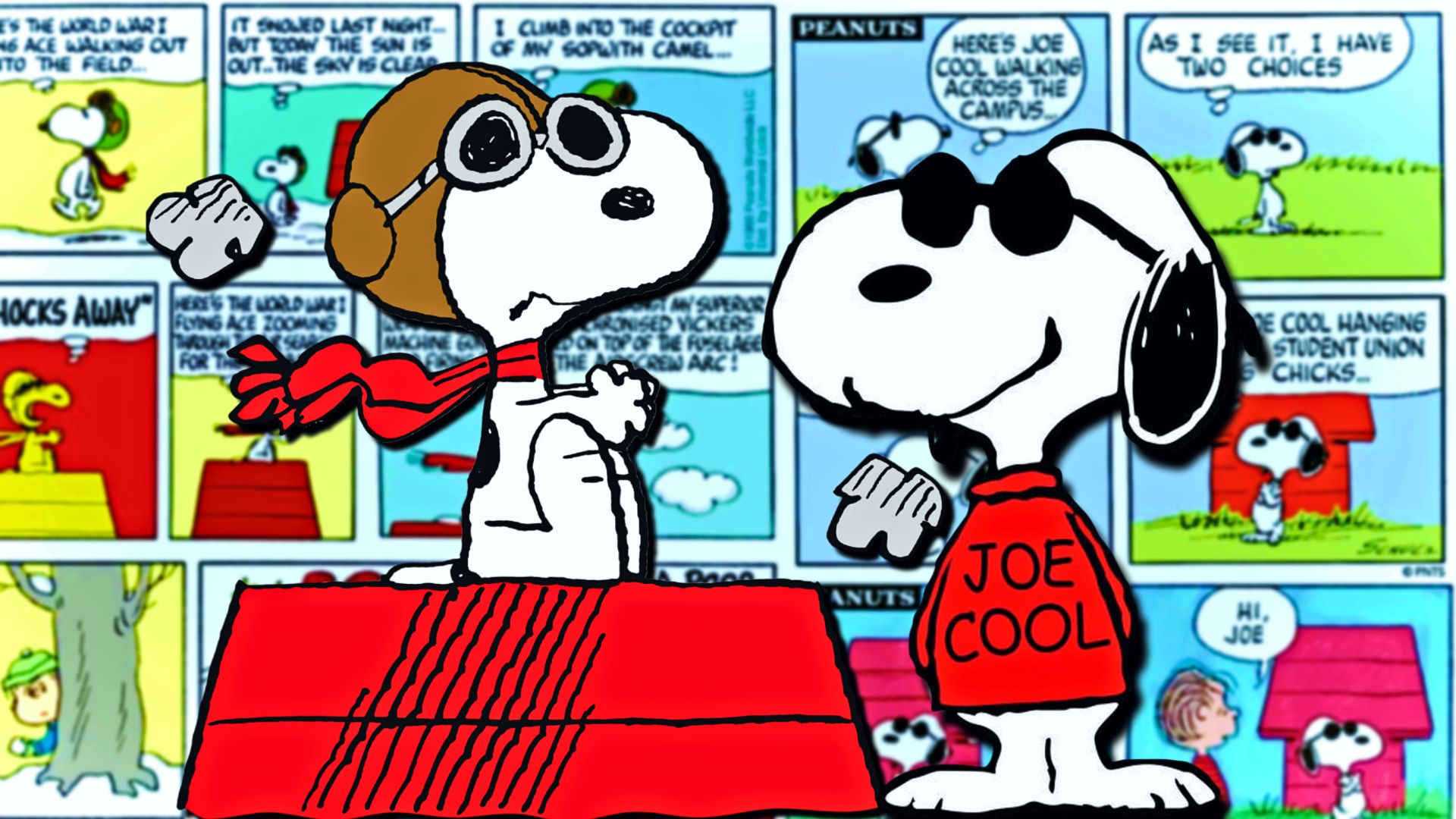
Although Snoopy mostly seems like an adorable beagle, he reaches another level of coolness as Joe Cool. As a laid-back and popular college student, Joe Cool adopts a relaxed attitude and is rarely seen without his signature dark sunglasses. He also occasionally wears a custom-style fraternity sweatshirt, which, instead of the usual Greek letters, features his own name across the front.
The alter ego debuted in a Peanuts comic strip on May 27, 1971. As Joe Cool, Snoopy indulges in his daydreams while lounging in a relaxed pose against the side of his doghouse, either pretending to be hanging out in a "student union" attracting the attention of girls or imagining that same space as if it were his "dorm room." In one storyline, after Lucy kicks him out of their house, Linus plays along with the beagle and begins sharing this "dorm room" with Joe Cool, even though it is still just Snoopy's doghouse.
Joe Cool also likes pizza and refers to himself as the "Big Beagle on campus," which means he has little interest in attending classes or studying for his final exams. What’s great is that, even though he embodies many clichés of college student life, Joe Cool remains relevant despite the passage of time, unlike some of Snoopy’s other alter egos, such as Flashbeagle, which might be considered somewhat dated since they are tied to the era in which they first appeared.
World-Famous Author

Among his most memorable alter egos is Snoopy’s persona as the World-Famous Author. Sitting on top of his doghouse with his iconic purple typewriter, Snoopy would grapple with many of the common frustrations writers face, such as spending hours just to come up with a single word, seeking others' opinions on his stories, or getting stuck when inspiration runs dry.
Yet, while fans might assume he writes purely for the love of his craft, the beagle also had a keen eye for financial gain. Snoopy would often contemplate the money his writing might earn, eagerly anticipating large sums whenever he submitted his work for review and publication. Although he never made it big as a writer (in fact, no one attended his book signing), Snoopy received $75 for his first manuscript, as revealed in the Peanuts comic strip from July 14, 1965.
Undoubtedly, among the best Snoopy strips featuring his persona as the World-Famous Author is the one in which he attempts to write "the great American novel," using the phrase "It was a dark and stormy night" over and over again. This legendary line even inspired a Batman comic, a fact that speaks volumes about the quality of Snoopy’s writing and makes this one of his most successful alter egos.
World War I Flying Ace

One of the most exciting aspects, and one that best captures the essence of Snoopy’s daydreaming, is his alter ego: the World War I Flying Ace. By simply donning a leather flying cap, goggles, and a red scarf, Snoopy transforms into a full-fledged pilot, while the roof of his doghouse becomes a Sopwith Camel biplane, a vantage point from which he experiences all sorts of dangerous battles.
The WWI Flying Ace first appeared in the Peanuts comic strips on October 10, 1965, and over decades, he has had many encounters with his arch-nemesis, the Red Baron. Woodstock also assists him, serving as a flight mechanic for the WWI Flying Ace. Snoopy also imagines a ground crew for himself, assigns his own missions, and doesn't let the weather stop his adventures; even when it rains, he remains committed to his fantasy, all from the comfort of Charlie Brown’s house.
Not only has the line "Curse you, Red Baron!" stayed with fans of the series over the years, but the WWI Flying Ace became one of Snoopy’s most popular alter egos. He appears in all kinds of merchandise and is frequently referenced in other media, a testament to the enduring legacy of Snoopy and the Peanuts comic strip.
- TV Show(s)
- The Snoopy Show, Peanuts by Schulz
- First Film
- The Peanuts Movie
- Cast
- Christopher Shea, Kathy Steinberg, Bill Melendez, Sally Dryer, Peter Robbins, Noah Schnapp, Hadley Belle Miller, Mariel Sheets, Lisa DeFaria, Venus Omega Schultheis
- Created by
- Charles M. Schulz
- Movie(s)
- The Peanuts Movie, A Charlie Brown Christmas, A Boy Named Charlie Brown, Charlie Brown's All Stars!, A Charlie Brown Thanksgiving, It's the Great Pumpkin, Charlie Brown, It's the Easter Beagle, Charlie Brown
- Character(s)
- Charlie Brown, Snoopy, Lucy van Pelt, Linus van Pelt, Sally Brown, Pig-Pen, Marcie (Peanuts), Peppermint Patty, Woodstock
Created by Charles M. Schulz, Peanuts is a multimedia franchise that began as a comic strip in the 1950s and eventually expanded to include films and a television series. Peanuts follows the daily adventures of the Peanuts gang, with Charlie Brown and his dog Snoopy at the center of them. Aside from the film released in 2015, the franchise also has several Holiday specials that air regularly on U.S. Television during their appropriate seasons.
KioskNews shows a cleaned-up reading view extracted from the publisher’s page — the original always lives on their site, not ours.