Canada budget charts ‘economic independence’ in decisive shift from US
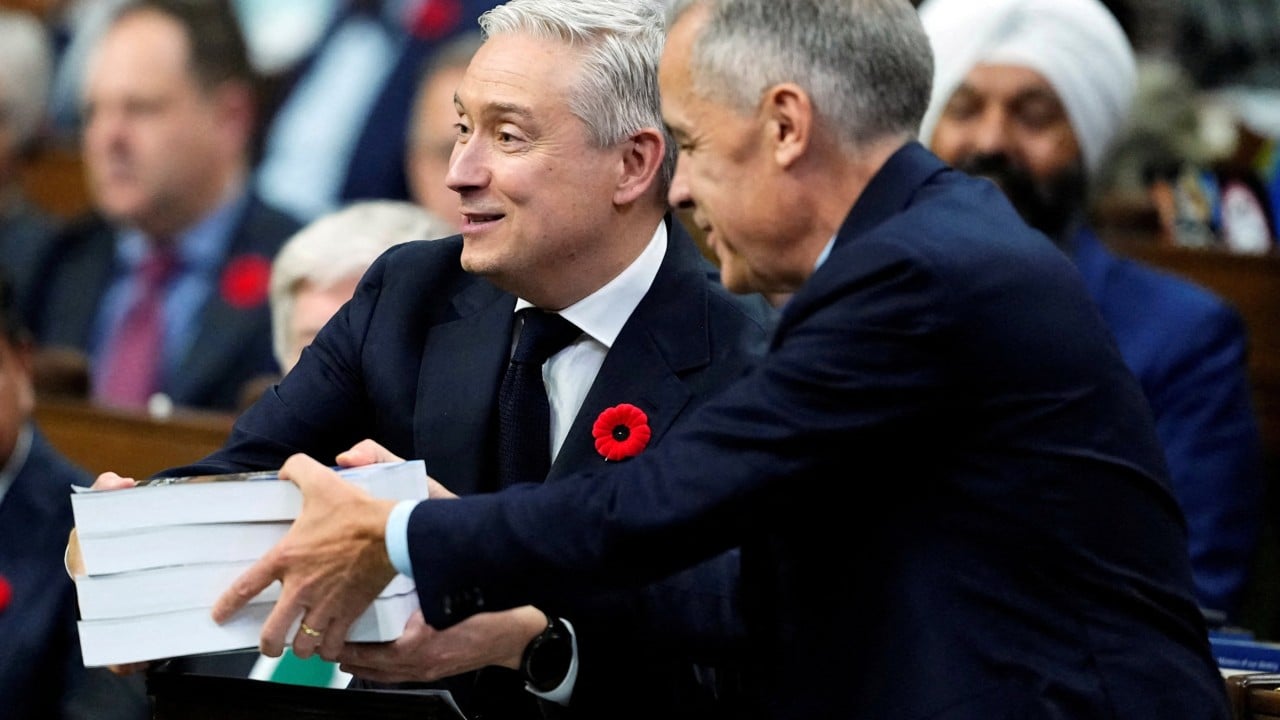
Canada unveiled a budget on Thursday that calls for “economic independence” and says that while reducing its reliance on the United States will take time, “the shift is under way”.
Prime Minister Mark Carney’s second budget since taking office last year was presented to parliament just two days after President Donald Trump suffered a sweeping midterm election rebuke.
While Democrats, who will take control of the US House and Senate next year, have already voiced a desire to ease Trump’s trade war with Canada, Carney’s budget affirms that the Canadian economy cannot remain dependent on the US market.
“Canada and the United States will not return to our old relationship,” the budget says, echoing Carney’s message that pre-Trump tariff-free North American trade is not coming back.
The budget, titled “Masters of our Destiny”, details plans for Canada’s first-ever sovereign wealth fund.
The C$25 billion (US$18.3 billion) Canada Strong Fund will invest in major national projects, with Ottawa hoping that a government stake in such projects will help attract private capital.

The budget further marks Carney’s decisive break with his predecessor, Justin Trudeau, another Liberal, whose economic stewardship faced criticism.
The budget presented by Finance Minister Francois-Philippe Champagne says Carney’s government inherited an economy plagued by weak productivity growth in which “private sector investment lagged,” while “Canada remained excessively dependent on the United States”.
“Diversification will take time, given the scale and depth of Canada’s economic relationship with the United States. But the shift is under way,” the budget says.
Speaking earlier Thursday, Carney told reporters that political developments in the United States are “important” and that bilateral relations will “evolve,” but his priority remained more “independence”.
“We’re focused here, we’re focused on the same issues as we were at the start of the week,” before the midterms, he said.
The budget also details a tax incentive Carney introduced at a major investment summit in September, where he gathered global financial heavyweights in Toronto to try to persuade them to invest in Canada.
The “Productivity Mega Deduction” allows businesses of all sizes to deduct the costs of new investments and, according to Ottawa, makes Canada an increasingly attractive investment destination compared to the United States.
“Put simply, a company will pay approximately 60 per cent less tax on the return from a new investment made in Canada than on the same investment made in the United States,” the budget says.
The budget also acknowledges the pain Trump’s tariffs have inflicted across key sectors of the economy, notably automaking, steel, aluminium and timber.
It says C$44 billion has already been announced for businesses and workers impacted by tariffs.
Ten billion of that is allocated to workers, nearly C$13 billion is to provide liquidity for larger businesses facing cash flow challenges due to tariff disruptions, and another C$20.6 billion is to help businesses adapt in response to Trump’s tariffs.
“The rules that Canada relied on for decades can no longer be taken for granted,” Champagne told reporters before his budget speech, insisting Canada was in a strong fiscal position with “room to manoeuvre”.
Conservative Party head and opposition leader Pierre Poilievre accused the Liberals of presenting a “credit card budget”.
Ordinary Canadians will ultimately have to pay for debts owed to “bankers and bond holders,” he told parliament.
In Canada, governments collapse if their budgets are rejected, and last year Carney needed opposition support and abstentions to survive, but his Liberals have since secured a parliamentary majority.
KioskNews shows a cleaned-up reading view extracted from the publisher’s page — the original always lives on their site, not ours.