Days after Xi-Trump summit, the US marks China’s National Day with pared-down note
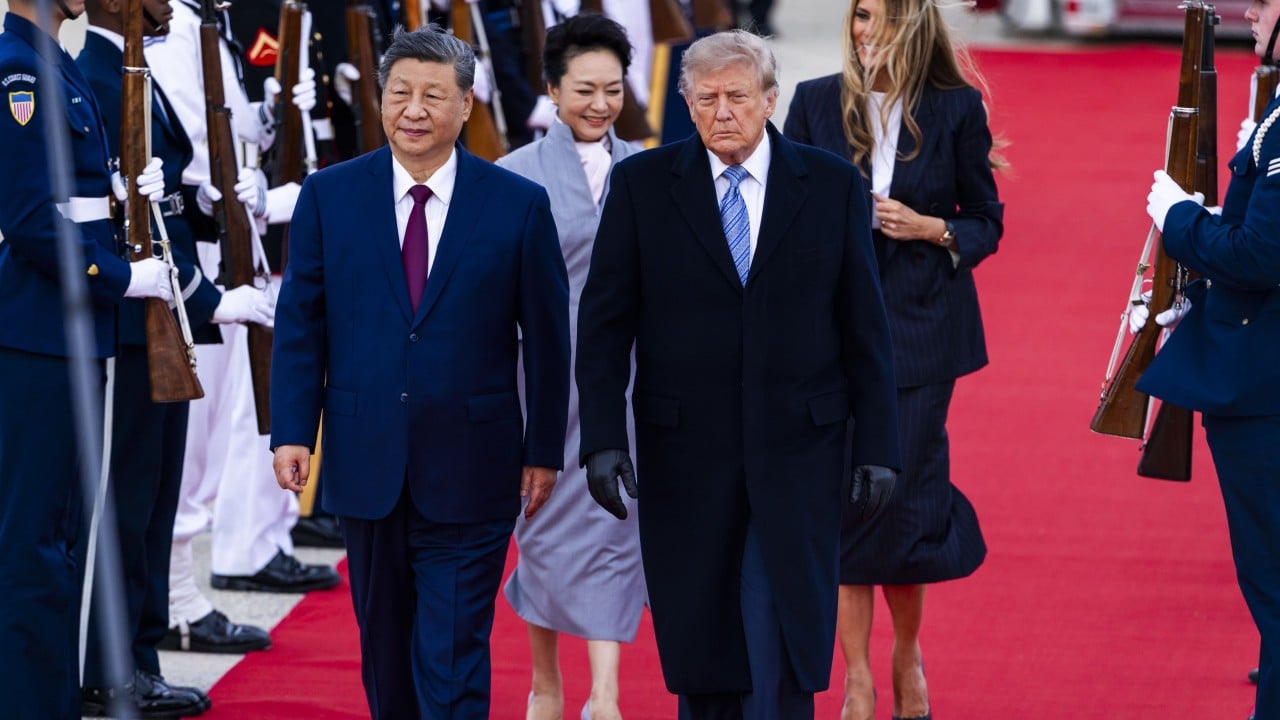
Five days after Chinese President Xi Jinping left Washington, the US State Department marked the 77th anniversary of the People’s Republic of China with a greeting short enough to fit on a calling card.
US Secretary of State Marco Rubio’s congratulatory statement landed on Wednesday, a few hours before dawn on National Day in Beijing. It made no mention of Xi’s visit, the trade understandings reached during the trip or the meetings the two leaders have scheduled for later this year.
Washington continued its tradition of marking China’s National Day before October 1 arrived in the United States. But it pared down the message.
“On behalf of the United States of America, I congratulate the people of China on the 77th anniversary of the founding of the People’s Republic of China on October 1,” it said.
“The United States wishes the people of China goodwill, along with peace, health and happiness in the coming year.”
Unlike Rubio’s greeting last year, this year’s version dropped the word “prosperity”. The previous statement wished the Chinese people “health, happiness, prosperity and peace in the year ahead”.
That wording change sits against the backdrop of a week of high-level contact. Xi just completed a state visit to Washington, while US and Chinese officials announced outcomes on trade and other topics. Hours before Xi’s arrival in the US, Rubio himself described the US-China relationship as one that would “define the 21st century”.
Atul Kumar, a fellow at the Observer Research Foundation in New Delhi, said Rubio’s note introduced “goodwill” while dropping “prosperity” and made no reference to the summit between Xi and US President Donald Trump or their planned meetings later this year.
“As Xi seeks strategic persuasion and a constructive, stable relationship with Trump and the US administration, the inclusion of goodwill seems noteworthy,” he said. “However, the omission of ‘prosperity’ underscores deeper bilateral economic rivalry.”
He added that the framing kept the State Department’s “formal, ceremonial language of diplomatic courtesy without explicitly endorsing or institutionalising Trump’s leader-level summit diplomacy”.
Speaking at the Chinese embassy’s National Day reception in Washington on Wednesday, Chinese ambassador Xie Feng called the Xi-Trump rapport the “most valuable strategic asset” in the bilateral relationship, adding that head-of-state diplomacy anchored ties. The personal connection between the two leaders had “helped keep China-US relations on course at critical moments”, he added.
Manoj Kewalramani, chair of the Geostrategy Programme at the Takshashila Institution in Bengaluru, said the latest statement still pointed to engagement.
SCMP Plus is a new premium news platform that gives you an
all-inclusive edge to stay ahead on China news.
To access our exclusive content you’ll need to subscribe.
Already a subscriber?
LOG IN
“The signal essentially remains that the US is looking to build some sort of a working relationship with China rather than simply manage difficult issues or compete intensely,” he said.
From cooperation to competition
The National Day greeting has been more than a holiday courtesy. Its wording has offered a small annual snapshot of how Washington describes its relationship with Beijing, with the length and tone broadly tracking the state of ties.
During Barack Obama’s presidency, the messages contained references to cooperation.
In a September 29, 2011 statement, then US secretary of state Hillary Clinton said the two countries were “developing the positive, cooperative and comprehensive relationship envisioned by our presidents”. She cited the state visit by then Chinese leader Hu Jintao in January of that year as well as the Strategic and Economic Dialogue that May.
“A thriving China is good for America and a thriving America is good for China,” she added.
John Kerry, who succeeded Clinton as secretary of state, took a similar tone. In 2013, the year of the Sunnylands summit between Xi and Obama, Kerry said the relationship had “grown by historic measures since President Nixon’s visit to China 41 years ago”. He added that “a prosperous China is good for the United States, and a prosperous United States is good for China”.
In 2014, marking the 35th anniversary of diplomatic relations, Kerry called cooperation on climate change, Ebola fever and nuclear proliferation “indispensable”.
And in 2015, just a week after Xi’s previous state visit to Washington, Kerry wrote that the two sides had “shown how much we can accomplish through cooperation”. He closed with a wish for “peace and prosperity over the coming year”.
The messages became shorter as tensions deepened during Donald Trump’s first term as US president.
On September 30, 2017, the US State Department issued a statement while then secretary of state Rex Tillerson was in Beijing, ahead of Trump’s November state visit. It said that “a strong, constructive relationship between the United States and China is important for the prosperity and stability of our two countries as well as the world”.
Tillerson also wished the Chinese people “peace and prosperity”.
By 2019, in the middle of the US-China tariff war, references to the bilateral relationship largely disappeared from the holiday greeting. Former secretary of state Mike Pompeo’s message wished the Chinese people “happiness, health, peace and prosperity in the year to come”.
His 2020 message came a few months after Washington closed China’s consulate in Houston and Beijing closed the US consulate in Chengdu. It wished the Chinese people “health, prosperity, happiness and peace in the coming year”.
Blinken returns to ties
Antony Blinken, secretary of state under former US president Joe Biden, brought the relationship back into focus.
After a frosty meeting with top Chinese diplomats in Alaska in 2021, Blinken said Washington sought to “work cooperatively to solve the challenges we all face” and wished the Chinese people “peace, happiness and prosperity”.
A year later, just weeks after then US House speaker Nancy Pelosi’s visit to Taiwan, he pointed to areas where the two sides could work together, including “health, climate change, counternarcotics and other areas where our interests intersect”.
That language continued in 2023, following controversy over an alleged Chinese surveillance balloon and a summer of high-level US visits to Beijing. Blinken highlighted cooperation on “the climate crisis, public health, counternarcotics, food security and global macroeconomic stability”.
Then, in 2024, the message arrived after October 1. It said the US was “committed to responsibly managing our bilateral relationship with the [People’s Republic of China] and will maintain open lines of communication”.
KioskNews shows a cleaned-up reading view extracted from the publisher’s page — the original always lives on their site, not ours.