Australians with big mortgages are stressed out – and the mental health toll is heavy

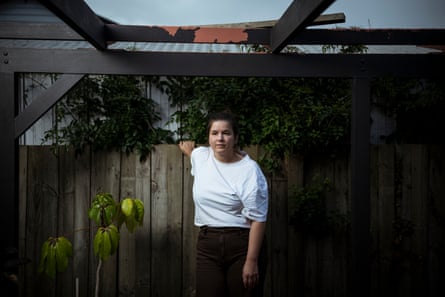
When Emily Knights bought a quaint two-bedroom starter home with her then-partner in Geelong, Victoria, the milestone marked years of financial sacrifice.
However, the end of their relationship shortly afterwards left her shouldering the entire mortgage on a home that needed renovation and had “no working oven”.
“I bought with the intention of having a dual income and had planned the numbers, and it was all going to be manageable. But on a single income, I’m paying around 50% of my wage to the house,” she says.
After several Reserve Bank interest rate rises, she is “barely scraping by”.
Knights, who is 34 and works as a nurse, says the past couple of years since she bought have been shrouded in anxiety.
“It’s overthinking, it’s ruminating, it’s obsessing over a budget,” she says.
“I’m probably the most financially stressed I’ve ever been in my life.”
That many are struggling with the cost of living and rising interest rates is no surprise, with frequent media stories about the crisis and people sharing their worries with friends, colleagues, and online.
Dr Lay San Too, a senior research fellow at the University of Melbourne specialising in mental health and suicide prevention, wanted to understand how widespread the mental health impact of financial pressure is, the expenses hitting hardest, and whether this is worsening.
In a study published in the journal Social Science & Medicine on Friday, they found mortgage holders who, like Knights, were allocating more than 30% of their disposable income towards housing repayments experienced a decline in mental health roughly three times larger than that of others experiencing financial strain.
“As many Australian mortgage holders have variable-rate mortgages, higher interest rates alongside rising living costs have worsened their financial pressures and, in turn, the impact of this pressure on their mental health,” Too says.
The researchers analysed 13 years of nationally representative data from the Household, Income and Labour Dynamics in Australia (Hilda) Survey, a long-running study that tracks economic and personal wellbeing, labour market dynamics, and family life.
They examined the change in prevalence of financial hardship and mental wellbeing of 18,750 adults, excluding retirees and pensioners.
They broke the data down to time periods described as the “cost-of-living crisis era” (2022-2024); the “Covid pandemic era” (2020-2021); and the “pre-crisis era” (2012-2019).
The study found no sharp mental health decline among high mortgage holders (those allocating more than 30% of their net disposable household income toward monthly repayments) during the pandemic years – but hardship jumped sharply in 2023 and 2024 as interest rates rose, and household savings buffers that some people had accumulated during the pandemic were exhausted.
Too says this may be because governments and financial institutions introduced substantial support measures during the pandemic.
“Income support, mortgage relief, and other fiscal and monetary policy measures helped many households and businesses manage the financial pressures they were facing at that time,” she says.
While interest rates have been increased primarily to bring inflation under control, for households with large variable-rate mortgages, Too says “those rate rises can translate into substantially higher monthly mortgage repayments”.
Financial hardship was measured by whether someone missed a bill, mortgage, or rent payment, skipped meals, couldn’t heat their home, sold belongings, or sought help from charities or family.
The study excluded comfortable, voluntary mortgage over-payers, instead requiring participants to report financial stressors and active mortgage hardship.
Mental health was tracked through self-reported anxiety and depression symptoms from the group over time.
Poor mental health was highest among those with large mortgage repayments and who had reported missing payments, the study found.
“We did not find a decline in mental health among those experiencing rent hardship, particularly those with high rental payments, during the current cost-of-living crisis compared with the pre-crisis period,” Too says.
after newsletter promotion
This is not because the mental health of renters is good, she says, but because their mental health was already at a significant low before the cost-of-living crisis.
Overall, financial hardship rose more and was associated with greater mental distress during the cost-of-living crisis than through the Covid era.
If governments don’t act on this distress, Too says “over time, this could contribute to greater demand for mental health services [and] place additional pressure on an already stretched health system”.
Beyond Blue CEO Georgie Harman says the number of people contacting the mental health support service has increased by 9% over the past year, with growing demand for support from people struggling with mortgage repayments, housing costs, household bills and the rising cost of everyday essentials.
“Increasingly, people are carrying a level of financial pressure that feels relentless,” Harman says.
“We’re hearing from people who describe feeling like they’re just one unexpected expense, whether that’s a car repair, surprise bill or setback, away from things becoming unmanageable.”
Director of the University of Melbourne’s centre for mental health, Prof Jane Pirkis, co-authored a paper published in August which found every 1% monthly increase in annual inflation in Australia is associated with a 4% increase in suicide rates one month later.
“Inflation is having a major impact on people’s mental health,” Pirkis says.
Her research found the strongest link between inflation surges and suicide rates in 30 to 69-year-olds, ages where people “are often not only financially responsible for themselves but also for other family members”, she says.
“This may create an added level of burden when inflation means that they are struggling to provide for dependents.”
Pirkis says governments need to consider a range of policies to prevent significant mental health crises as a result, such as financial assistance, welfare payments, tax cuts and rebates, subsidies on essential goods and services, eviction moratoria, utility shut-off protections, nutrition programs, measures to strengthen social support systems and housing affordability, and labour-related policies.
Harman says the most effective support for those mentally struggling due to financial strain “is both practical and emotional”.
“That might mean accessing free financial counselling through services like the National Debt Helpline, talking with a GP or mental health professional, reaching out to family and friends, or using trusted online tools and information to better understand and manage money stress,” she says.
Despite supportive social and family networks being protective of mental health, Beyond Blue research published in June found financial pressure is the leading external stressor affecting Australians’ relationships, leading them to pull back from social activities.
Knights says this reflects her own experience.
“The girls say, ‘Let’s catch up for dinner,’ and I say, ‘I can’t’,” she says.
“Everyone thinks, ‘Oh, you own a house, it must be so great.’ But the actual reality is you don’t have any financial freedom because it’s all just tied up in the house and the essentials that you need to get by.”
-
In Australia, the crisis support service Lifeline is 13 11 14. The National Debt Helpline is 1800 007 007
KioskNews shows a cleaned-up reading view extracted from the publisher’s page — the original always lives on their site, not ours.