Hegseth pitches US-Asean defence framework but will it be a hard sell?
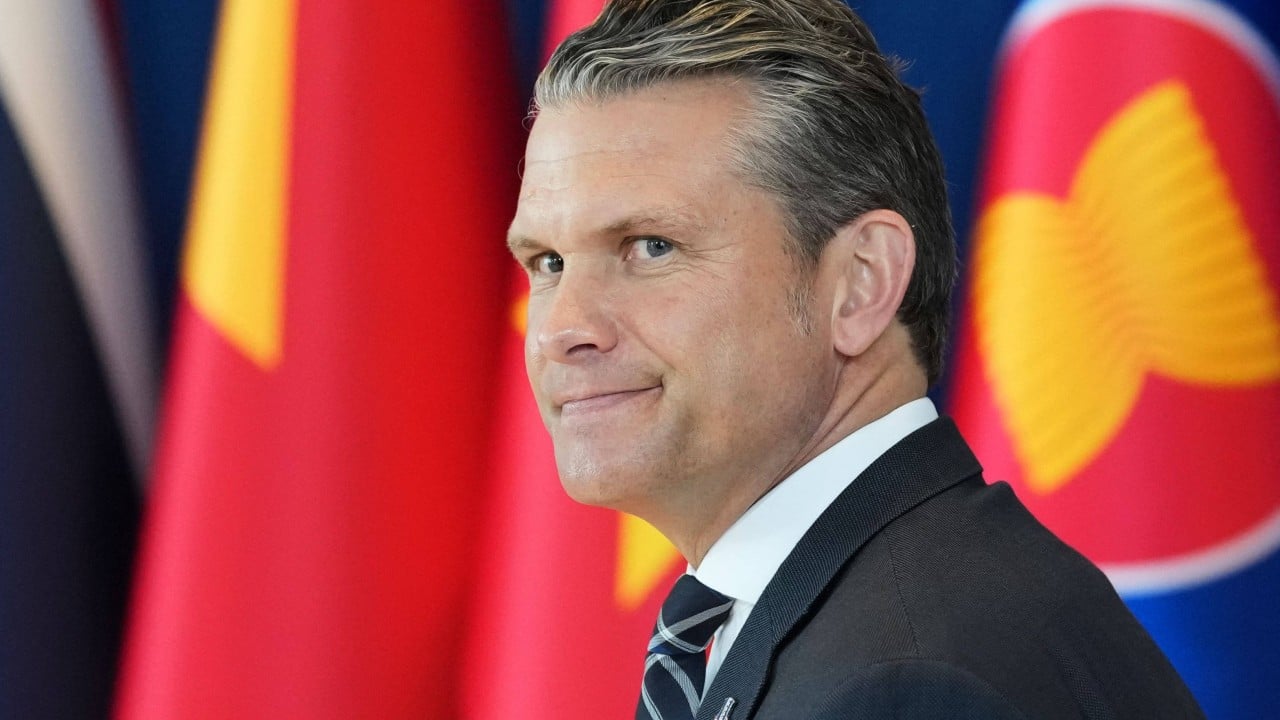
US Defence Secretary Pete Hegseth on Wednesday proposed a new US-Asean defence framework to guide cooperation over what he called “critically important years” ahead, but offered few details on what it would entail.
The proposal faces questions over whether members of the Association of Southeast Asian Nations will embrace a bloc-wide initiative, with analysts suggesting they would prefer bilateral arrangements that preserve their flexibility as they navigate ties with Washington and Beijing.
Speaking at the opening of the US-Asean Defence Ministers’ Informal Meeting in Cebu, Hegseth said Washington wanted to build on the region’s “pragmatism, openness to dialogue, respect for counterparts, and proud nationalism”, noting that 2027 would mark the 50th anniversary of relations between Southeast Asia and the US.
“As we look to the future in this region, I’d like us to be even more ambitious … we propose that we work together to develop a US-Asean Framework for Defence Cooperation,” Hegseth said.
He described the proposal as a “practical framework that guides our cooperation over … I will note a critically important next several years”, but did not share further details.
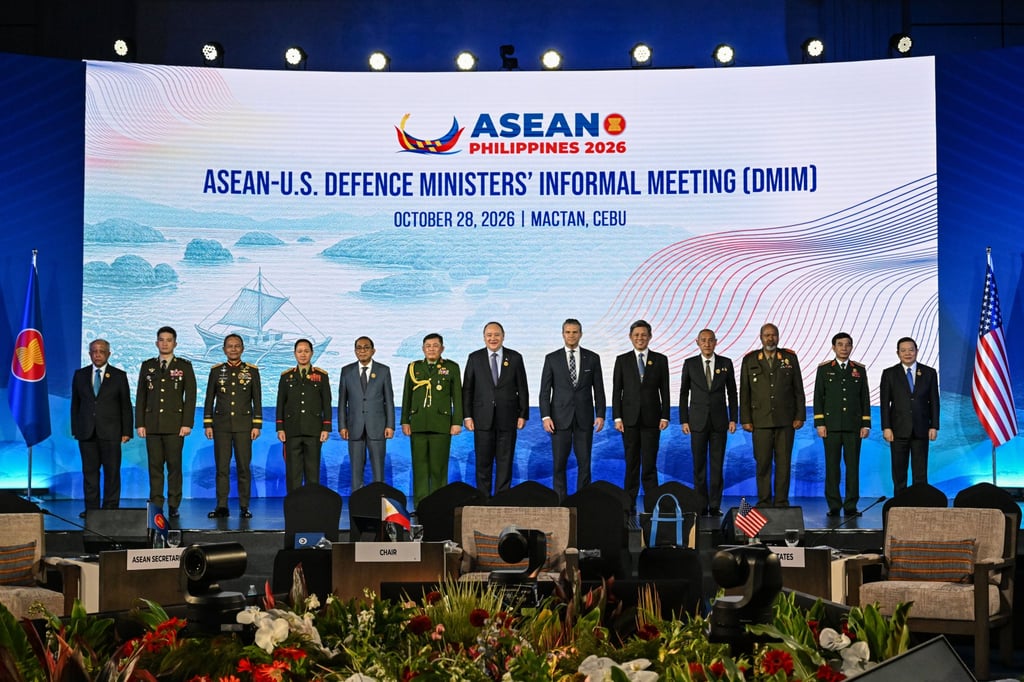
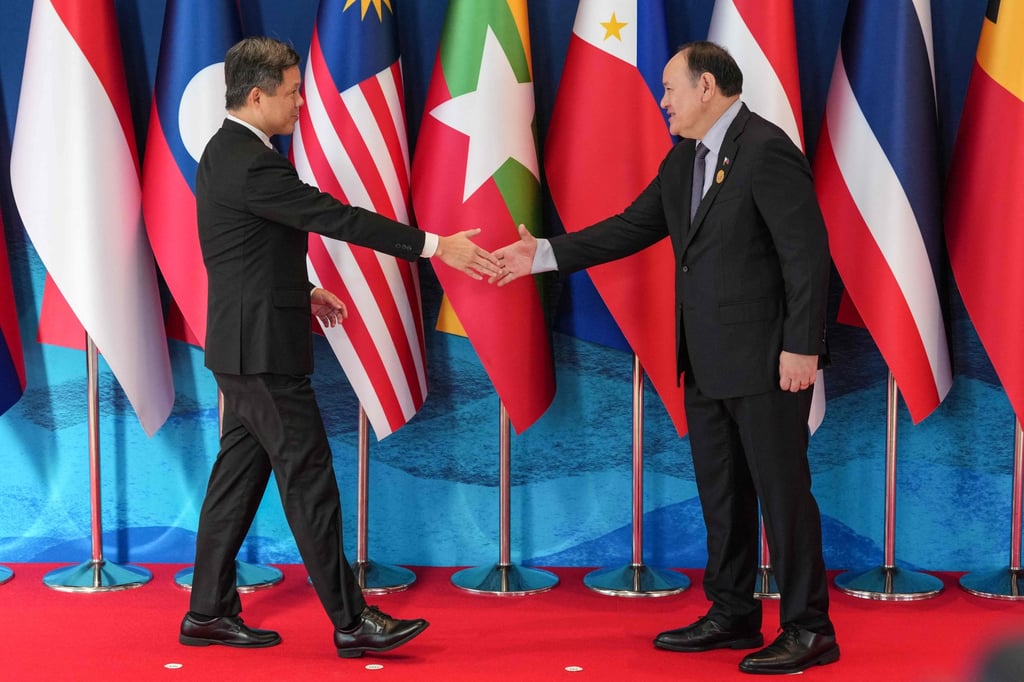
According to Hegseth, the US is ready to begin working on the framework during Singapore’s term as Asean chair next year, when the city state’s defence chief Chan Chun Sing leads the Asean Defence Ministers’ Meeting (ADMM)-Plus.
The US Department of Defence said it did not have further information to provide at this time.
The US has been keen on bolstering its defence partnerships in the region amid its vision to uphold a “free and open Indo-Pacific” and China’s increasing military and economic power in Asia.
Hegseth said US President Donald Trump wanted a “stable, secure and prosperous” region built on the backs of strong nations capable of defending their own sovereignty, reflecting similar statements he made during the Shangri-La Dialogue in May.
Washington wanted to take a “strong, quiet, and clear” approach in the region, quiet enough “to avoid needless escalation or public theatrics” but “clear enough that our friends and partners, potential adversaries understand precisely where the United States stands”, Hegseth said.
The US remained keen on strengthening maritime domain awareness and improving interoperability to advance cooperation among the region’s naval forces, he added.
“These are not symbolic things; they are concrete demonstrations of what serious partners do, serious partners train together, learn together, plan together, and build the confidence and competence necessary to prevent conflict,” he said.
Hegseth’s comments come as the Philippines, a close US ally, has been embroiled in simmering maritime tensions with Beijing over disputed waters in the South China Sea.
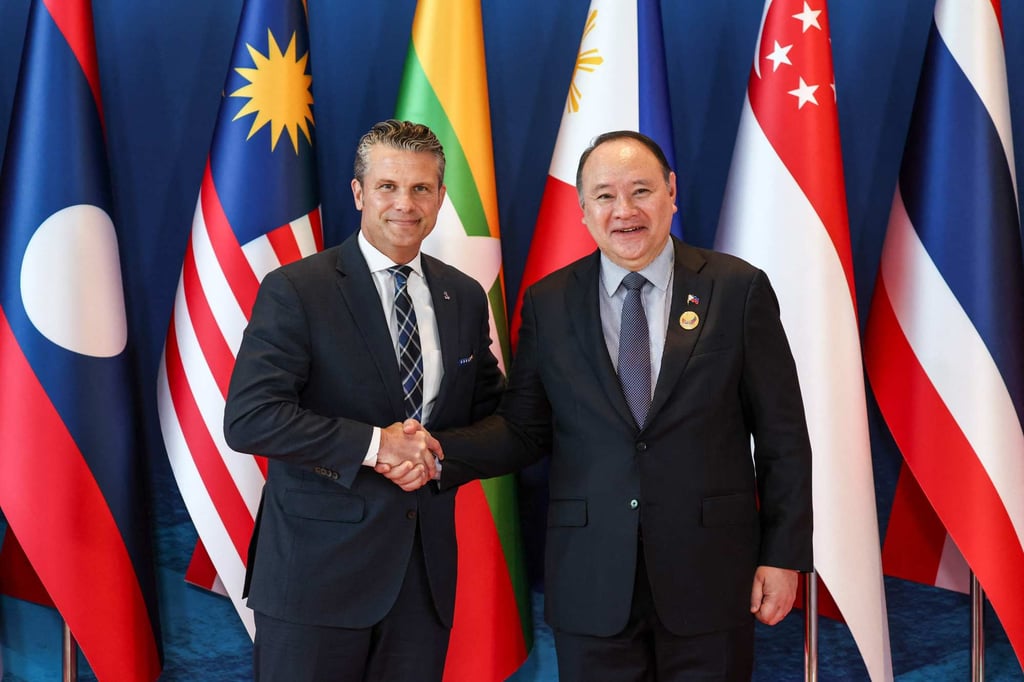
‘Not a military alliance’
Although Hegseth has yet to provide further details, analysts say the proposed framework is likely to focus on a limited set of defence cooperation priorities rather than cover a comprehensive range of security issues.
“First, Hegseth’s own emphasis was narrow, [specifically mentioning] maritime domain awareness and naval interoperability,” Keith Mahoney, president of defence intelligence at the Studebaker Defence Group, told This Week in Asia.
Mahoney said the ADMM-Plus mechanism was consultative and did not typically work on build-up pacts.
According to Mahoney, the Philippines, as Washington’s sole Asean treaty ally, is likely to play a central role in this framework, and is the one country Hegseth singled out at the Shangri-La Dialogue.
Hegseth had praised Manila’s shift to external defence, its interoperability work, and the 12 per cent defence-spending increase under President Ferdinand Marcos Jnr.
Mahoney pointed to the 10-year Framework for the US–India Major Defence Partnership, which he described as a “direction-setting” document, as a likely template for how cooperation would work out between Washington and Asean.
However, he said Manila was unlikely to achieve consensus within the bloc, as its maritime disputes with China “make it the most exposed member, and several neighbours will keep their distance precisely to avoid being drafted into that front”.
Rommel Jude Ong, a retired rear admiral of the Philippine Navy and a professor at the Ateneo School of Government, expressed doubt that the framework would materialise because the US had little economic leverage against Asean.
“Perhaps if it is addressed bilaterally, some countries would be amenable to its request. Moreover, Asean is not a military alliance, despite the ADMM-Plus mechanism,” he said.
Ong pointed out that the ISEAS – Yusof Ishak’s State of Southeast Asia survey this year showed that the region largely preferred China if forced to align itself with either Beijing or Washington, adding that most countries “are more inclined to collaborate economically with China”.
Observers also note the “poor timing” in proposing such a framework, especially when America’s partners have been questioning its commitment to those partnerships.
“How can he demand from Asean when most of its naval resources have been shifted to the Middle East?” Ong said. “Obviously its role as security guarantor has been diminished. If their objective is to create a burden-sharing set-up, that would be a game killer.”
Chester Cabalza, president and founder of the Manila-based think tank International Development and Security Cooperation, said the framework offering “comes at a time when there is a fractured world. Some of the nations in the region tend to question American policies and leadership”.
Cabalza told This Week in Asia that most Southeast Asian nations “will call for strategic autonomy and hedging, and [will not just be] passive pieces on a global chessboard”.
Washington must demonstrate its sincerity to Southeast Asia, including “low-hanging fruit” in trust-building measures such as real-time maritime domain awareness, and logistics and supply chain interoperability, to avoid the trap of empty diplomatic rhetoric, Cabalza said.
He called the next few years a “critical stress test for Asean centrality”, and said Washington’s proposal could only succeed if “the US recognises the role of the middle powers in Southeast Asia as complementary and not a competitor to US military might in the region that elevates collective strategic culture”.
16:04
Watch: Asean defence ministers meet with US counterpart Pete Hegseth
Joanne Lin, a senior fellow at the ISEAS – Yusof Ishak Institute, noted that many of the areas Hegseth mentioned on Wednesday were already covered under existing Asean-US cooperation.
“The question, therefore, is what additional value this framework can bring,” Lin said, suggesting that it could provide a more structured and longer-term approach to defence cooperation.
The move also appeared to demonstrate Washington’s continued commitment to Southeast Asia’s security and strengthen the defence capabilities of some of its regional partners, in line with the Trump administration’s emphasis on burden-sharing, Lin said.
“However, the extent of cooperation will likely vary across Asean members, given their different security relationships with Washington.”
As Asean is not a military alliance, it would be difficult to expect the bloc to collectively undertake the kind of burden-sharing commitments that Washington sought from its treaty allies, Lin added.
The main challenge, Lin noted, would be ensuring that the framework remained inclusive “and is not perceived as an arrangement directed against China”.
Asean would also prefer to see such cooperation embedded within the existing ADMM-Plus framework and complement bloc-led mechanisms, she added.
KioskNews shows a cleaned-up reading view extracted from the publisher’s page — the original always lives on their site, not ours.