Lindsay Clancy returns to court as defense seeks to block retrial in murder case
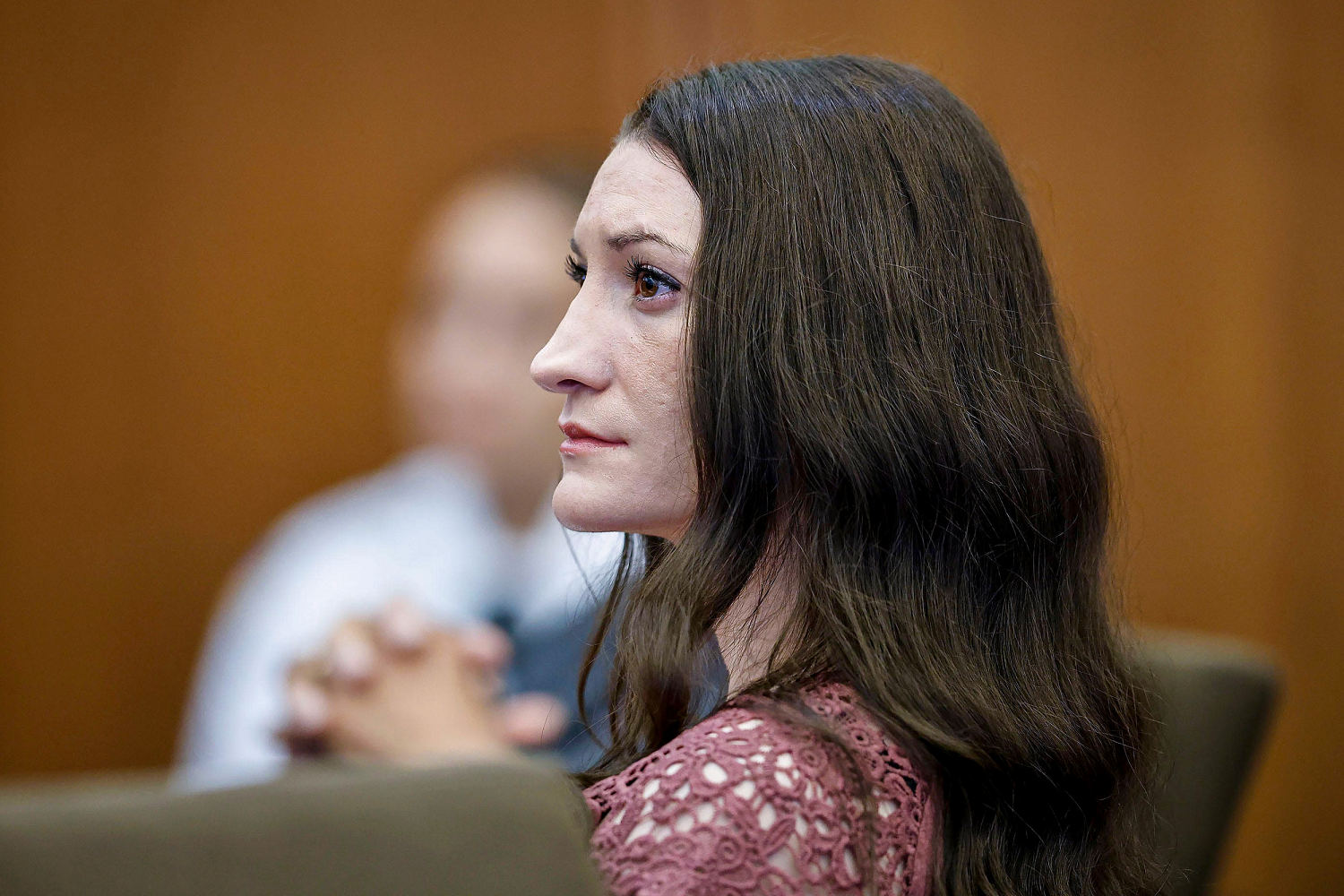
Lindsay Clancy, the Massachusetts woman accused of killing her three children in 2023, will be back in court Monday for a hearing that could determine whether she will face a retrial.
Her defense team is expected to argue that she can’t be retried on double jeopardy grounds, meaning a defendant cannot be prosecuted twice for the same crime in a bid to have the charges dismissed.
In a motion Thursday, the prosecution asked the judge to reject Clancy’s motion to dismiss charges against her, arguing they have a right to seek justice for her three slain children, even though the first trial ended in a mistrial in September.
Clancy’s defense attorney, Kevin Reddington, however, indicated in the last week of the trial that he was ready to start a retrial as soon as possible. Days after the judge declared a mistrial in the state case, he also asked President Donald Trump to pardon his client. Presidents can pardon only federal offenses.
The defense will also argue to preserve juror records and to investigate the lone holdout juror, whom other jurors have said was the sole roadblock to a unanimous decision.
Prosecutors are expected to file a motion Monday that bars lawyers and law enforcement involved in the case from speaking to the media.
Clancy is accused of strangling her three children — Cora, 5, Dawson, 3, and Callan, 8 months old — with exercise bands on the evening of Jan. 24, 2023, before throwing herself out of her bedroom window in a suicide attempt that left her paralyzed and in a wheelchair.
During her trial, Reddington argued that Clancy was experiencing postpartum psychosis and was compelled to act on auditory hallucinations when she carried out the killings.
Prosecutors, however, have said she was aware of her actions and planned the murders ahead of time. She was not actually in psychosis when she killed the children, they said.
It remains unclear whether both sides will argue the same fact patterns if there is a retrial.
The jury deadlocked three times, forcing Judge William Sullivan to declare a mistrial, despite Reddington’s best efforts to attempt a last-minute emergency stay. Supreme Judicial Court Associate Justice Dalila Argaez Wendlandt later denied it.
The foreperson reported one holdout, who they said was not following the law of “beyond a reasonable doubt.”
Jurors have since spoken out, with several pointing to one juror they said would not uphold the reasonable-doubt standard and was the only one of 12 jurors who wanted to convict Clancy. They said he would not engage in discussions and failed to provide evidence to support his reasoning.
The lone juror, Michael P. Desronvil, has since said he has felt harassed since the end of the trial and insisted he “didn’t have any doubts.”
The trial captivated the nation as online sleuths peddled conspiracy theories that Clancy was not the one who killed the children. Rather, that her then-husband, Patrick Clancy, carried out the murders and framed her for it.
In a statement following the first trial, Patrick Clancy’s lawyers slammed true-crime creators pushing the theories and called them a “campaign of misinformation” that was “publishing what they know to be outright falsehoods that Patrick was somehow involved in the death of his young children and other vile claims.”
The lawyers added that “every appropriate measure will be pursued to hold them accountable, including legally” and that “law enforcement has been notified.”
Patrick Clancy testified for the prosecution in the first trial, detailing the horrors he found at his home when he returned from running errands the night of the murders. He has also filed a civil suit against Clancy’s doctors, alleging that misdiagnoses and several prescription medications worsened her condition.
Reddington told NBC News that Clancy rejects those conspiracy theories about her ex-husband.
“She knows, and it’s readily apparent that Patrick has been set upon and his life has been turned upside down into a nightmare that he doesn’t deserve. Period. Full stop,” Reddington said in September.
He added that after the trial, Clancy “was not very good” and remained “suicidal.”
“She’s strong. She has incredible family support,” he said of his client. “But she is suicidal. I mean, she’s on 24/7, one-on-one suicide watch. I worry about her every day.”
KioskNews shows a cleaned-up reading view extracted from the publisher’s page — the original always lives on their site, not ours.