Hong Kong scholar says Musk’s claim that city ‘will be gone soon’ doesn’t add up

Tech billionaire Elon Musk has weighed in on Hong Kong’s low birth rate, saying that the city’s population “will be gone soon” unless the trend reverses.
Musk, founder of SpaceX and Tesla, was responding to a social media post by former investment banker John LeFevre in which LeFevre said that he had developed “Grok Bot Syndrome” after his AI employees proved fast, efficient and reliable, and he expected the same from real people.
LeFevre added that he had become impatient, short-tempered and unforgiving of incompetence but also described his time in Hong Kong as a banker working alongside colleagues who were “educated, smart and ambitious”.
“Hong Kong has had one of the lowest birth rates in the world for a long time. They will be gone soon if that does not change,” Musk said.
Replies to Musk mostly echoed his concerns, with some users saying Hong Kong was “basically gone already” and that its culture and language risked being erased as more people arrived from mainland China.
Professor Paul Yip Siu-fai, chair professor of population health at the University of Hong Kong, said Musk was right on the numbers but had ignored how migration kept the city’s population going.
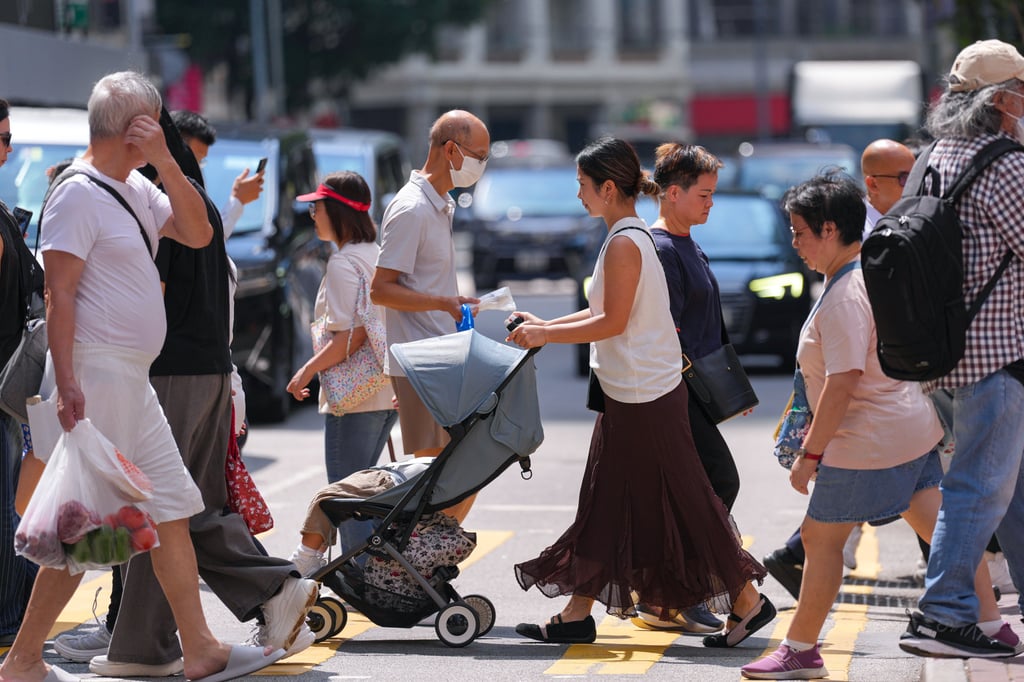
Hong Kong’s fertility rate fell to just 0.73 births per woman in 2025, the world’s second lowest after Macau, according to the United Nations.
“If you do the maths, in 70 or 80 years there will be no one left. But Hong Kong is different – we have migration, so the city will not run out of people. We will just have what we call ‘new Hong Kong people’,” Yip said.
He added that Hong Kong could only sustain its population through migration, automation and talent schemes, and birth incentives had to go beyond one-off cash handouts towards sustained support.
Hong Kong’s birth rate has been falling for years, with the latest figures showing 29,700 births between mid-2025 and mid-2026 – the first time it has fallen below 30,000 since records began in 1962.
The city’s population nonetheless stood at 7,518,300 at midyear, up 0.3 per cent from a year earlier, on the back of net inflows.
In the policy address in September, Chief Executive John Lee Ka-chiu rolled out incentives to encourage childbearing, including extending a scheme to give cash bonuses of HK$20,000 (US$2,550) for each newborn and a reduced down payment on subsidised housing for new parents.
“It is not just about money, though economics is an important factor,” Yip said.
“The 12-hour family leave for civil servants is a good start, and that private companies can offer the same, so that we can build a more family-friendly environment for everyone.”
From January 2027, civil servants will be entitled to 12 hours of family care leave a year, taking between one and four hours at a time to accompany family members to medical appointments or attend their children’s school activities.
KioskNews shows a cleaned-up reading view extracted from the publisher’s page — the original always lives on their site, not ours.