Can you have a heart attack even if your ECG is normal? A cardiologist answers
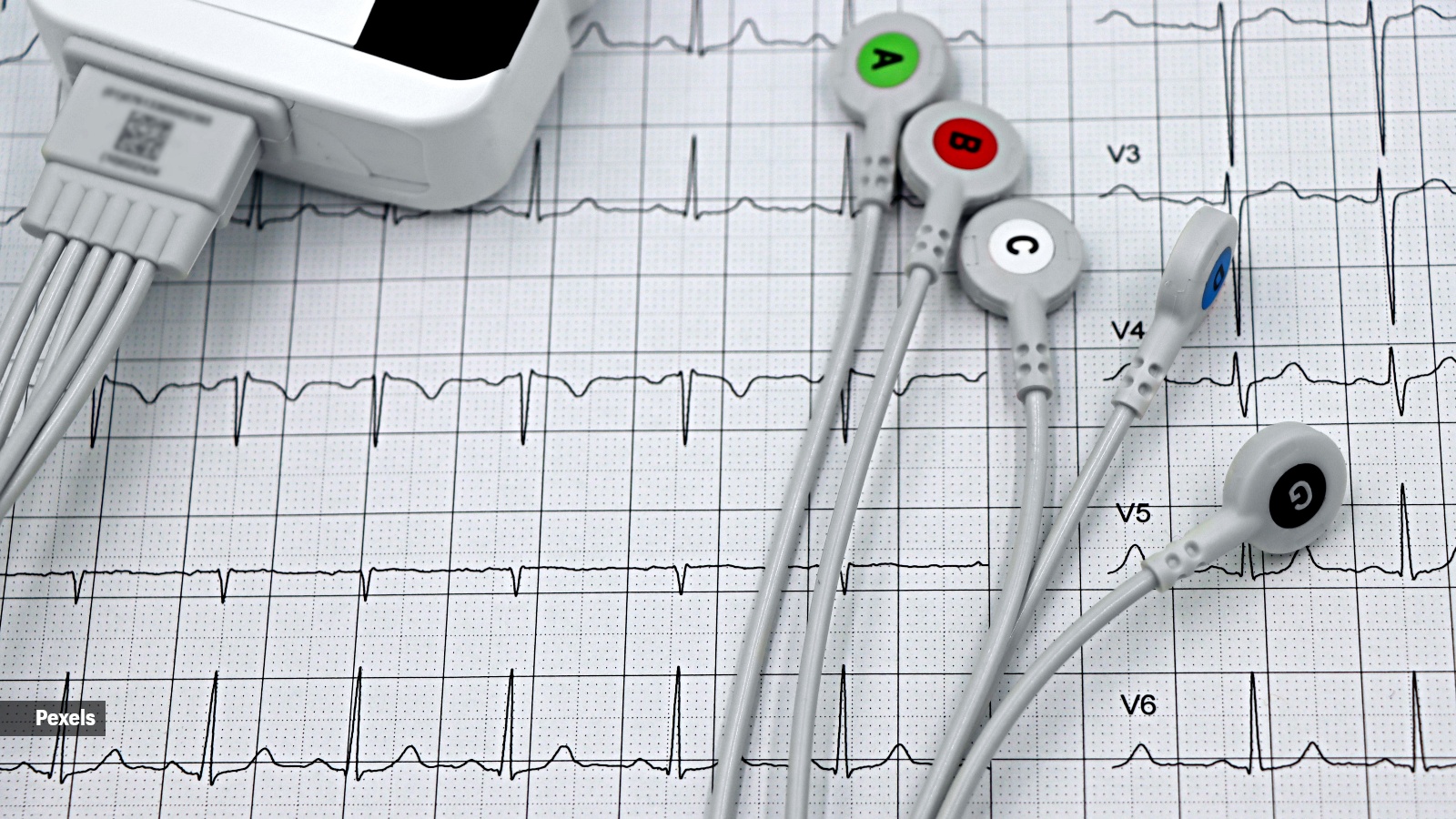
A normal medical test can be reassuring, but does it always mean that everything is fine? An electrocardiogram (ECG), also known as an EKG, is one of the tests doctors use to check for a heart attack. However, a normal reading does not always mean the heart is safe.
In some cases, a person can experience a heart attack even when their ECG shows no obvious abnormalities. So, how is this possible, and what should patients know?
“Yes. A person can have a heart attack even if the electrocardiogram (ECG) is normal,” Dr Zeeshan Mansuri, Consultant Cardiologist, Narayana Hospital, Ahmedabad, tells indianexpress.com.
The cardiologist explains that this can happen when the affected part of the heart is small, when an artery is only partially blocked, or when the electrical changes associated with a heart attack have not yet appeared.
DISCLAIMER: This article is based on information from the public domain and/or the experts we spoke to. Always consult your health practitioner before starting any routine.
“Some heart attacks, non-ST-elevation myocardial infarctions, do not show the usual ECG pattern,” he explains. These are known as non-ST-elevation myocardial infarctions (NSTEMIs).
A normal ECG, therefore, should not be taken as proof that a person is not having a heart attack. Doctors consider the patient’s symptoms, risk factors, further ECG readings and blood test results before ruling one out.
Story continues below this ad
Why can an ECG miss a heart attack, and how reliable is the test?
 It shows the heart’s activity at one specific moment and might not catch changes in all types or stages of a heart attack (Pexels)
An ECG records the heart’s electrical activity at one particular moment. However, the changes associated with a heart attack may not always be visible when the test is performed.
“An ECG is a first test, but it is not reliable enough on its own to rule out a heart attack,” Dr Mansuri says. “It shows the heart’s activity at one specific moment and might not catch changes in all types or stages of a heart attack.”
In the early stages, reduced blood flow may not have caused clear electrical changes, or the changes may be very small and temporary. An ECG may also miss abnormalities if the affected area is small, if it is in a part of the heart not well represented by standard leads, or if an artery has a blockage that comes and goes.
“The ECG can also miss problems if the affected area is small, if it’s in a part of the heart that is not well shown by the standard leads, or if the artery has a blockage that comes and goes.”
Story continues below this ad
Some heart attacks also do not cause ST-segment elevation. “That is why repeat ECGs and blood tests are important if the symptoms keep happening,” Dr Mansuri explains.
What other tests can detect a heart attack if the ECG is normal?
When an ECG is normal, but doctors still suspect a heart attack, they may recommend additional investigations.
One key test is a high-sensitivity cardiac troponin blood test. Troponin is a blood marker that indicates injury to the heart muscle. Doctors may repeat the test later to check whether the levels are rising or falling.
Dr Mansuri explains, “This test is done again after some time to see if the levels go up or down.”
Other investigations may include:
Story continues below this ad
- Repeat ECG: Helps detect changes that may develop over time.
- Echocardiogram: Checks how well the heart moves and pumps. Dr Mansuri notes that this test is used in unstable cases.
- Coronary CT angiography: May be recommended depending on the patient’s risk and test findings.
- Invasive coronary angiography: May also be performed when needed, depending on the risk and what other investigations reveal.
Can ECG readings change as a heart attack progresses?
 Screenshot of a similar query posted on Quora
Yes. ECG findings can change as a heart attack develops. “At first there may be no changes or only small ones. Then the ECG might show ST-segment elevation or depression, T-wave inversion, or new Q waves, depending on the artery involved, how long it has been going on, and the type of heart attack.”
Dr Mansuri points out that some changes may not remain constant: “Some changes may go away. Come and go.” This is why doctors look at repeat ECG readings and consider the patient’s symptoms and troponin results rather than relying on just one ECG.
What should you do if you have heart attack symptoms but a normal ECG?
Anyone experiencing chest pain, shortness of breath, sweating, nausea, dizziness or pain that moves to the arm, jaw or back should go to the emergency room immediately, even if their ECG is normal.
Dr Mansuri advises patients, “Do not drive yourself.” He also stresses the importance of seeking help promptly: “Call emergency services quickly.”
Story continues below this ad
At the hospital, doctors may conduct further ECGs, check troponin levels more than once and look for other possible causes of the symptoms.
“A normal ECG at first does not rule out a heart attack,” he lastly cautions. A normal initial reading should never be a reason to delay seeking medical attention.
DISCLAIMER: This article is based on information from the public domain and/or the experts we spoke to. Always consult your health practitioner before starting any routine.
KioskNews shows a cleaned-up reading view extracted from the publisher’s page — the original always lives on their site, not ours.