‘Process cannot become punishment’: SC warns against indefinite jail before trial
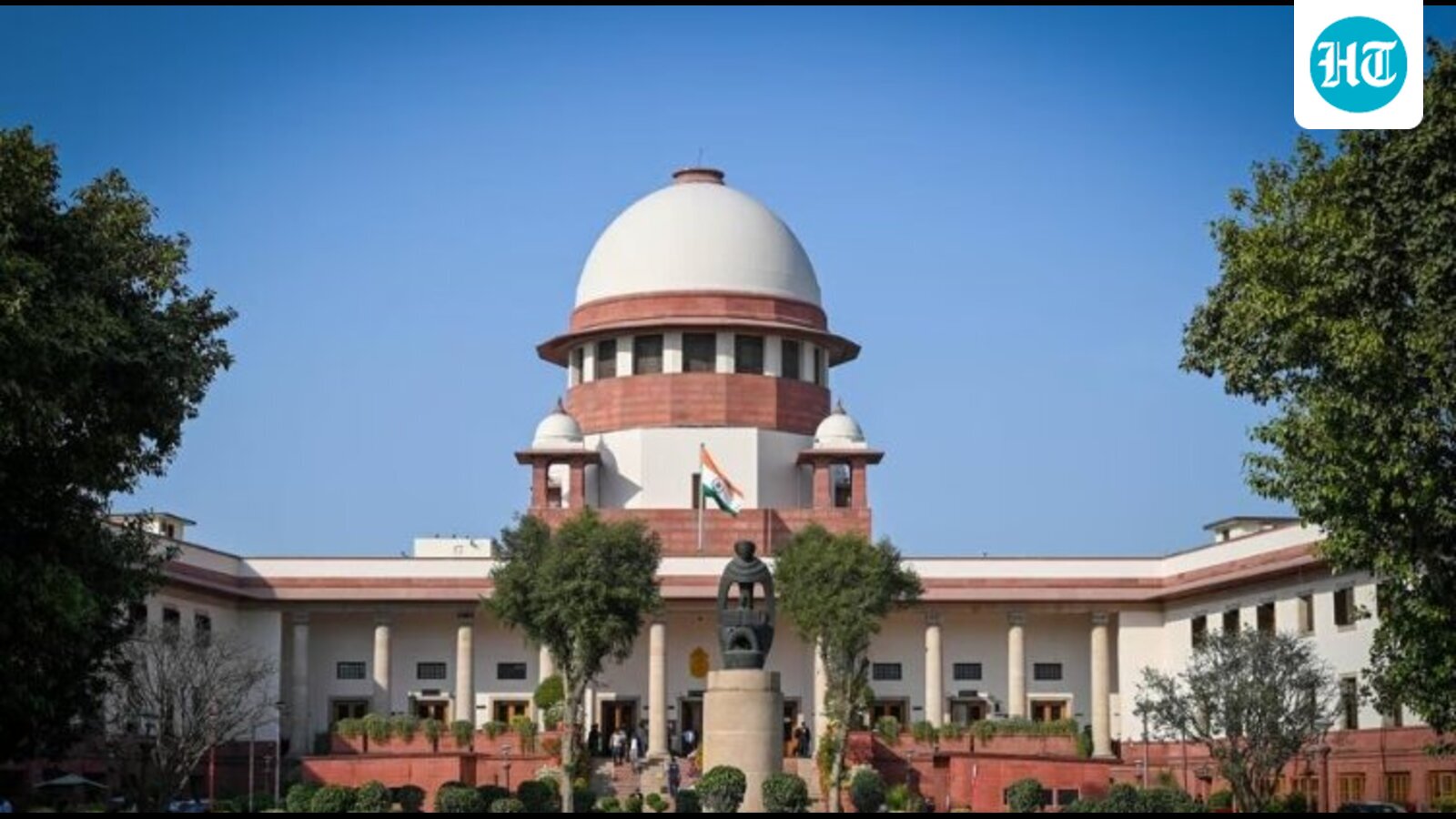
“Process must not be turned into a punishment unto itself,” the Supreme Court held on Wednesday, emphasising that prolonged incarceration, if allowed to continue, would negate the constitutional safeguards available to accused persons even under stringent laws such as the Prevention of Money Laundering Act (PMLA).
“In a bail matter, especially in serious offences, the job of a Court is to balance the rights of the State with those of the arrestee,” noted a bench of justices Aravind Kumar and Vipul M Pancholi, stressing that investigating agencies have a duty to complete their investigations expeditiously and cannot justify keeping an accused behind bars indefinitely when the trial is unlikely to conclude within a reasonable time.
“The twin conditions under Section 45 of the PMLA cannot override the constitutional safeguards under Article 21 of the Constitution,” held the bench, reiterating a principle laid down by the Supreme Court while granting bail to former Delhi deputy chief minister Manish Sisodia in 2024.
Section 45 of the PMLA imposes stringent conditions for bail, requiring the court to give the prosecution an opportunity to oppose the application and, where it does so, to be satisfied that there are reasonable grounds for believing the accused is not guilty and is unlikely to commit an offence while on bail. The court’s observations underline that these statutory restrictions cannot become an instrument for indefinite detention when the constitutional right to a speedy trial is jeopardised.
The court made the observations while granting bail to Sanjay Sureka, an accused in an alleged ₹6,210.72-crore financial fraud and money laundering case involving a steel company, 62 shell companies and a large volume of documentary evidence. The bench found that the scale of the prosecution made an early conclusion of the trial unlikely, even though the investigation against Sureka had been completed.
“In a bail matter, especially in serious offences, the job of a court is to balance the rights of the State with those of the Arrestee,” said the bench, acknowledging that large-scale economic offences could cause extensive damage to the country’s financial system and justified stringent provisions under the PMLA.
But the gravity of the allegations could not eclipse the obligation of institutions to ensure that criminal proceedings progressed without undue delay, it added.
“In the same breath, sight must not be lost of the fact that the institutions have a duty to expeditiously investigate the cases, or else the justification to keep an accused person under custody for an indefinite period of time” would cease to hold, the bench said.
The ruling adds to a line of recent Supreme Court decisions recognising that the statutory restrictions on bail under special laws cannot operate in isolation from the fundamental right to life and personal liberty under Article 21. In Manish Sisodia Vs Directorate of Enforcement, the court held in 2024 that the right to a speedy trial could not be defeated by stringent bail provisions when the delay was not attributable to the accused.
The court has since reiterated similar concerns in cases involving the PMLA, including Arvind Dham Vs Directorate of Enforcement (2026), where prolonged pre-trial detention and the absence of a realistic prospect of an early trial weighed in favour of bail.
The latest observations come at a time when the Supreme Court is also preparing to examine review petitions against its July 2022 judgment in Vijay Madanlal Choudhary Vs Union of India, which upheld several far-reaching powers of the ED under the PMLA. The review proceedings concern, among other issues, the non-supply of the Enforcement Case Information Report (ECIR) to accused persons and the reverse burden of proof under the law.
The 2022 ruling upheld Section 45’s twin conditions for bail, making release in money laundering cases particularly difficult. Subsequent decisions, however, have emphasised that the statutory threshold cannot be applied mechanically to justify prolonged incarceration where the trial cannot be completed within a reasonable timeframe.
In the present case, the court found that Sureka had been in custody for more than 20 months for an offence carrying a maximum punishment of seven years. The prosecution involved 97 accused persons, 48 prosecution witnesses and approximately 15,000 pages of relied-upon documents, while the investigation against other accused persons was still pending.
The bench said the trial court would have to examine thousands of pages of records and hear a large number of witnesses, making the proceedings a time-consuming exercise. With the investigation against Sureka complete, it found no justification for continuing his incarceration until the trial concluded.
“No purpose will be served by keeping the accused person behind bars now,” said the court, allowing his appeal against the Calcutta High Court’s November 2025 order denying him bail.
Sureka was arrested by the ED on December 18, 2024, in a case arising from allegations that the management of Concast Steel and Power Limited had inflated the company’s turnover to secure bank credit and diverted funds through shell companies. The ED alleged that the proceeds of crime amounted to ₹6,210.72 crore, of which properties worth ₹777.10 crore had been attached.
The bench rejected Sureka’s separate contention that his arrest was illegal because the ED forwarded the arrest order and related material to the adjudicating authority five days after the arrest. It held that Section 19(2) of the PMLA requires the material to be forwarded “immediately” but does not prescribe a fixed deadline, and that a reasonable interval necessitated by the compilation of voluminous records would not, by itself, invalidate an arrest.
The court directed Sureka to surrender his passport before the trial court, barred him from leaving the country without its permission and prohibited him from influencing witnesses or tampering with evidence. It clarified that its observations would not be treated as findings on the merits of the case.
KioskNews shows a cleaned-up reading view extracted from the publisher’s page — the original always lives on their site, not ours.