Change of guard at SBKK: Gauri Keeling wants to ‘put things in order’ at iconic institute
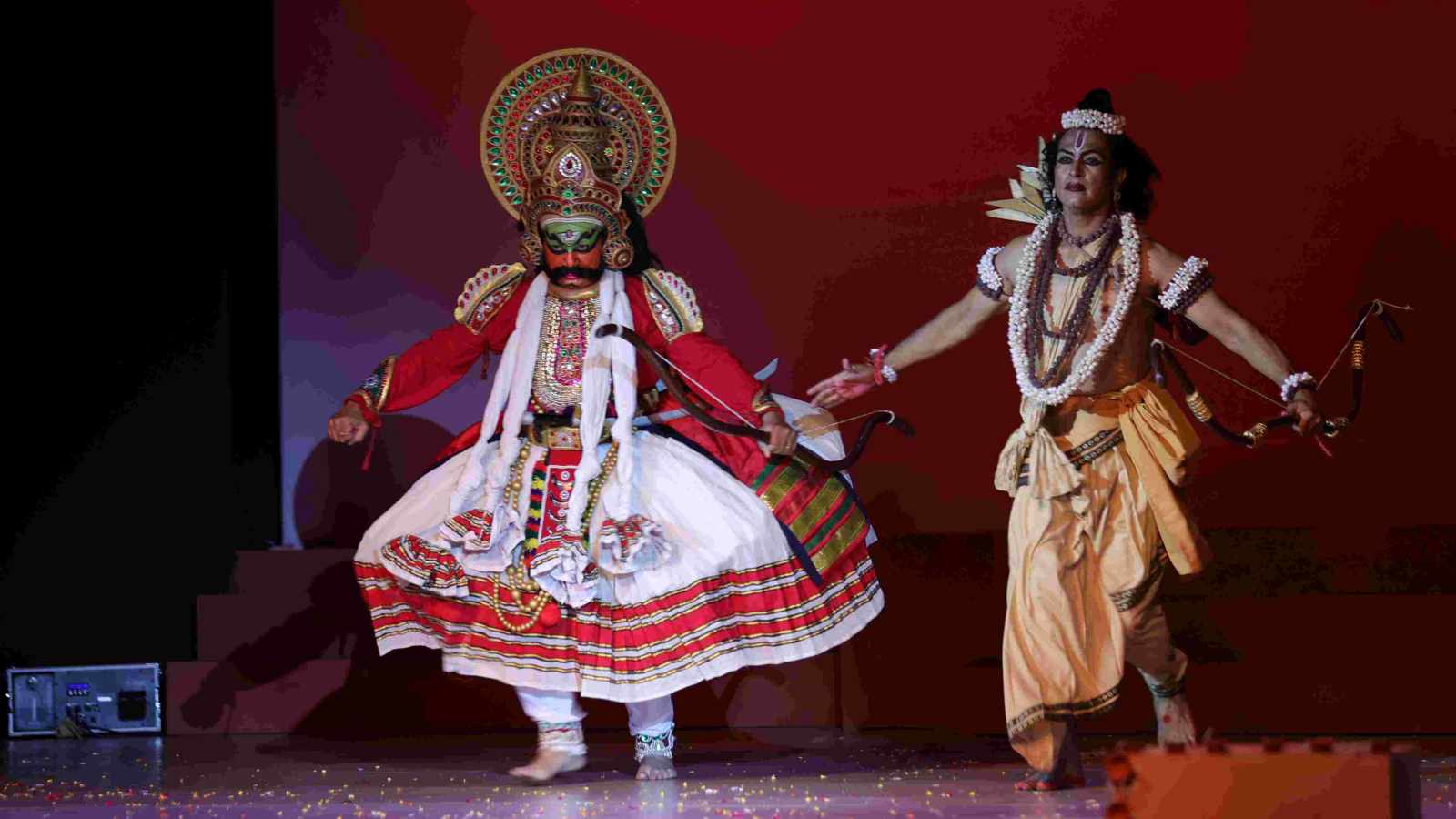
At the full-dress rehearsal of the Shriram Bharatiya Kala Kendra’s (SBKK) flagship production ‘Shri Ram’, the 22-day Ramlila’s 69th edition currently being presented at the institute’s open-air arena in Mandi House, Gauri Keeling has a list of concerns and production notes.
Sitting beside the institute’s chairperson, Shobha Deepak Singh, Gauri, the new Vice Chairperson of SBKK and Shobha’s younger sister, lists the ‘issues’ to Meenakshi Dass, the working trustee of SBKK and Shobha and Gauri’s niece.
King Janaka’s beard is all wrong, the subtitles on the screen are crooked, and the moving lights are not working for her, Gauri says
The older LED screens have given way to traditional sets and older compositions this time, and the chaupais (four-part verses from the Ramcharitmanas) have been brought back.
At an institution that has presented the production for decades and is synonymous with the teaching and performance of Indian classical arts, such details are more than matters of stagecraft.
They also have to do with the artistic vision and authority that has shaped the Kendra. For decades, that vision has been closely identified with Shobha, the institute’s long-time artistic director, who has overseen the various productions and shaped them since taking over from art impresario Sumitra Charat Ram. Sumitra, the mother of Shobha and Gauri, played a key role in the revival of performing arts in post-Independence India.
Story continues below this ad
“Back when my mother began, we were fully involved. All of us children were monkeys in the Ramlila when it was rehearsed in the basement of our Curzon Road residence,” said Gauri, who learned how to sing and dance as a child.
With Shobha getting on in age – and after her husband Deepak Singh, who helped her run the place, passed away a couple of years ago – most of the financial and cultural decision-making has been taken over by Gauri, who plans to work in collaboration with Jayant Kastuar, Director of SBKK, and Dass.
Gauri will also take over the major decision-making for Kamani Auditorium, the 55-year-old, 625-seater auditorium located next to SBKK, and one of the oldest auditoriums of its kind in the city.
“Shobha has done a wonderful job for about 25-30 years and will always have the respect of the chairperson of the institute but she can no longer walk around a lot, and cannot make certain decisions,” Gauri told The Indian Express.
Story continues below this ad
The history of SBKK, she said, can be loosely divided into two eras – “the Sumitra Charat Ram era based on traditional writing, then post the ’70s, the Shobha Deepak Singh era, which was more modern”.
She is herself traditional, Gauri said, and wants, therefore, to bring back some of the older elements besides “trying to remove all the gimmicks”.
Gauri moved to London in 1976 after marrying British diplomat David Keeling. She runs an art trust in that city along with Lekha Poddar, the co-founder of Devi Art Foundation, and Amin Jaffer, an art historian who also curated the Indian Pavilion at the Venice Biennale. She will now divide her time between Delhi and the UK, Gauri said.
As Vice Chairperson of SBKK, Gauri’s priority will be to “put things in order”. “I am determined that this institute, which has been running for 70 years, is put on the right path for at least the next 10 years,” she said. She also plans to look for a professional chairperson for the institute.
Story continues below this ad
“I don’t believe in the mai baap (paternalistic) system of functioning at any level. I am trying to put together a team that will be answerable to a committee including the Chairperson, the Vice Chairperson and the Director of the institute. I am training them to work like I do,” Gauri said.
“Now, for the first time, every project is going to have a project report,” she said. “A budget will be made for the year, and if anyone goes over budget, I don’t approve it. This is a charitable institution and we don’t have money to squander. I am Mr Charat Ram’s daughter; I was trained by him to be focused and precise.”
The change of guard at the Capital’s premier dance and music institute could alter how the Kendra is run, and how its legacy is carried forward.
“The transition has to occur but it is a slow process,” SBKK Director Kastuar said. Getting professionals to manage the show is easier said than done, he said – “finding professionals who don’t have their biases and who don’t have an axe to grind is hard”.
Story continues below this ad
“Family members may have their individual views, but they are all committed to the institute, which is good. My role is to ensure a smooth transition,” Kastuar said.
Transitions always bring teething problems, Dass said. “We are informing Shobha ji about everything. I feel everything is in order; it just needs to be managed better. We are trying to professionalise, put standard operating procedures in place. We are all doing it together. SBKK is nothing without Shobha ji and she is satisfied that things are moving well,” Dass said.
Founded by Sumitra Charat Ram, daughter-in-law of industrialist Lala Shri Ram of the DCM group, SBKK traces its origins to an all-night baithak she hosted on Independence Day in 1947 at her residence.
This grew into Jhankar, a cultural society dedicated to Indian classical music and dance, and in 1952, the institute was formally registered as Shri Ram Bharatiya Kala Kendra. It presented the Ramlila as a dance drama in 1957, a production that remains its signature annual presentation. The institute also presents the famed Shriram Shankarlal Music Festival.
KioskNews shows a cleaned-up reading view extracted from the publisher’s page — the original always lives on their site, not ours.