DOJ launches 'Sure Ka Na Ba?' campaign vs. online scams
Make this your preferred source to get more updates from this publisher on Google.
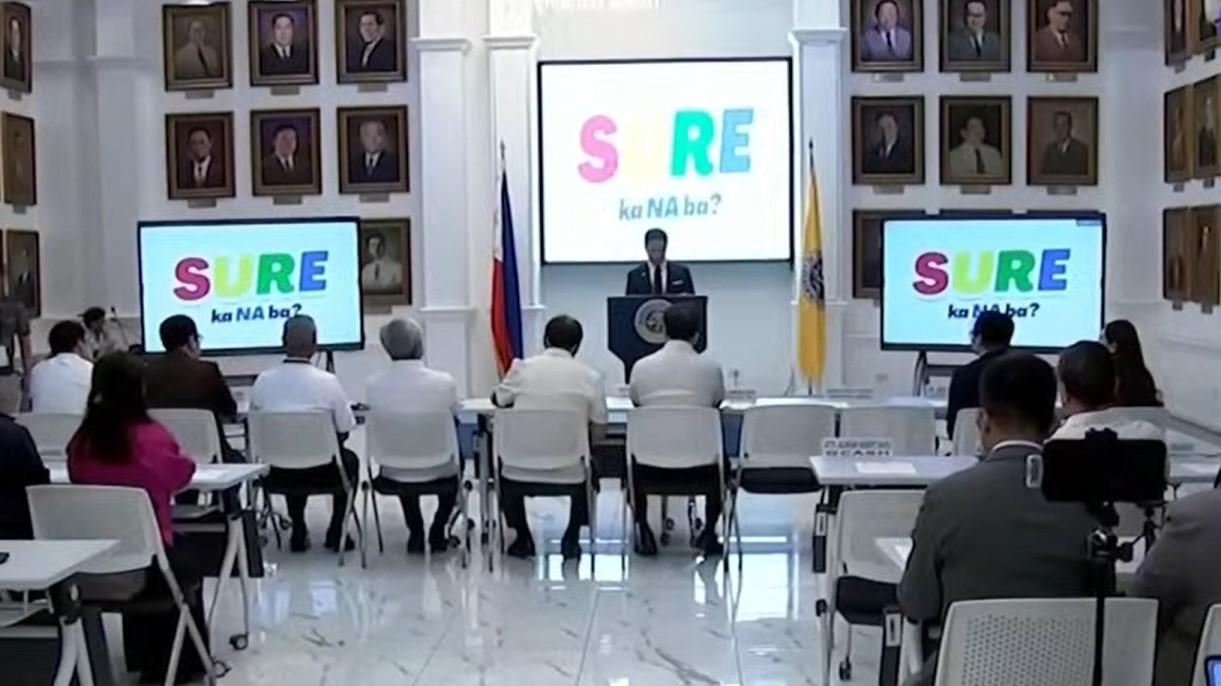
The Department of Justice (DOJ) on Thursday launched a public awareness campaign to help Filipinos recognize and avoid online scams amid the increasing number of people exposed to fraudulent schemes.
According to a report by Darlene Cay on GTV's Balitanghali, the "Sure Ka Na Ba?" public awareness campaign against cyber scams aims to enable Filipinos to identify suspicious messages, calls, and links before they become victims.
"We aim to equip every Filipino with the knowledge and practical skills to recognize the warning signs of an online scam," Justice Secretary Fredderick Vida said.
"We want every Filipino to learn how to spot a scam, understand how it works, report suspicious incidents, and empower others to protect themselves. In other words, I want their 'sure ka na ba' to be 'sure na.' This is the preventive approach," he added.
About 84% of Filipino adults encountered scams in the past year, higher than the 77% recorded in 2025, based on the 2026 State of Scams in the Philippines report of the Global Anti-Scam Alliance.
Under the DOJ campaign, the word "SURE" represents four steps that the public should remember when dealing with potential scams:
- Spot — Identify whether a message, call, or link could be a scam
- Understand — Learn how scams work and how to protect oneself
- Report — Immediately report suspected scams to the appropriate authorities
- Empower — Help others avoid falling victim to fraudulent schemes
Vida said Filipinos should make it a habit to ask themselves, "Sure ka na ba? (Are you sure?)" before clicking suspicious links, sending money, or engaging with questionable offers.
The DOJ chief stressed that while the department continues to strengthen efforts to hold scammers accountable and build cases against them, it also wants to empower the public to protect themselves.
Vida also shared that he had been used in an impersonation scam, recounting that someone recently called an acquaintance and pretended to be him to solicit money.
Filipinos who encounter suspicious messages or fall victim to scams may report the incidents to authorities, their respective banks, or e-wallet providers.
They may also send reports to the DOJ through cybercrime@doj.gov.ph.
KioskNews shows a cleaned-up reading view extracted from the publisher’s page — the original always lives on their site, not ours.