7 Fantasy Books You Can Finish in a Weekend

Born with Autism (formerly classified as Asperger syndrome), Tyler B. Searle has been obsessed with storytelling since he was old enough to speak. He gravitated towards fairy tales, mythology, the fantasy genre, and animated movies and shows aimed at family audiences. When not writing, Tyler enjoys watching more cartoons and reading fantasy books in his home in Ontario, Canada.
Sign in to your Collider account
Fantasy as a genre is defined by the presence of magical and mystical elements. It can be as mundane as a version of our reality where one in every ten humans has the power to control one of the four elements, to as expansive as a secondary world populated by brave heroes, dark wizards, and ferocious monsters. Thus, it's been a very common genre for literature, where authors are not limited by the constraints of reality and budgets like in television and film, and can let their imaginations run wild.
With how busy our lives can get these days, it can be hard to find the time to indulge in a little reading. Fortunately, there are a fair few fantasy books that, thanks to their digestible pros and gripping content, make the pages fly by over a couple of days.
'After Hamelin' (2000)

The Pied Piper of Hamelin is one of the most famous European folk tales, but have you ever wondered what happened after the Piper lured away the town's children? Bill Richardson explores this question through After Hamelin, which follows Penelope, the deaf child left behind in most versions of the story. With the aid of the village's wise man, Penelope follows the piper into a magical world, where she discovers that there is much more to him than his hypnotic pipe than initially assumed.
The book is written for a younger audience, which makes it a pretty quick and easy read. That doesn't mean it pulls any punches, however: there are plenty of dark and emotional moments that have permanent consequences for the characters. All of this is used to explore interesting themes of responsibility, the burden of one generation being passed to the next, and the power of imagination.
'Dragon Princess' (2014)

One of the most classic and well-known tropes in fantasy is a hero rescuing a princess from a ferocious dragon. Author S. Andrew Swann decided to play around with it in his novel Dragon Princess, the first in a trilogy, that follows a thief named Frank who is hired by the royal wizard to play the part of the hero. Unfortunately, this was all part of an elaborate plan by the wizard and dragon to seize power, but Frank disrupts the wizard as he casts a spell, resulting in a magical mishap that sees Frank alone in the woods in the princess' body.
This is the kind of book written by someone who has a true love of fantasy stories, and thus knows how to tweak and play with the classic tropes in just the right way. A lot of time and care is put into exploring how a world where magic rarely works as intended operates, and many of the twists are hilarious in how off the beaten path they are. Meanwhile, it also knows when to be serious, best seen through the book's exploration of Frank's body dysmorphia.
'Phantastes' (1858)

Many people like to call J. R. R. Tolkien the father of modern fantasy, but that title arguably belongs to George MacDonald. His works inspired authors such as Tolkien, C. S. Lewis, and Lewis Carroll, the latter of whom he helped further by encouraging him to publish Alice's Adventures in Wonderland. The book that best showcases MacDonald's influence on the genre is Phantastes: A Faerie Romance, about a young man who finds his way into the land of the faeries and attempts to find his ideal personification of beauty.
Modern audiences might have a bit of a hard time adjusting to MacDonald's style, but once acclimated, the book is nothing short of magical. Events and structure are based more around emotion than a classic three-act plot, with plenty of allegories and characters who embody certain aspects of the human psyche. This gives the book the atmosphere of moving through a lucid dream, especially as it changes alongside the protagonist's ideals.
'Tooth and Claw' (2003)

Have you ever wondered what would happen if you mixed dragons with a Victorian romance novel? The result is Tooth and Claw, which details the lives of a family of dragons shortly after the death of their patriarch. While his eldest son, Penn, is wracked with guilt after listening to his father's final confession, another son, Avan, risks his reputation by trying to regain his stolen inheritance. Meanwhile, his younger daughters are separated from each other and forced to find their footings in a world that primarily sees them as future wives.
Tooth and Claw has all the witty banter, family crises, and navigation of rigid social classes that one would expect from a Victorian romance, but the fact that everyone is a dragon also allows for fantastic worldbuilding opportunities. It is customary for dragons to eat the deceased, for example, and scale color is used to mark a female's position in society; gold scales for maidens, pink for expected brides, and red for mothers. It's also got plenty of grim moments as well, such as serf dragons who have their wings constantly bound, tyrannical nobles being permitted to cull sickly hatchlings among their people, and if a female dragon's scales turn pink, she is expected to marry the dragon who caused it regardless of their reputation.
Collider Exclusive · Game of Thrones Personality Quiz Which Game of Thrones House Do You Belong To? Stark · Lannister · Targaryen · Baratheon · Tyrell
Five great houses. Five completely different answers to the same question: how do you hold power in a world that will take it from you the moment you stop paying attention? Eight questions will determine where your loyalties — and your nature — truly lie.
🐺Stark
🦁Lannister
🐉Targaryen
🦌Baratheon
🌹Tyrell
01
Someone powerful is acting dishonourably and everyone knows it. What do you do? In Westeros, the answer to this question has ended more than one great house.
02
What is the source of your power? Every house endures because of something. What is it for yours?
03
Who do you truly fight for? Strip away the banners and the words. The honest answer tells you everything.
04
How do you deal with your enemies? A house's method reveals its character as clearly as its words ever could.
05
What kind of ruler do you believe in? Westeros is full of answers to this question. Most of them end badly.
06
You suffer a devastating loss. How does your house respond? How a house handles defeat tells you more about it than how it handles victory.
07
Which of these truths about Westeros do you most believe? Every house has a philosophy. This is yours.
08
The Iron Throne is within reach. What do you do? The answer reveals not just your ambition — but your character.
The Maester Has Spoken Your House Is…
Your answers point to the great house whose words, values, and way of surviving in Westeros match your own. Bend the knee — or don't. That's very much up to you.
🐺 House Stark
Winter is Coming — and you have always known it. You prepare not out of fear but out of duty, because the people who depend on you deserve someone who takes the long view.
- You lead with honour even when it costs you, because you understand that a reputation built on integrity is the only one worth having.
- Your loyalty to family and people runs deep — not as sentiment but as a code that doesn't bend when things get difficult.
- The North endures because Starks endure — not by being the cleverest players in the game, but by being the kind of people others are willing to follow into the cold.
- You are that kind of person. The pack survives. The lone wolf dies. You already know which one you are.
🦁 House Lannister
You understand the game — its rules, its exceptions, and exactly when the rules become the exception. You play it without illusions and without apology.
- You are sharper than most people realise, and you have learned to use that gap to your advantage.
- A Lannister always pays their debts — and you always keep your word, because your word is an instrument of power, and instruments must be kept in working order.
- You love your family with a ferocity that sometimes blinds you, and you know it, and you do it anyway.
- The lion doesn't concern itself with the opinion of sheep. Neither, in the end, do you.
🐉 House Targaryen
You carry a sense of destiny that is difficult to explain and impossible to ignore — the feeling that you are not simply participating in the world but meant to reshape it.
- You are capable of extraordinary things, and you know it, and that knowledge is both your greatest strength and your most dangerous quality.
- Fire and blood are not just words to you — they are a philosophy about what change requires and what it costs.
- The Targaryens at their best were transformative rulers who broke chains and defied the limits of what anyone thought possible.
- At your best, so are you. The dragon has three heads. You are one of them.
🦌 House Baratheon
You are a force — direct, powerful, and difficult to ignore when you enter a room or a conflict. You do not negotiate with challenges. You meet them.
- Ours is the fury — and yours is a kind of intensity that commands attention, respect, and occasionally fear from those who underestimate what's behind it.
- You value strength and straight dealing. You'd rather know where you stand in a fight than navigate a web of courtly whispers.
- The Baratheons built their house on the back of one of the greatest military victories in Westerosi history — and then struggled with what came after.
- The lesson of your house is that winning is not the end of the story. Governing is. You are learning that too.
🌹 House Tyrell
You understand that power does not always announce itself — that sometimes it arrives with flowers, good wine, and a smile that doesn't quite reach the eyes.
- Growing strong is your house's motto, and you live it: patiently, strategically, always investing in the relationships and resources that will matter most when it counts.
- You are charming by choice and calculating by nature — a combination that makes you one of the most effective players in any room you enter.
- The Tyrells fed King's Landing and shaped its politics without ever sitting on the Iron Throne — and they were arguably more powerful for it.
- You know that the person who controls the food controls the kingdom. And you always know where the food is.
'A Knight of the Seven Kingdoms' (2015)

If you've ever wanted to try getting into George R. R. Martin's A Song of Ice and Fire series, but are put off either by its bleakness and or incomplete nature, consider checking out A Knight of the Seven Kingdoms. This omnibus combines three novellas—The Hedge Knight, The Sworn Sword, and The Mystery Knight—that are set 100 years before A Game of Thrones. They follow the adventures of the wandering hedge knight, Ser Duncan the Tall, and his squire, Egg, as they are forced to deal with arrogant lords, dark conspiracies, and too many life or death situations.
Martin has always succeeded in creating characters who draw you in and keep you turning the pages, and Dunk is one of his strongest. He's an honest protagonist who might not be the smartest person around, but he always tries to do what is right, even if it costs him dearly. His point of view also provides a more ground-level look at Westeros and how the commoners and lesser lords try to live their lives while the high lords play the game, all of which is brought to life through beautiful illustrations by Gary Gianni.
'The Last Unicorn' (1968)
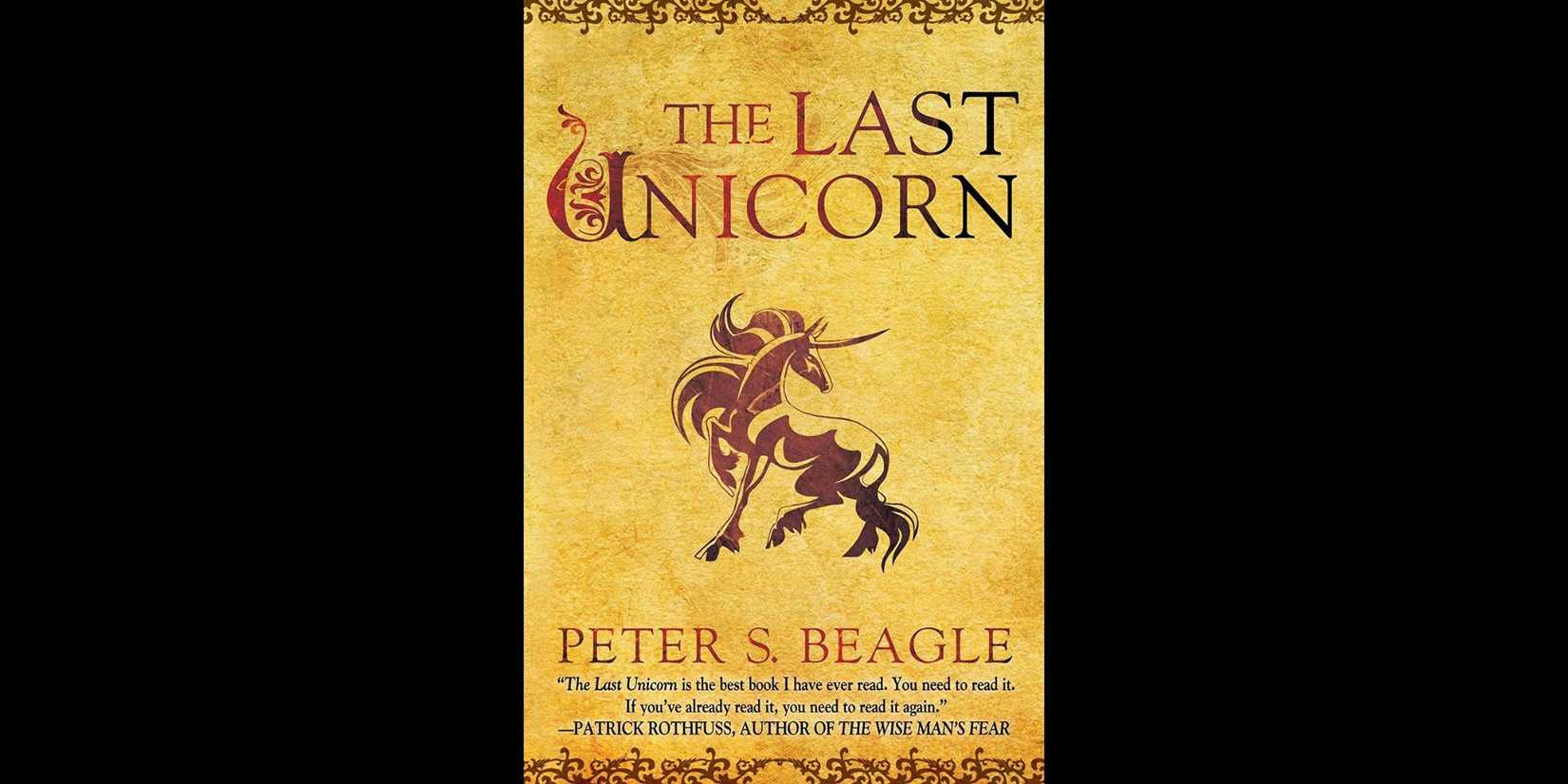
Peter S. Beagle has had a very prolific career as a writer, from best-selling novels to the screenplay of Ralph Bakshi's The Lord of the Rings film and "Sarek," an episode of Star Trek: The Next Generation. His best work, however, is his 1968 novel, The Last Unicorn, for which he also wrote the screenplay to its 1982 film adaptation. It follows a unicorn who ventures off into the world to find others of her kind, encountering unlikely allies and fearsome enemies along the way.
The beauty of The Last Unicorn is how casual and unapologetic it is about the fact that it is a fantasy book. Tropes such as evil uncles usurping their niece's throne are baked into the bones of the world, and it's not afraid of letting things be weird, like through butterflies that sing in riddles, and the existence of real-world mythologies like Robin Hood. Yet, amidst all of this, the story is also one of tremendous melancholy, as the unicorn's immortal nature and the changes she must make to rescue her kind touch on themes of regret, the price of immortality, and the power of memory.
'The Hobbit' (1937)

While grading papers one day, a bord Professor Tolkien wrote: "In a hole in the ground, there lived a hobbit." From this one line, he crafted the story of Bilbo Baggins, a respectable hobbit who is whisked away by the wizard Gandalf to join an expedition to the Lonely Mountain to reclaim it from the dragon Smaug. While originally intended as a one-off story for his kids, Tolkien eventually brought it into the greater legendarium he was writing, and would eventually write a sequel called The Lord of the Rings.
The Hobbit has never been out of print since its publication, and has continued to delight and inspire readers and creatives alike. This is thanks to how well structured it is: the story is broken into easily digestible episodes that play out like an epic quest, born from Tolkien's love of Germanic mythology and the epic poem Beowulf. Those familiar with The Lord of the Rings might find Middle-earth a tad more whimsical than expected, but it still has plenty of epic battles and hard-hitting themes about greed, corruption, and finding one's courage in the darkest of times.
KioskNews shows a cleaned-up reading view extracted from the publisher’s page — the original always lives on their site, not ours.