10 Best Mad Magazine Movie Parodies Of All Time
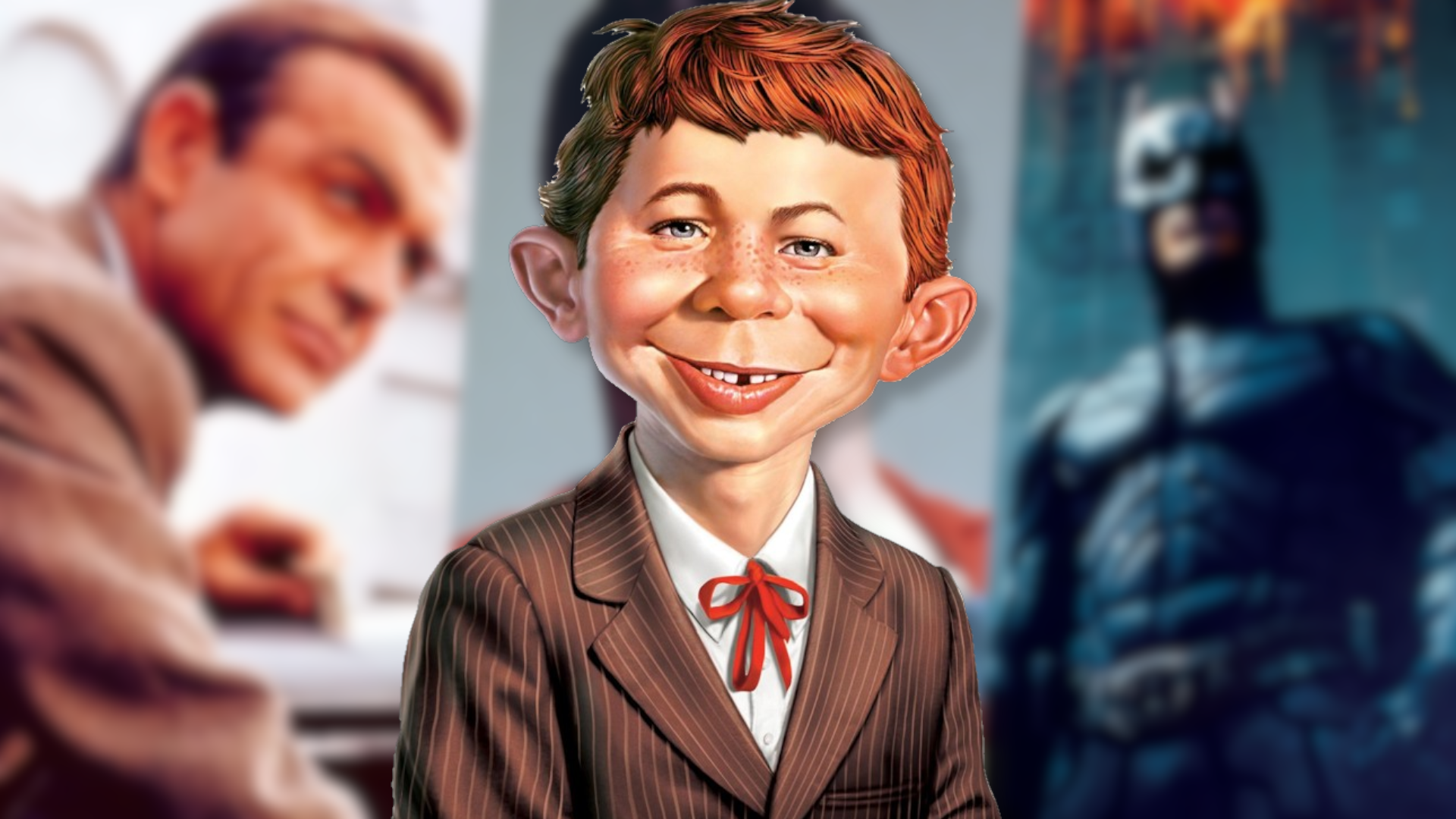
Over more than seven decades, MAD magazine has put out one hilarious parody after another targeting the biggest films ever made. First published by EC Comics starting in 1952, the magazine briefly ended its run in 2018 before continuing under DC Comics, where it remains today. MAD caught on fast and quickly became America's favorite humor magazine with its heavily-stylized art, willingness to make fun of any and everything, and its beloved ever-present mascot Alfred P. Neuman.
From its earliest parodies of films like High Noon (1953) to modern blockbusters like The Batman (2022), MAD has been both relentless and ruthless. Wherever a joke can be made—no matter how crass or goofy— the self-described "usual gang of idiots" behind MAD will be there trying to fish it out. The magazine has become such a cultural institution that many celebrities consider MAD parodies an honor. Taking a look at the best MAD magazine movie parodies of all time, it's perfectly clear just what they mean.
8 James Bomb Bomb Movies (MAD #165, March 1974)

Hot on the heels of Roger Moore's first Bond appearance in Live and Let Die, the magazine would publish a now-legendary roundup of James Bond parodies with "8 'James Bomb' Bomb Movies" (MAD #165) in March 1974. The ambitious series condenses every then-released Bond movie into a single page each, viciously parodying Bond clichés throughout.
Agent 007's romances and enemies feel as absurd as his gadgets, while meta-commentary on the film's success, rotating actors, and churning releases serves as the cherry on top. Meanwhile, beloved MAD artist Mort Drucker effortlessly channels the changing identity of Bond (and the series itself) through his caricatures of Sean Connery, George Lazenby, and Roger Moore.
Superduperman (MAD #208, July 1979)
MAD's success can be attributed, at least in part, to an early parody of Superman from MAD #4 called "Superduperman"—perhaps ironic, considering it's now one of DC Comics' best superhero-free offerings. The legendary parody lampooned Superman, Captain Marvel, and superheroes generally, turning Clark Kent into a bumbling creep named Clark Bent.
"Superduperman" effectively permanently redefined MAD's format, marking a shift from general genre-focused satire to actually parodying particular franchises and media.
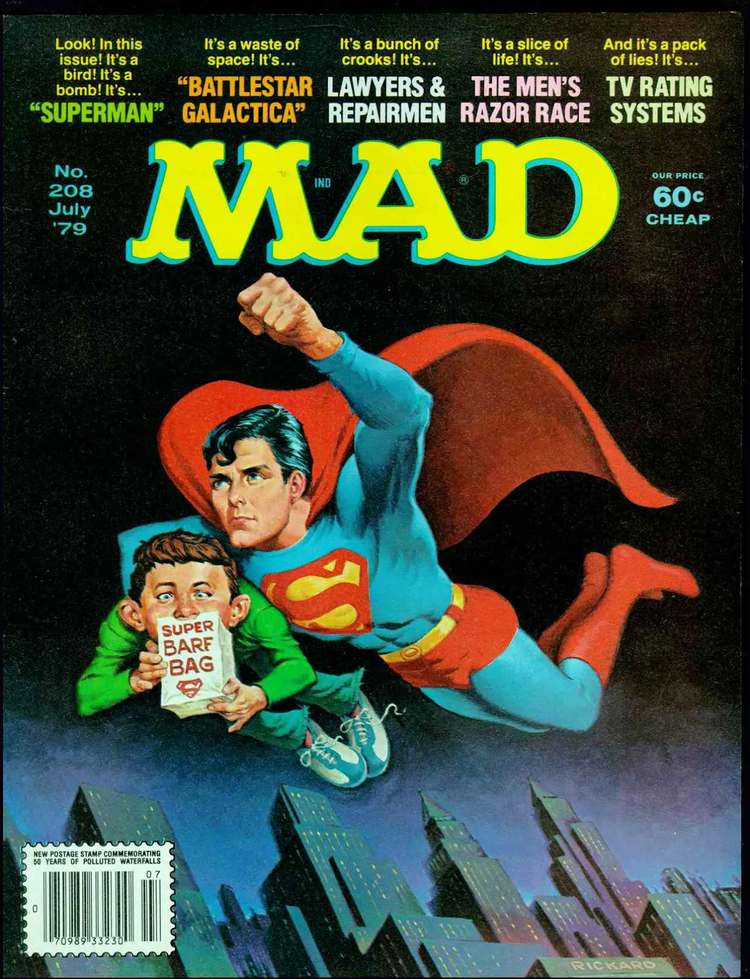
In a sense, then, MAD's parody of the iconic 1978 Superman film serves as a full circle moment—fittingly also titled "Superduperman" (MAD #208). Much like the original "Superduperman" deflated the hero itself, the 1979 movie parody deflated the film's grand scale and cosmic ambitions.
Star Roars/Star Bores (MAD #196, January 1978)
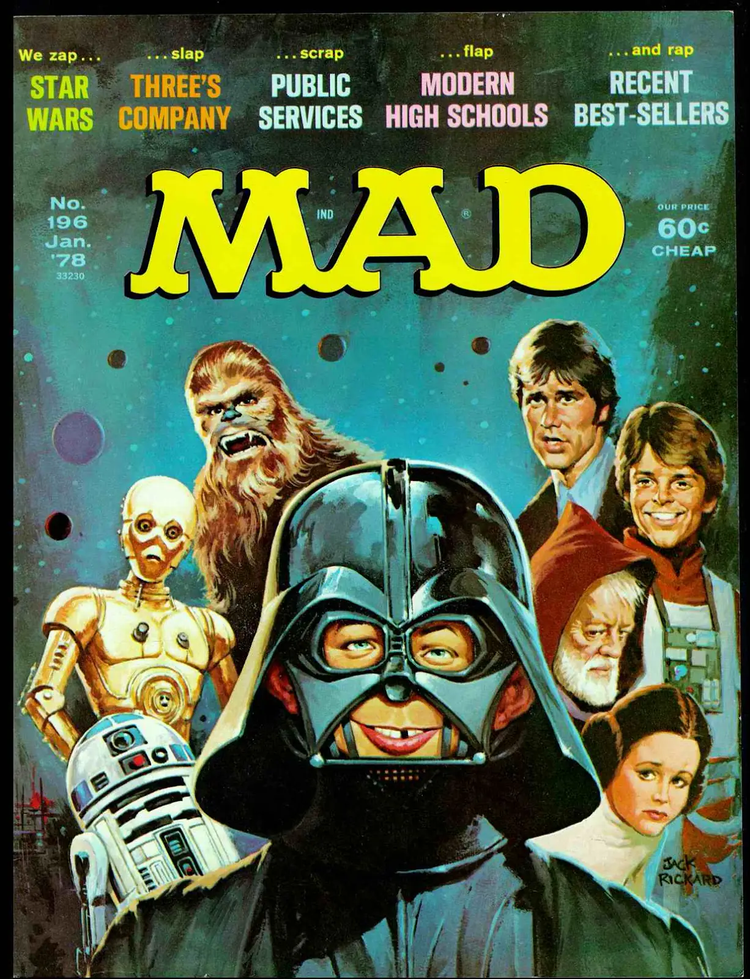
Star Wars was effectively an overnight sensation when the first film premiered in 1977, and it was only natural that MAD would take notice of it. In fact, its outsized cultural impact partly forms the butt of the joke throughout the magazine's recurring parodies of the series. Those parodies officially kicked off in MAD #196 with "Star Roars"; subsequent films would be titled variations on "Star Bores".
MAD's Star Wars parodies are among the magazine's most beloved film parodies ever, and it's all thanks to Star Wars itself: its melodrama, character archetypes, futuristic gadgets, and grandiosity are all ripe for a bit of deflation. Add in the rich commercial machinery that developed around Star Wars almost immediately, and it would become an obvious candidate for MAD to do what they do best.
Star Blecch - The (GACCK!) Motion Picture (MAD #216, July 1980)
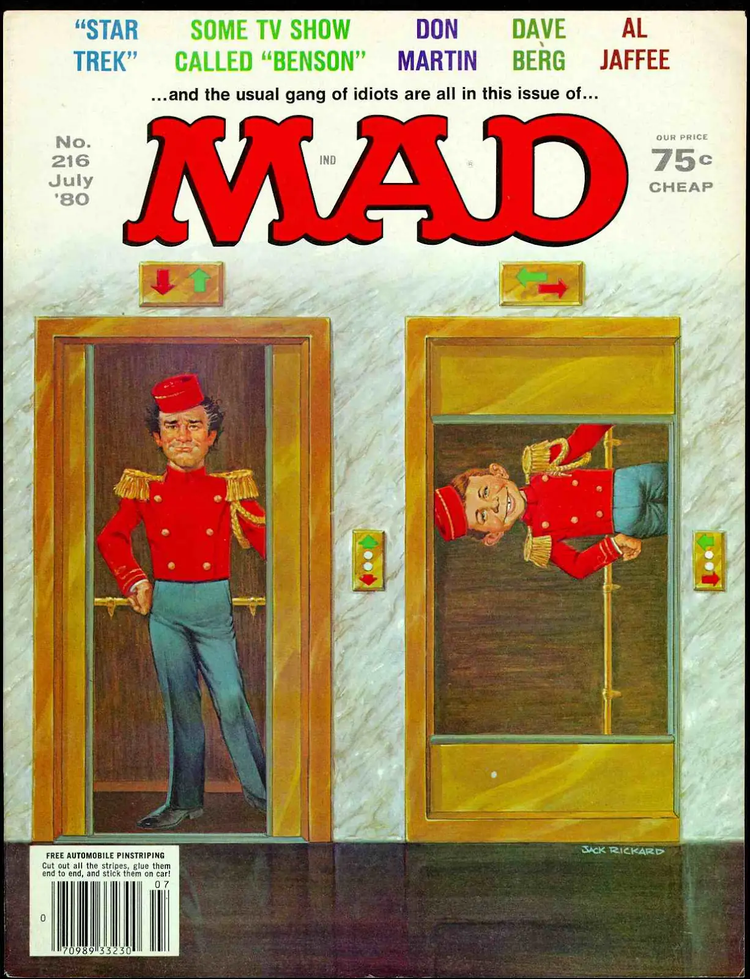
MAD first lampooned Star Trek in 1967, focusing on the original television series with a parody called "Star Blecch." This original parody mainly took aim at the show's goofy technologies, the bizarre creatures they meet, and the sometimes contrived writing. But as an episodic series, Star Trek had a methodical and smart formula that was, for all intents and purposes, fairly grounded. Star Trek: The Motion Picture (1979), of course, translates that into a grander cinematic experience—a fact that MAD quickly homed in on with "Star Blecch - The (GACCK!) Motion Picture."
The Dork Knight (MAD #495, November 2008)
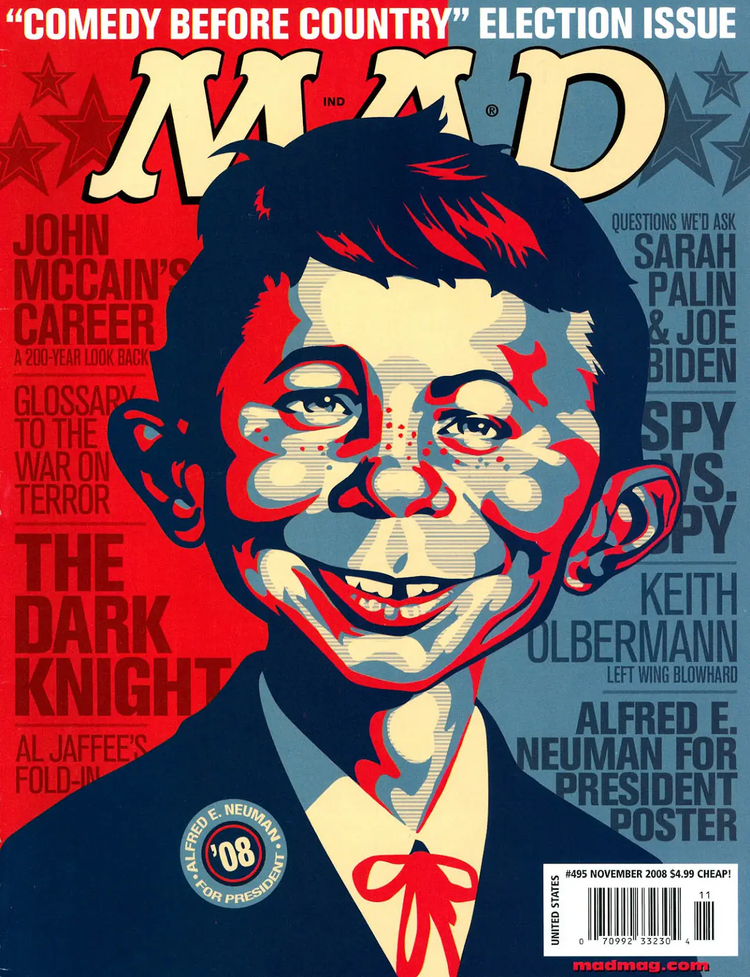
MAD famously satirizes genre movies, dramas, and self-serious flicks. They provide a fertile ground for the contrast and irreverence that makes MAD's comedy work.
It's also what makes "The Dork Knight" (MAD #495) work. After decades of campy Batman movies, Nolan's Batman trilogy came along with a particularly gritty, dark approach to Gotham and its caped crusader. MAD's parody of the first film, Batman Begins, got straight to the point with the flippant premise Battyman, Begone!
The Dark Knight is still considered the best Batman movie of all time, and surely the MAD creative team of Desmond Devlin and Tom Richmond were aware of both the grandeur and quality. That still didn't stop them from ripping into the movie's absurdity from its opening panel, leading into a parody where Batman is dorky and self-indulgent and the very buzz around The Dark Knight is made an object of loving ridicule and fourth-wall breaking jokes. "The Dork Knight" is MAD doing what they do best: affectionately rendering their targets' prestige irrelevant.
The Bathroom (MAD #28, December 2022)
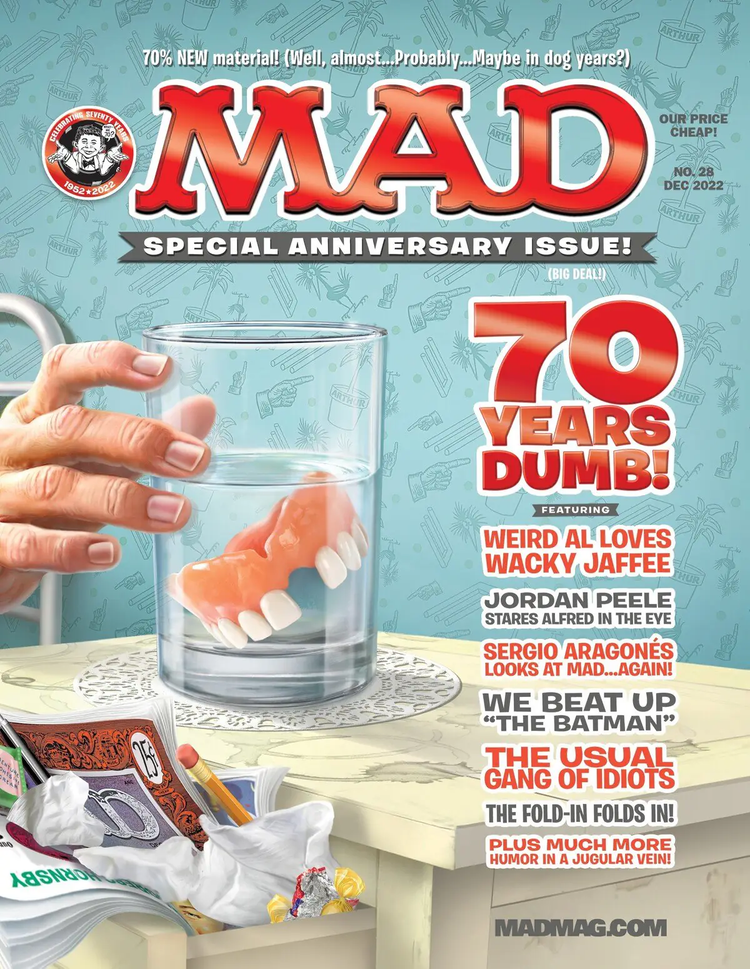
After MAD was rebooted by DC Comics in 2018, the once-ubiquitous film parodies gradually became few and far between, effectively going on a hiatus in 2019. Matt Reeves' The Batman was what it took to awaken the MAD monster from its slumber, with Desmond Devlin and Tom Richmond hopping back on for another parody of the brooding three-hour reinterpretation of Gotham and its favorite vigilante.
With its somber, subdued tone, methodical pacing, and particularly dark take on the classic character, The Batman provided MAD with their perfect target, and the magazine aimed to take the plodding epic down a notch with good old-fashioned toilet humor: an absurd reminder of the absurdity of Batman himself.
One Cuckoo Flew Over The Rest (MAD #184, July 1976)
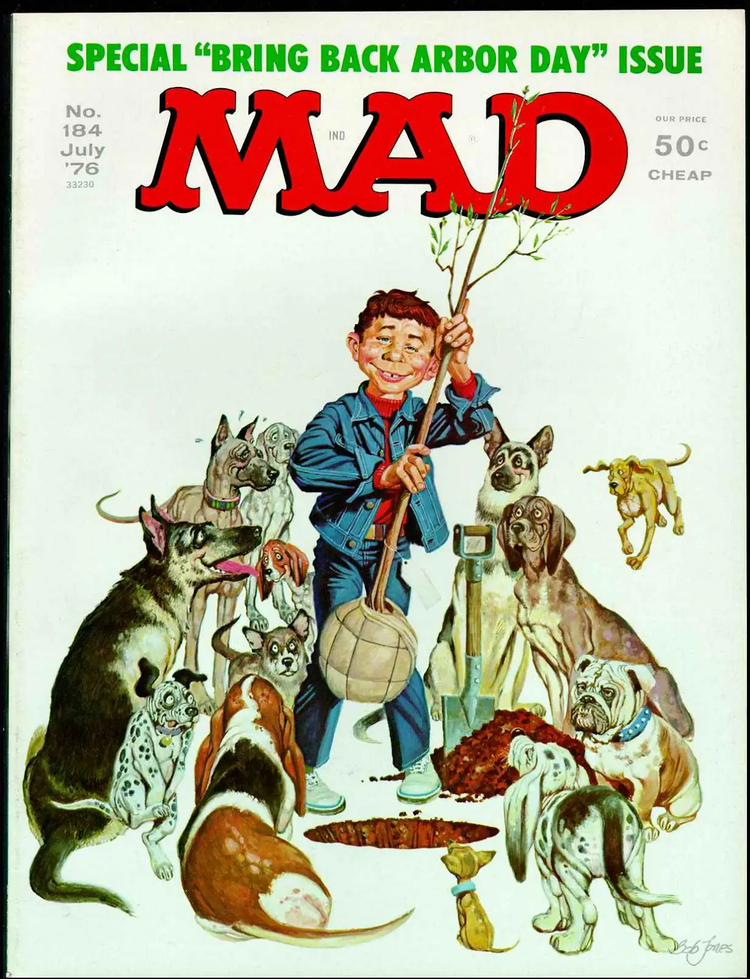
If a single word could sum up MAD's approach to comedy, it would likely be "defiant". MAD's satire is built on rigorously opposing the sensibilities and grandeur society imposes on itself; the magazine's willingness to make fun of everything is itself a form of defiance. It should come as no surprise, then, that one of the magazine's best movie parodies takes aim at a story about defiance in the face of conformity and authority.
One Flew Over The Cuckoo's Nest (1975) heavily employs satire to critique institutions, authority, and psychiatry. What makes "One Cuckoo Flew Over The Rest" a particularly good parody is that its own satire joins hands with the movie's premise. In its own way, it undermines the authority at play in the film by treating it as so dubious that it doesn't even deserve sense—it deserves mischievous nonsense.
The Fascist And The Feeblest (MAD #40, December 2024)
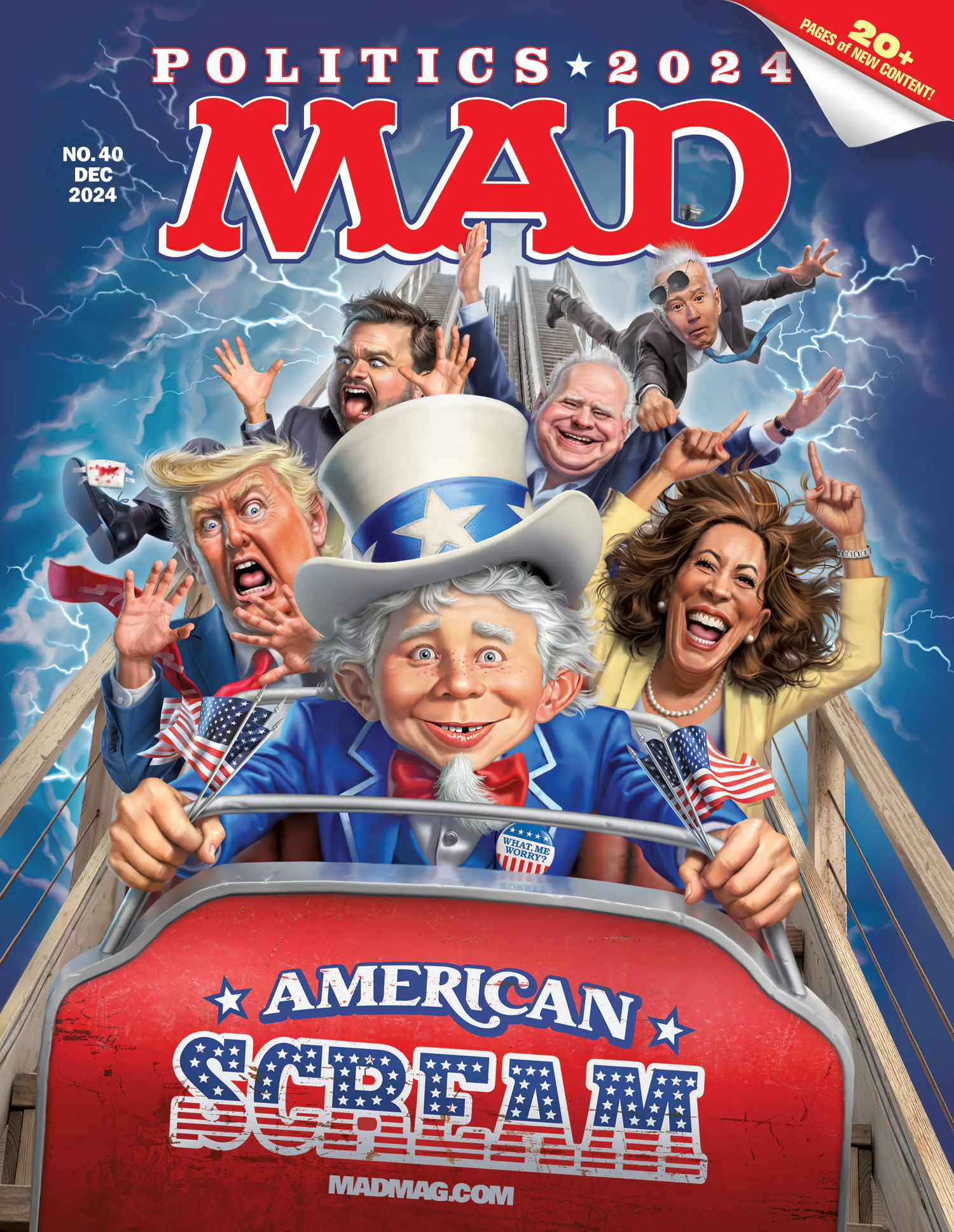
After the unusual return of MAD's movie parodies with "The Bathroom", there have been few examples of MAD movie parodies. That changed in MAD #40 (December 2024) with "The Fascist and the Feeblest". A parody of The Fast and the Furious, "The Fascist and the Feeblest" came into being because the "powers-that-be at DC opened their wallets to have some new election cycle stuff," according to illustrator Tom Richmond's blog. The comic depicts a transcontinental race between Trump and Biden, with several other figures appearing and grounding the comedy of the comic.
While it's true that the comic can feel on-the-nose in the same way as SNL political sketches of the last decade or so, that's more an issue of proximity: it's precisely because these events are so near to readers that it might feel played out. But place it in the continuity of MAD's other political satires in the last 70 years, and it's clear that this sort of (and level of) commentary has always been at work in MAD. In fact, this parody deserves recognition precisely because it shows the magazine still has the sauce for irreverently funny social commentary.
Balmy And Clod (MAD #119, June 1968)
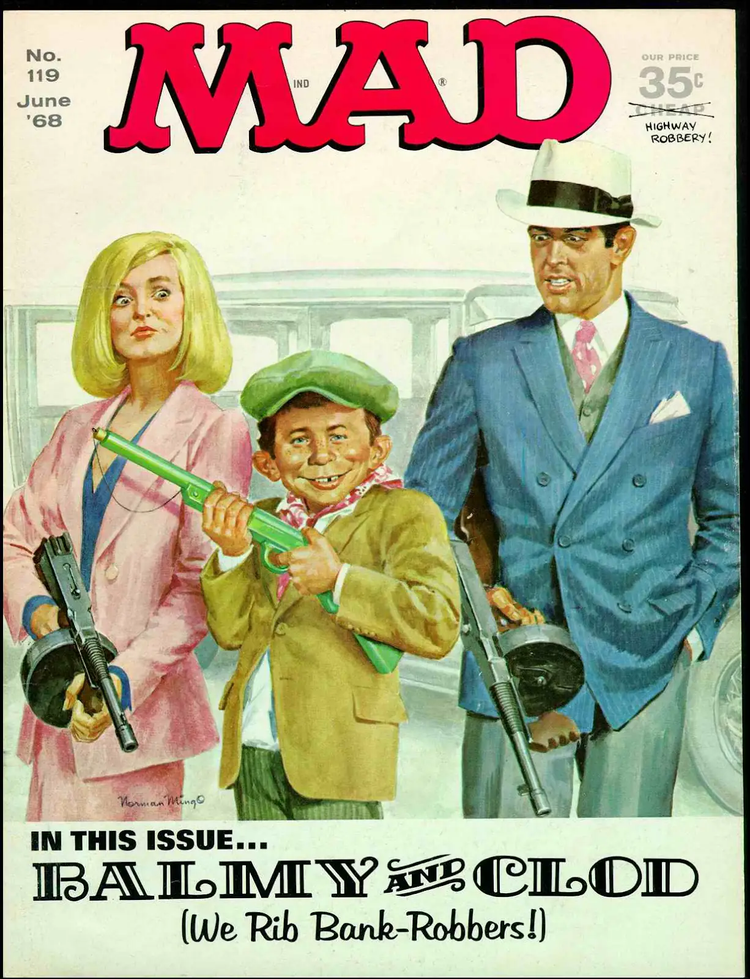
"Balmy and Clod", MAD's parody of Bonnie and Clyde, is one of the sharpest parodies on this list. Bonnie and Clyde's romantic story of two star-crossed outlaws was an immediate hit, but MAD found something more to the crime classic. "Balmy and Clod" lampoons the violence, romance, and glamour inherent to Bonnie and Clyde by deflating its artistic presentation.
MAD strips the movie of its pretensions, and what remains is a hilarious critique of the film's romantic criminals and premises. A historical irony is that stripping the appealing Hollywood story lands "Balmy" and "Clod" much closer to the real-life Bonnie and Clyde.
201 Minutes Of A Space Idiocy (MAD #125, March 1969)
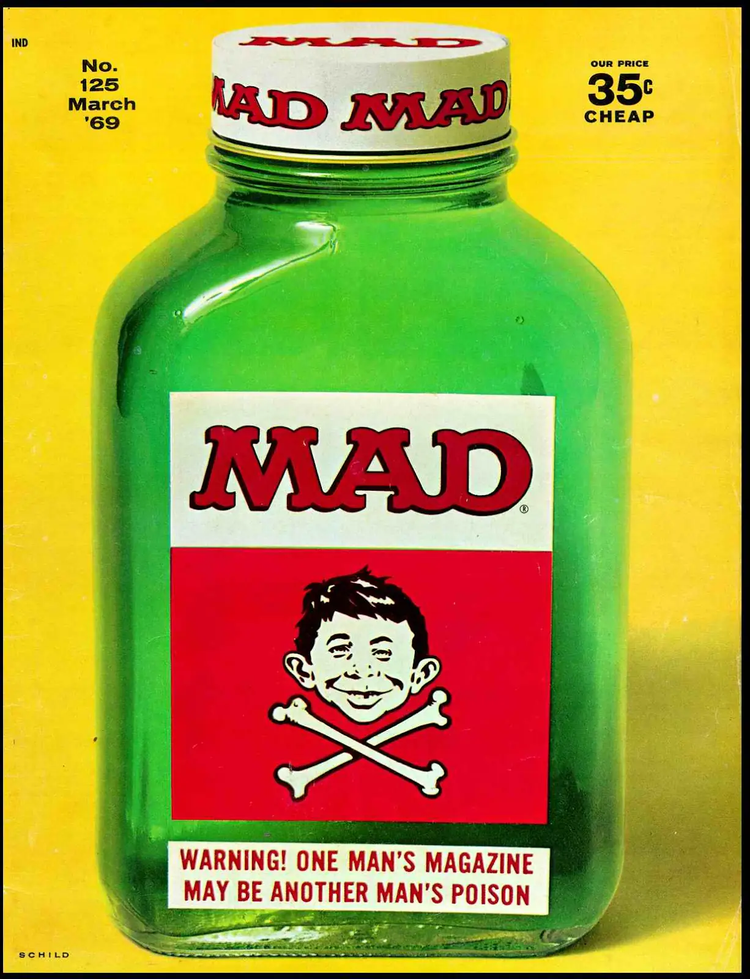
It's difficult to name a definitive MAD movie parody, but "201 Minutes of a Space Idiocy" would certainly be a top contender. Kubrick's legendary 2001: A Space Odyssey (1968) is more or less the distillation of MAD's perfect target: epic, slow, pensive, and auteurist. "201 Minutes of a Space Idiocy" is a silly riff on the film—which is just about the most insulting thing it can be to a film as serious and interpretive as 2001.
But that insult comes in jest with love, and that's what makes MAD's satire work so effectively. "201 Minutes of a Space Idiocy" positions itself as calling 2001's bluff, undermining the whole game of interpreting the film's oblique symbolism and lack of clarity. It all builds toward an unforgettable ending gag that lands that joke in the best way possible—and which can't be spoiled without ruining the whole thing.
That, above all, is the mark of great parody: "201 Minutes of a Space Idiocy" is clear, hilarious satire at its best, and it shows why MAD's movie parodies will always reign supreme.
KioskNews shows a cleaned-up reading view extracted from the publisher’s page — the original always lives on their site, not ours.