NWSL, U.S. Soccer continue focus on women's soccer growth with player and executive development programs
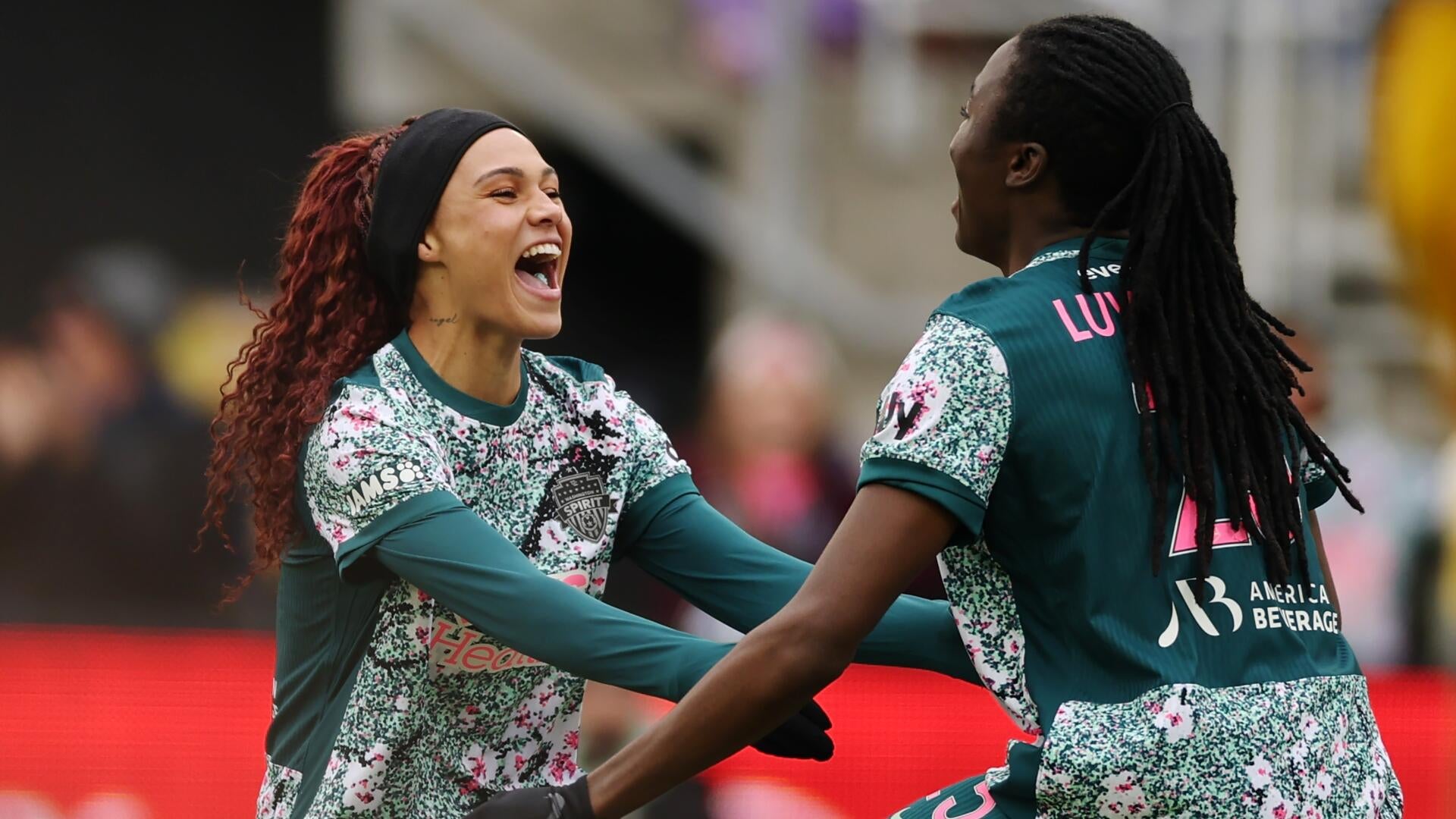
The NWSL announced the creation of the player development rule on Thursday, as well as the Sporting Executive Leadership Program in conjunction with U.S. Soccer and FIFA

• 9 min read
WASHINGTON, D.C. – The NWSL has always been a measuring stick for the growth of women's soccer in the U.S., which in recent years has been headlined by skyrocketing expansion fees and increased fan engagement. There's a buzzword that continues to pop up around the league, one that is rarely associated with the key performance indicators – pipeline. After she read out another list of attendance figures and viewership numbers before the 2026 season wraps up with Saturday's NWSL Championship (8 p.m. ET, CBS, Paramount+), commissioner Jessica Berman made a hard pivot in her state of the league remarks on Thursday to say the league is officially in the business of prioritizing said pipeline.
In the first of four announcements she teased was in service of that. The NWSL announced two initiatives on Thursday: the creation of a player development rule (PDR) and a sporting executive leadership program, designed specifically to focus on the foundation of the league's structure. The plans are a marriage of the league's business model and sporting objectives, a tacit understanding that the two go hand-in-hand, especially for a league that is admittedly driven by star power. These new plans, though, are hardly the only initiatives that will influence the pipeline.
The NWSL's new initiatives reflect a shifting focus across the American soccer landscape, one that seems driven by the heightened interest in the sport courtesy of this year's World Cup in North America. The league's financial stability enabled this shift but beyond that, there are overlapping commitments across the industry to finally fix one of American soccer's most evident problems – the pipeline. The sport's success in this country has often come in spite of a fractured youth soccer system, one that U.S. Soccer hopes to unite in the coming years.
The parties, be it in conjunction or individually, are also dead set on ensuring the women's game is held in equal regard to the men's every step of the way.
The pathway for players
The PDR joins a list of NWSL rules in recent years that have incentivized clubs to recruit young players more easily such as the U-18 Entry Mechanism and organizing its first-ever combine last year. The new rule requires participating clubs to develop a curriculum that supports player development and is tied directly to salary cap relief.
"What can we do at the league to motivate and incentivize clubs to develop players?" Sarah Gregorius, the NWSL's vice president of sporting, told CBS Sports. "What do we have in our toolkit? And one of the things we obviously have in our toolkit is a salary cap and we can use that as a motivation and as an incentive to encourage the types of behavior around player development that we want to see, and hopefully, it's really our first structural foray into player development. Again, it's deliberately an incentive. It's not a mandate. It's up to the clubs. If they want to participate, if they want to access the reward, they know what they have to do in order to do that."
There is a perceived industry standard about developing young players, even if it is as far from an exact science as it gets. Academy systems tied to clubs are how players often come up the ranks – that is true across the men's game including in MLS and increasingly so for women's players in Europe. The NWSL does not have a streamlined system that mirrors the academy set-up and interestingly enough, is not actually trying to go in that direction.
"This is a pretty unique country," Gregorius said. "It doesn't actually work to pick something up from overseas and plop it down over here and I'm actually not convinced in the two years that I've spent here and everything that I've learned that this vertical academy system across the clubs makes the most sense. There's already a ton of incredible player development happening. There's just a bit of a lack of cohesion and a lack of connection to the professional game … The Spanish model won't work here, the German model wouldn't work here, the Japanese model wouldn't work here. Got a ton of respect for what they're doing in their countries but the reason that it works is it's for those countries. We have to do something that works for this one, which has characteristics that no other country in the world has. F---, this place is big. It's dynamic. There's a lot going on."
Gregorius believes a league-issued mandate might further fracture an already splintered landscape.
"If I think about it from a local level, some of our clubs are in markets that have thriving youth ecosystems, right?" Gregorius started. "So if all of a sudden there was a mandate from the league that every single club – which is what they do in England – has to come in and have a professional game academy, they're going to all of a sudden have to start pulling players out of those environments, which is disruptive for the kids. It's disruptive for the families. Some of those kids and families are also fans of the team. It's the icing on the cake in those particular markets so all of a sudden, you create tension. You create tension for the parents. You create tension for the kids. You create tension within the fan groups. They're like, 'Well, no, actually. You've stripped out my youth club in order to service a mandate from the league, not paying attention to the fact that all of your talented players have come through the system.' That's not what we want. That's bad for player development and it's bad for fan engagement, to be honest."
The NWSL is distinguishing itself from MLS, a league to which it has no formal ties but one that committed to the traditional academy system over a decade ago and can count it amongst its greatest successes. There's no stigma associated with the diverging path, though – U.S. Soccer has committed to viewing the women's game specifically through a female lens in recent years, an initiative championed by U.S. women's national team head coach Emma Hayes but embraced by many, either through her influence or separate from it.
"The intense focus on the pathway is very intentional," U.S. Soccer COO Dan Helfrich told CBS Sports. "The intense focus as we build the next version of the women and girls pathway, that it's done through a female lens, is very intentional and look, there is going to be, we believe, historic investment and interest in women's soccer and it's it's going to crescendo into the 2031 World Cup and making sure we take advantage of this moment to corral and direct the investment and interest in a sustainable way. I don't think there's anything that could have a greater legacy for women's soccer in our country than that."
The distinction between the men's and women's games, even at the youth levels, is easy for Helfrich to make because they have always existed.
"The first thing is the environments for players to develop in," he said. "it's really important that they're tailored to women and girl and that includes environments for youth clubs and colleges and professional clubs and so some of the work, for example, of the Kang Women's Institute becomes really important to do the research to develop the insights and then for us to promulgate them into all these areas, that's different and if you look at the as-is state of the pathway, the league structures for girls are different than the league structures for boys. The role of college soccer for girls is different than the role of college soccer for boys and so practically, if you're trying to optimize a future, you apply a different lens."
The pathway for everyone else
There's more shared consensus when it comes to developing leaders that will foster players' growth, which is where the sporting executive leadership program kicks in. The program is built around specialized education for sporting director types, the first yearlong edition of the initiative already in session. A cohort of six – Haley Carter of the Washington Spirit, Caitlin Carducci of the Orlando Pride, Angela Mangano of the Houston Dash, Jeff Agoos of the Portland Thorns, Kelly Cousins of the Utah Royals and Dome Guasch of the Boston Legacy – already took part in their first session of a project supported both by U.S. Soccer and FIFA.
"The 16, now 18, individuals who hold the highest sporting position at the clubs have an outsized impact on the on-field identity and on-field product of their club so therefore, all of those people have an an impact on the on-field product of the league," Gregorius noted. "It's also, curiously enough, one of the few roles within the sporting department that doesn't have a license. You don't need to have completed a particular license. There's no education requirements or anything like that so when we also did an audit of the 16 clubs and who was holding those positions, some have former players, some have lawyers, some have people with an operations background, some have people with a coaching background. It was very varied so we're like, okay, if we know that this group has a ton of impact, if we know that they don't go through any structured learning. Is there a way that we can wrap our arms around them and support them?"
The uniqueness of this program is that it is tied specifically to the NWSL, which operates independently of a men's league unlike some of its European counterparts or even the WNBA.
"It's the first of its kind because every other f---ing part of the world just cares about men's football so we're really, really proud of not only the commitment and the discipline around trying to get it off the ground," Gregorius said.
It is in parallel with other initiatives the league and U.S. Soccer have worked on in recent years. The NWSL combine, for example, was also an effort to bolster female coaches while U.S. Soccer frequently uses its new national training center to conduct coaching courses with the youth game in mind.
"What I would say is to grow the game the way it needs to be grown, we can't underestimate or overlook the non-player part of development," Helfrich said, "and the non-player part of development is coaches. The non-player part of development is scouts. Non-player part of development is referees and the non-player part of development is front office, technical leaders and so, building a partnership with the NWSL on all of those important non-player development activities is a big priority."
The NWSL's partnership with U.S. Soccer on this program also speaks to a unique truth about American soccer. The women's game is held in incredibly high regard in the U.S. because of the historic success of the USWNT, who have four World Cup titles and five Olympic gold medals in their 40-year history. The USWNT's reputation of being serial winners is intrinsically tied to the health of the federation, the NWSL and in some ways, American soccer as a whole.
"Honest to God, I've loved waking up every day and only thinking about the women's game," Gregorius, a former New Zealand international, said. "It's brilliant and it's very unique over here that we are able to do that and what I love about working with U.S. Soccer, as well, to be honest, is they're the same. They're almost more interested in the women's game sometimes than they are anything else … It's an organization that is already on the train, you know what I mean? The NWSL and our clubs, it's not even a question of being in the shadow of the men's game or any of that other bulls--- that you kind of encounter in other places. The focus is unwavering and that's brilliant."
KioskNews shows a cleaned-up reading view extracted from the publisher’s page — the original always lives on their site, not ours.