‘Rules are less respected now globally, leading to emergence of choke points': EAM Jaishankar in New York
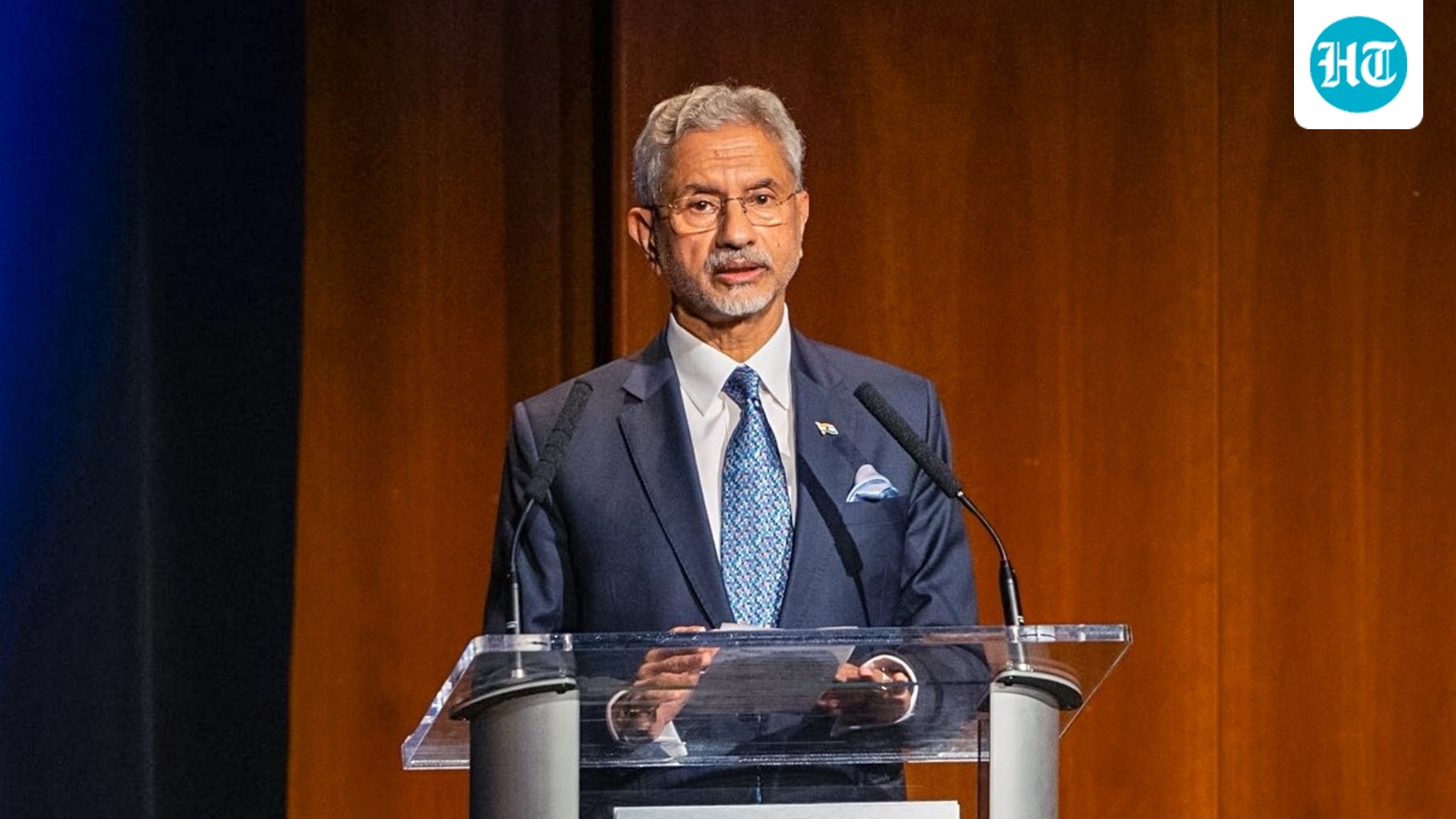
Jaishankar also talked about a paradox in global diplomacy, where every country has a strong sense of competition but the interdependence also deeper than ever.

 Prefer HTon Google

External affairs minister S Jaishankar on Tuesday said that rules are being less respected now globally than they used to be before, which has led to emergence of “choke points” such as in the Strait of Hormuz and financial choke points created through sanctions.
He said that countries today are exercising whatever leverage they have over their competitors or adversaries in this “very competitive environment”.
Jaishankar made the remarks while addressing the Asia Society event in New York.
“The first point is that countries feel that our position is up or down, but we have leverage; we need to use it. The fact is that rules are less respected than they used to be before; assumptions are being challenged. The consequence of that, what we have seen, especially in the last 4-5 years, is the emergence of choke points,” the foreign minister said.
Highlighting the various kinds of choke holds that have emerged, he said, “choke points of every nature: geographical choke points, such as what we are seeing at Hormuz; financial choke points through sanctions; travel choke points and market access choke points.”
“So anything that countries of influence and clout have, which they believe they can wield in this very competitive environment vis-à-vis their adversaries or competitors today, is being exercised,” he added.
'Paradox of competition and interdependence'
Jaishankar also talked about a paradox in global diplomacy, where every country has a strong sense of competition but the interdependence also deeper than it ever was, which has made diplomacy a “very challenging task”.
Also read: 2 MHA officials held for seeking illegal gratification for FCRA registration
He said that while interdependence is a “reality”, the feeling of competition is a “sentiment”.
“...The paradox of our times is that on the one hand, there is a very strong sense of competition... This coexists with a deeper and deeper interdependence. So that interdependence is the reality; the competition is the sentiment. Much of what we see in terms of policy choices, policy debates, and approaches of countries to each other and to the world is how countries are torn between these two — the desire to compete and the constraints and the challenges of what happens when competition goes ahead," Jaishankar said.
He added that between competition and interdependence, “friendly fire” is also thrown in nowadays for good measure.
“This makes diplomacy a very challenging task," he said.

Follow the latest breaking news, major developments and agenda-setting stories from India and around the world with the newsdesk at Hindustan Times. Operating round the clock, the desk brings together experienced editors, reporters and correspondents to deliver fast, accurate and contextual reporting across subjects that influence public policy, governance, business, society and international affairs. The HT News Desk covers politics, elections, government policies, the economy, business and markets, science and technology, the environment, law and order, infrastructure, education, climate issues and geopolitics, while closely tracking developments across states, institutions and global capitals. The team also leads coverage of major breaking news events, policy announcements, court proceedings, natural disasters, public emergencies and significant international developments. Reports published by the newsdesk are based on information gathered from reporters on the ground, official statements, government agencies, court records, regulatory filings, recognised institutions and other authoritative sources. Stories undergo editorial scrutiny and verification processes to ensure accuracy, fairness and relevance, and are updated as events evolve and additional information becomes available. Whether covering a key political decision in New Delhi, an economic policy shift affecting millions, a landmark court ruling or a major global event, the HT News Desk aims to provide readers with reliable, fact-based journalism that delivers not only the latest developments but also the context and analysis needed to understand their wider implications.Read More

KioskNews shows a cleaned-up reading view extracted from the publisher’s page — the original always lives on their site, not ours.