At 74, she travels two hours to Changi Prison every week to counsel inmates: ‘I don’t want to give up on them’
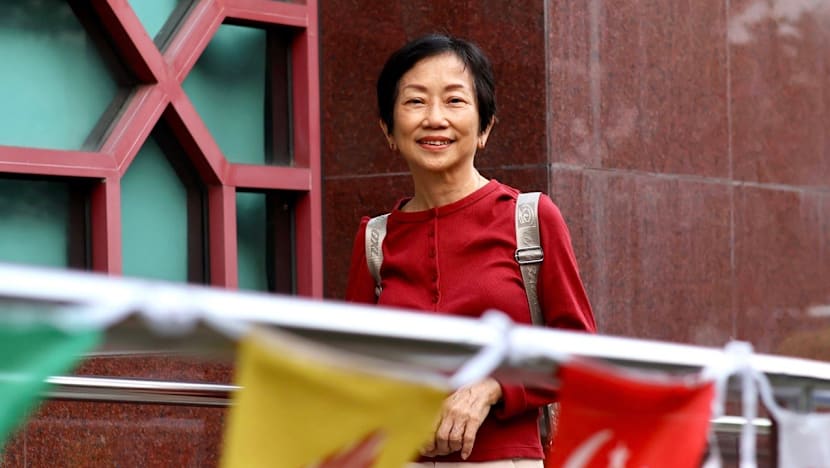
Choo Choy Lian has spent 15 years supporting inmates through the difficult process of rehabilitation. Even when some end up back in prison, the prison volunteer believes turning one’s life around takes patience, understanding and another chance.
New: You can now listen to articles.

This audio is generated by an AI tool.
23 Sep 2026 07:19AM
Every Sunday before sunrise, 74-year-old Choo Choy Lian leaves her flat in the west of Singapore and makes a two-hour journey by public transport to the east. The Singapore Buddhist Federation (SBF) volunteer has done so for the past 15 years.
Waiting for her at her destination are some of society’s most marginalised people – inmates at Changi Prison. There, Choo conducts counselling sessions, meditates with them and tries to guide them towards self-reflection.
“I feel that if I didn’t go for the sessions, they’d miss out,” she told CNA Women.
While some may have reservations about working with inmates, the gentle, soft-spoken grandmother of two sees them simply as people who have lost their way in life.
Speaking in Mandarin during the interview, Choo said: “It never crossed my mind to be afraid of them. In my mind, we are all just regular human beings but... they took the wrong path.”
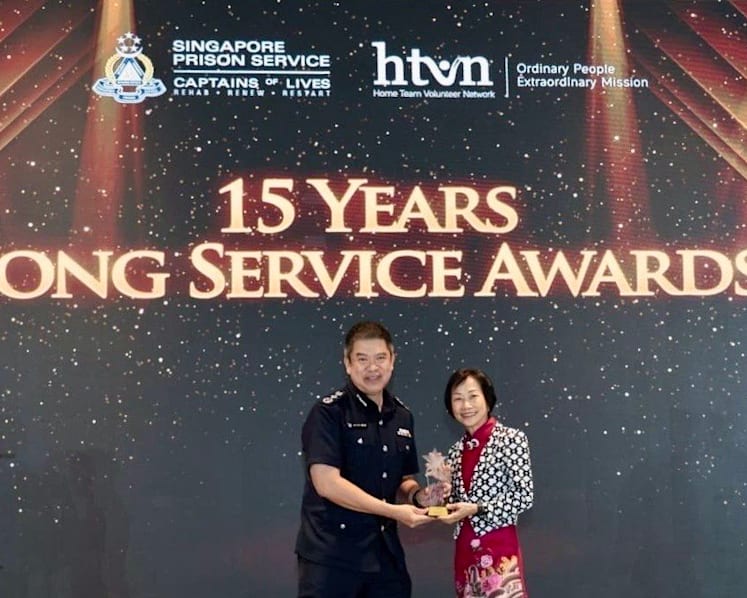
In July, Choo received the Long Service Award at the Singapore Prison Service Volunteer Awards Ceremony 2026, in recognition of her 15 years of service. The awards honour volunteers who support inmates and their families through rehabilitation and reintegration.
FROM CHINESE MEDICAL HALL TO PRISON VOLUNTEER
Choo’s volunteer work began after an encounter at a traditional Chinese medical hall, where she worked as an assistant measuring out and packing medication and herbs for customers.
One regular customer kept buying syringes. Sometimes, he would come in twice a day, offering different explanations for why he had to purchase such large quantities, Choo recalled.
“I felt that something wasn’t right,” she said. “Even for diabetics, they may inject insulin three times a day, at most. I wondered why he would need so many syringes.”
Observing the customer’s unsteady gait and pale complexion, Choo suspected that he might be struggling with drug addiction. Eventually, she told the customer to obtain the syringes from a polyclinic or a doctor.
The encounter left a lasting impression on her. She began wondering why some people veered off course in life, and if she could help them.
“It was this experience that made me think about how I could give back to society (after retirement). It drew me towards going into the prison and helping the inmates,” she said.
MAKING THE LONG JOURNEY TO CHANGI
After retirement, Choo threw herself into volunteering. The long commute to Changi Prison every week became part of her routine. During the journey, she often meditates quietly and mentally runs through what she should share with the inmates.
“I think about what’s suitable for them and prepare something simple to share that they can understand,” she explained.
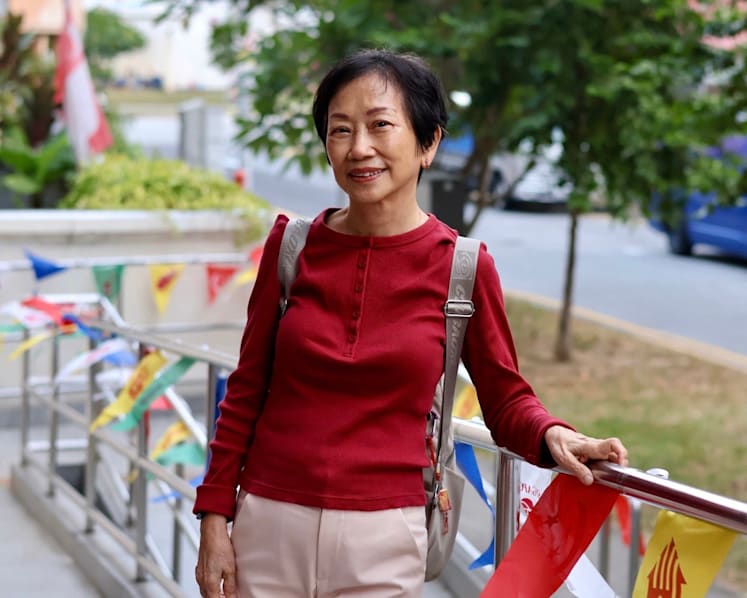
By the time she reaches the prison complex at around 8.30am and goes through security checks, she has already decided what to say. Each session lasts around two hours, after which she takes another two-hour commute home.
Over 15 years of weekly visits, Choo has observed certain patterns among the inmates. Emotional volatility is common, she said.
“Their emotions seem to be stronger, more volatile than most people’s. From there, you can understand that patience is needed to encourage them to gradually let go (of their misgivings).”
That is why Choo, who works with another volunteer, often begins the sessions with meditation and breathing exercises before moving on to religious teachings.
“I let them meditate first to help them cool down. While they’re meditating, I teach them some things about breathwork and how to relax. Most of them are quite smiley during the sessions,” she said.
Their emotions seem to be stronger, more volatile than most people’s.
Some of the inmates Choo has met grew up in unstable homes, with parents who struggled and were unable to provide much guidance when they were growing up. Others come from families that are better off financially, but are driven by greed or become fixated on certain things, which lead them down the wrong path, she said.
“My role is to accompany them as they grow, to hopefully help open up their hearts,” she said.
That means lending a listening ear or helping them channel their hurt and anger into self-reflection. She also reminds them that their actions affect people around them, including their parents and spouses.
“Usually I tell them, where you have fallen is where you must stand up again. Think about how to climb back up from there,” she said.
NOT GIVING UP EVEN WHEN THEY RE-OFFEND
Choo’s efforts do not always pay off. Some of her saddest memories are of inmates who are unable to reintegrate into society. Around her sixth year as a volunteer, Choo noticed some familiar faces that kept “going in and out of prison”.
“I kept seeing them turn up in my class again after they had been released. It made me so sad and heartbroken that they ended up consoling me,” she said.
“What comforted me a bit was that they knew they were wrong. They said they were too deeply addicted to these ‘polluted’ things, and couldn’t change overnight,” she added.
Choo believes the challenging part of rehabilitation begins after the inmates step back into society, and face day-to-day issues like housing, work or finances.
Some may be rejected by their family; others struggle to find employment. As such, some may seek out former friends and return to old social circles, and be tempted to return to their old ways, she added.
Outside of her Sunday sessions at Changi Prison, Choo and her fellow SBF volunteers continue to support ex-offenders by keeping in touch with them after their release. They have a chat group where they check in on one another, exchange updates and offer words of encouragement.
“We encourage them to face everything with patience, endurance, understanding and tolerance, to accept their situation. Turning one’s life around is a process,” she said.
Some former inmates eventually turned their lives around and went on to become volunteers at Changi Prison themselves, she added.
GIVING BACK AFTER RETIREMENT
At 74, Choo’s retirement schedule is packed with activities.
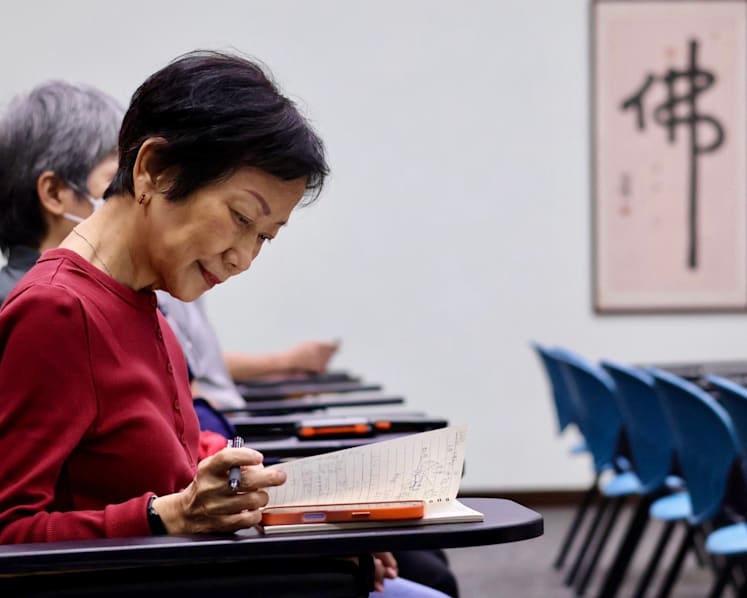
By the time of this interview at 3pm, she had already attended four separate appointments, most of them revolving around helping others – “the kind of work that’s hard to quit”, she said with a smile.
Choo also volunteers at other charitable and humanitarian organisations. For example, she helps dispense medication at a clinic offering free Traditional Chinese Medicine services, portions meals for the elderly and serves as an elder befriender. It is her way of “giving back to society” after retirement.
She also attends classes at SBF in the evenings. Her friends often jokingly complain about not being able to get hold of her.
“Out of 10 friends, nine would tell me, ‘You must rest more, you’re very busy. It’s always hard to find you’,” she said with a laugh.
Her family has been supportive of her volunteer work. Instead of meeting on Sundays, they have shifted their family gatherings to Saturdays.
So, what keeps her going year after year? Choo believes everyone deserves a chance to turn their lives around.
She knows that there will come a day when she may not be physically able to make the two-hour journey to Changi. Until then, she has no plans to stop or slow down.
“I’ll keep going until I really can’t do it anymore. I don’t want to give up on them. I want them to turn back,” she said.
CNA Women is a section on CNA Lifestyle that seeks to inform, empower and inspire the modern woman. If you have women-related news, issues and ideas to share with us, email CNAWomen [at] mediacorp.com.sg.
KioskNews shows a cleaned-up reading view extracted from the publisher’s page — the original always lives on their site, not ours.