Punjab’s (illegal) mining story: A ban in place, but digging goes on
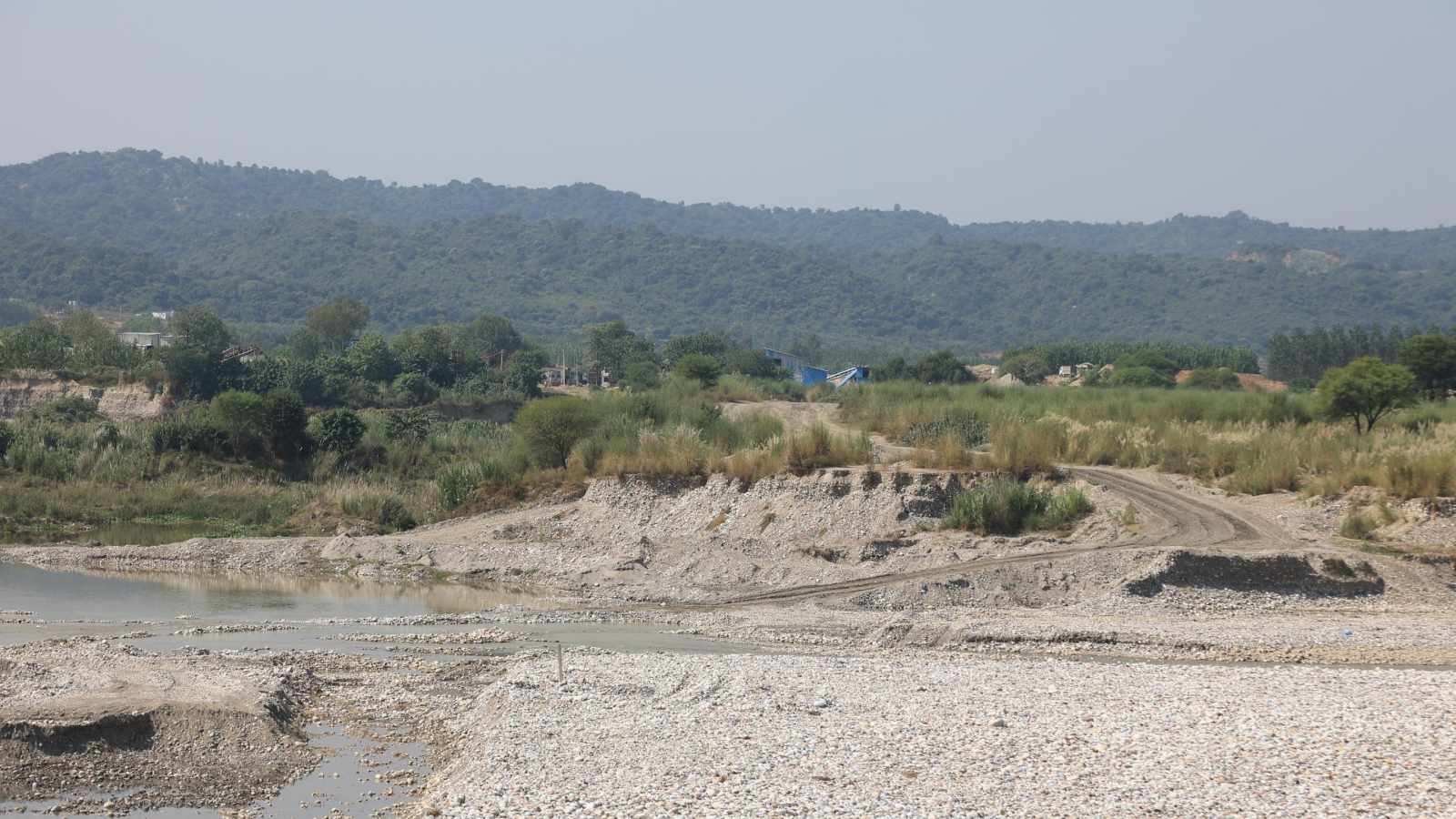
Bhallan village, like most of the others in Punjab, settles into silence by around 10 pm, its residents having retired for the night. The quiet, however, is soon shattered as poclain machines roar, their buckets scooping up sand and gravel from the bed of River Swan and dumping the same into waiting tippers trucks. By morning, the machines are gone, leaving behind fresh tyre tracks, heaps of excavated material and riverbanks scarred by deep pits.
“They return every night. Soon after midnight, we can hear loud sounds. My house is just a crow’s flight away. We often watch the activities being carried out. Using drones, we have clicked photos,” says Tikka Yashvir Chand, an activist who has been fighting illegal mining since 2018.
“It is continuing with all guns blazing. Just look at the fresh poclain marks in the sand. This shows machines were here last night,” he says, pointing to tyre tracks and machinery marks. The Indian Express team found large mounds of freshly excavated sand and stones on the riverbed.
“The banks, which were once grasslands, have been eroded to depths of as much as 100 feet. I have been witnessing this activity since 2012. It picked up in 2017, and now it is a free-for-all. This time, it is the worst. The banks are vanishing,” Tikka says.
He is among the activists who challenged the Punjab government’s orders permitting desilting at 85 river sites across the state.
About 12 km away, at Agampur, where the Swan merges with the Sutlej near Harsa Bella, large deposits of sand and gravel remain despite extensive mining activity.
On October 7, the National Green Tribunal (NGT) extended its ban on desilting while hearing petitions filed by Gram Panchayat Ghalri, Daljeet Singh, Ajay Kumar, Gaurav Partap Singh Pathania and Ravinder Pal Singh. The petitioners alleged that desilting was being used as a pretext to permit mining.
Story continues below this ad
“The government, on the pretext of clearing the river to prevent floods, allowed landowners to mine their land. The activists approached the NGT again. Only on October 7, the NGT extended the ban till January,” a government functionary said.
“Had there been no ban, the hanging bridge over the Sutlej at the Agampur site would have given way. Desilting has been banned, but illegal mining continues unabated,” Tikka says.
The Indian Express witnessed a poclain machine and a tipper engaged in mining at Plahta village at 12.31 pm on October 13, indicating that excavation was not confined to nighttime.
In the Algran-Sainsowal zone, residents identified at least 20 stone-crushing units operating along both sides of the river. No riverbed excavation was observed there during the visit.
Story continues below this ad
Taraf Majari bucks the trend
Neighbouring Taraf Majari has managed to preserve its riverbanks by imposing a village-level ban on excavation.
“Our panchayat has made it very clear that we will not allow any mining operations in the river. We faced resistance. Our youth damaged a tipper. They tried again, but we did not allow them. The entire village gathers at the entry point and prevents them from entering the area,” said Gurmeet Singh, the sarpanch serving his second consecutive term.
Ram Pal, a dairy farmer, said the restrictions had been in place for two decades. “We did not allow this. Nobody dares now,” he says.
Residents flag environmental and safety risks
Residents blame mining for noise and air pollution, damaged roads, accidents and falling groundwater levels. They also fear the consequences of deep excavations and the movement of heavy vehicles through their villages.
Story continues below this ad
“The heavy machinery carrying sand is always plying on our roads, causing damage. The environment is constantly noisy. Accidents happen frequently as these vehicles move at high speeds. The bridges are giving way. The Algran bridge connecting Ropar with Nawanshahr gave way after its pillars were damaged due to indiscriminate mining. The bridge is being repaired now,” says Hardev Singh, president of the Ilaqa Sangharsh Committee, Sri Anandpur Sahib.
“Our riverbeds are not very deep. But the miners create craters as deep as 100 feet. Those crossing the river cannot anticipate these. Tippers cause accidents. There are law-and-order problems, too. Our girls do not feel safe. There are strange elements engaged in this business. It is lucrative, and money brings power. They feel powerful,” says resident and activist Surinder Chhinda.
Hardev Singh also links excavation to falling groundwater levels. “Our water level was at 18 feet. Now, it has gone down to 40 feet,” he said.
Government cites supply gap, denies fresh illegal mining
A government official said only 16 of Punjab’s 33 permitted mining clusters were operational, leaving a substantial gap between demand and authorised supply.
Story continues below this ad
“We have a demand for four lakh metric tonnes in Punjab, but we are able to supply only 20 per cent of it. The rest of the material comes from other states. We are also supplying to Jammu and Kashmir. With the NHAI taking up several projects in Punjab, sand was to be supplied to them as well. This is why the end user is purchasing sand at Rs 40 per cubic foot and gravel at Rs 60 per cubic foot,” the official said.
Punjab Mines Minister Barinder Goyal denied that illegal mining was taking place in the state.
“During AAP’s tenure of over four years till October 6, we registered 247 FIRs and issued 598 challans under Section 74 and 75 of Punjab Minor Mineral Rules, 2013 across the state and a total penalty of over Rs 7.92 crore was imposed, of which Rs 7.69 crore has been recovered so far,” he said.
Citing a joint Mining Department-police raid on October 6 at Kot Sidhu village in Amritsar district, Goyal said “officials found unauthorised excavation involving three JCB excavators and seven tipper trucks”.
Story continues below this ad
On the NGT restrictions, he said, “What should we do? The mining activity that you would have witnessed must be because of the desilting that we had allowed landowners to undertake some time ago. There is no fresh activity going on.”
KioskNews shows a cleaned-up reading view extracted from the publisher’s page — the original always lives on their site, not ours.