Country diary: After the devastating summer fires, the first green shoots | Amanda Thomson
It’s over three months since the fire started that eventually engulfed 25 square kilometres of moorland and forest in the Cairngorms. I’ve now seen much of the area where the fire raged and have been shocked at the blackness of the land, how many of the moorland pines are dark as charcoal, their needles an unnaturally singed rust colour that goes on into the far distance, into the forest itself.
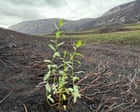
I joined a party going up one of the affected glens to plant over 3,000 trees: cell-grown goat and creeping willow, downy birch and alder – montane species, often miniature varieties, that previously have grown in this habitat but been devastated by overgrazing. The seeds had been collected from nearby remnant populations and grown in the Cairngorms Connect Tree Nursery, part of an ongoing programme of landscape restoration.
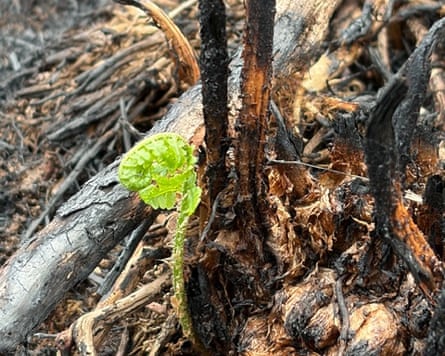
The delineation between burnt and unscathed areas felt sometimes extraordinary – bog asphodel and scabious would be blooming, a black grouse lek carrying on as if nothing extraordinary had happened. Then we would come to and easily walk over burnt ground where normally we would have struggled through thick heather moor. Even then, new growth was emerging: clumps of deer-grass atop the black undergrowth; tiny, bright green fronds of bracken and fern; birch shoots too.
It’s in the forest where most of the damage was wrought, where the fire slowed and burned deep into the roots and peat. Workers were dealing with hotspots and “smokers” a month and more after the fire, and some areas are still off limits because of the dangers of falling trees. Within the devastation, there is pyrophilous fungi, a “fire loving” fungus that emerges in the charcoal and will help create the conditions needed to spark new growth.
Recently, I walked to An Lochan Uaine, the green lochan, along a path now widened to form a firebreak. It brought home how close the fire came to jumping the tracks to my favourite hill, Meall a’ Bhuachaille, and to Ryvoan bothy. Around me autumn was unfolding, birches and larches losing their fiery leaves in the recent storms. Still, the charcoaled ground was dotted by blaeberry shoots: renewal amid autumn’s decline.
KioskNews shows a cleaned-up reading view extracted from the publisher’s page — the original always lives on their site, not ours.