CJP protest: The right to protest, and what happens when police deny permission
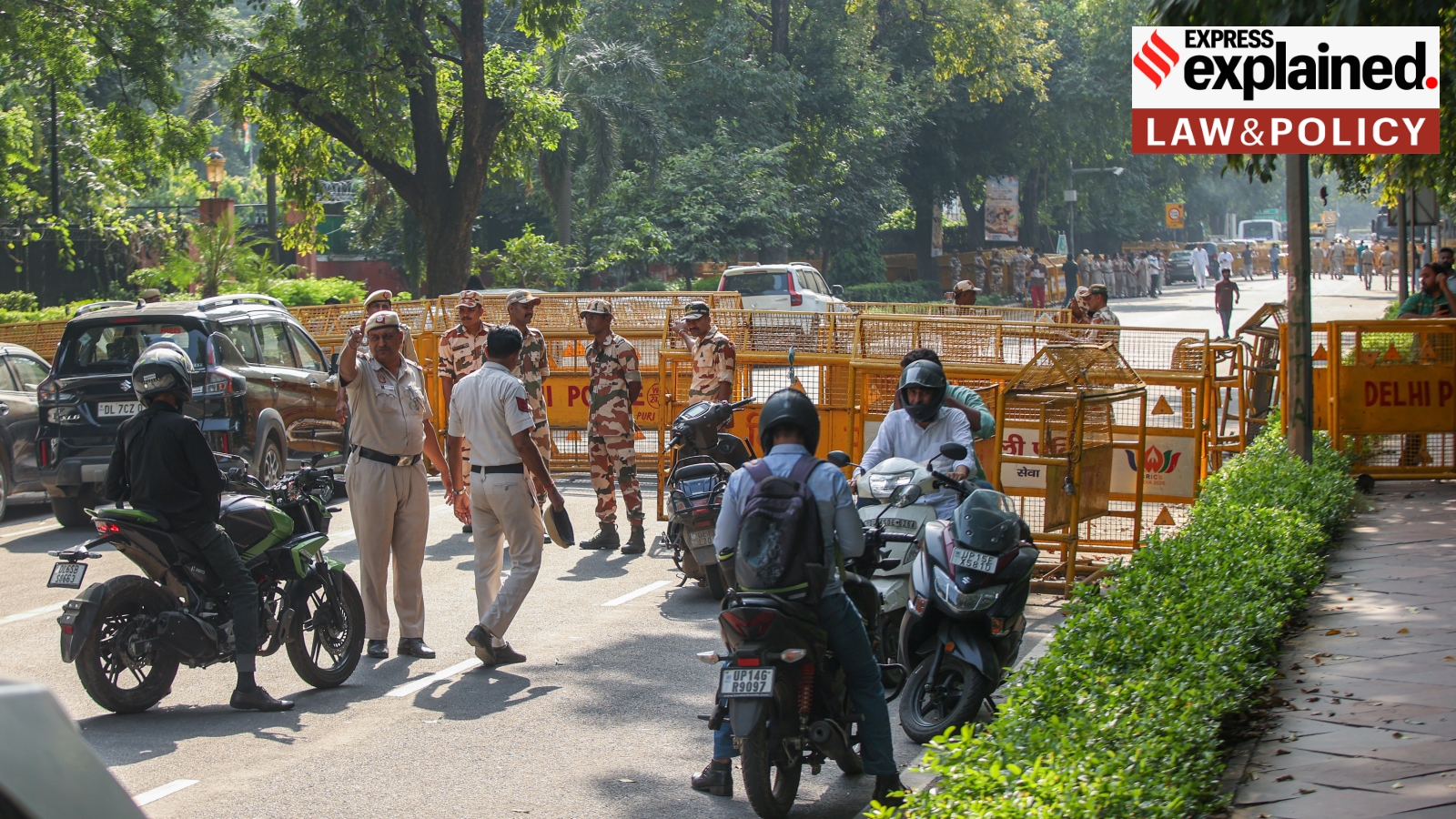
The Delhi Police has formally denied permission to the Cockroach Janta Party (CJP) to hold a protest at Jantar Mantar on October 10, citing short notice. Police said the pressure group sought permission on October 7, three days before the march, but should have done so at least 10 days before a gathering.
The protests are part of demonstrations demanding the resignation of Chief Election Commissioner Gyanesh Kumar over alleged irregularities in the Special Intensive Revision (SIR) exercise.
What does the law say about the right to protest? And what recourse do organisers have when permission is denied?
Article 19(1)(a) of the Constitution protects the right to free speech and expression. Clause (b) guarantees the right to assemble peacefully and without arms. These provisions protect a citizen’s ability to gather and express dissent. But neither right is absolute.
Article 19(2) permits restrictions on speech on specific grounds, including public order, while 19(3) allows “reasonable restrictions” on peaceful assembly in the interest of public order.
The Supreme Court, in its 2018 ruling in Mazdoor Kisan Shakti Sangathan, set out how the two fit together. The matter pertained to a challenge to repeated Delhi police orders restricting public meetings, processions, and demonstrations in Central Delhi under Section 144 of the Code of Criminal Procedure (now Section 163 of the Bharatiya Nagarik Suraksha Sanhita, or BNSS) without written permission. The court heard the matter alongside an appeal against a National Green Tribunal Order that had directed a halt to protests on Jantar Mantar Road after residents complained of noise, litter and occupation of public space.
A bench comprising Justices A K Sikri and Ashok Bhushan said: “Undoubtedly, holding peaceful demonstrations by the citizenry in order to air its grievances and to ensure that these grievances are heard in the relevant quarters is its fundamental right.”
Story continues below this ad
The court held that the authorities had failed to adequately regulate demonstrations and that this had contributed to the problems flagged by residents. It said that a provision for prior permission can be made, seeking permission from the Police Commissioner or his delegated authority for holding such demonstrations.
Senior Advocate Shadan Farasat told The Indian Express that the Constitutional right to protest must guide the interpretation and application of police rules and regulations.
Police guidelines on protests?
The Delhi Police guidelines set out a procedure for seeking permission to hold demonstrations at Jantar Mantar.
Applications must ordinarily be submitted to the Deputy Commissioner of Police (DCP) at least 10 days before the proposed event. Applications submitted later “may also be considered depending on the availability of the space” and whether there is “sufficient time for arrangements”.
Story continues below this ad
The 10-day requirement should not by itself be treated or read as an absolute bar on considering applications submitted at shorter notice. The guidelines expressly contemplate late applications and that they may be considered, subject to circumstances.
Applications are assessed on a “first-come, first-serve” basis, subject to review by the Special Branch, traffic police and New Delhi district police. The DCP has to consider whether the demonstration is likely to obstruct traffic, endanger human safety or public tranquillity.
The DCP may also revoke permission in the event of unforeseen developments, including VIP security requirements or intelligence inputs. In such cases, the order states “the reasons for revocation shall be duly recorded and conveyed to the organisers”.
The order also sets conditions for the protest itself. The gathering cannot exceed 1,000 people at Jantar Mantar. “Beyond this threshold, venue of the protest can be at Ramlila Ground, which can accommodate up to 50,000 persons.”
Story continues below this ad
Farasat said the permission mechanism should facilitate demonstrations rather than prevent them altogether. “You cannot block protests altogether. Permission is effectively a facilitative mechanism to ensure that authorities are aware and then to facilitate it.”
What happens when policy deny permission for protest?
The immediate option is to approach the police again. The organisers can seek reconsideration, respond to the reasons for refusal or propose a smaller gathering, a shorter duration or an alternative venue.
The standing order does not set out a separate appeal against a refusal. It says the DCP’s decision “shall be final and binding on the organiser(s)”.
The order treats revocation and refusal differently. When police first grant permission and then cancel it, clause 3(v) says that the reasons “shall be duly recorded and conveyed to the organiser(s)”. Refusal, however, is when police reject the application in the first place.
Story continues below this ad
If an organiser believes that the refusal is arbitrary or unsupported by the guidelines or inconsistent with the right to peaceful assembly, they can approach the Delhi High Court under Article 226 of the Constitution.
If the protest continues despite denial or in violation of the prohibitory order, anyone violating it could be booked under Section 223 of the Bharatiya Nyaya Sanhita (formerly Section 188 of the Indian Penal Code), which deals with knowingly disobeying a lawful order issued by a public servant. Depending on the circumstances, the punishment can include imprisonment or a fine.
“But this also has to be looked at in the context of a Constitutional right to protest,” Farasat said. “Those being charged could then argue that without giving any alternative space, without giving any indication, without giving any genuine mechanism to protest, this is a complete blockage. The exercise of power under Section 163 is in the teeth of the Constitutional right to protest.”
The guidelines say that the conduct of organisers may also be considered in future applications. The Delhi Police Standing Order states that protests and organisers may be videographed and that records of non-compliance “will also be kept in record to decide permission for their future protests”.
Story continues below this ad
Farasat said that the restriction on protests without an alternative venue is a Constitutional error. “The law also is that the place of protest has to be in the vicinity of the powers that be. It cannot be that you can have a place of protest outside Delhi or in the periphery of Delhi. It has to be where those you are asking certain measures from are in a position to hear you,” he said.
What if a prohibitory order has also been issued?
A prohibitory order is a magistrate’s written order that bars certain activity in an area, such as the assembly of five or more people. Section 163 of BNSS provides for it.
A separate remedy is available against such an order. Under Section 163(5), an aggrieved person can apply to the issuing magistrate to rescind or alter it. Section 163(7) requires the magistrate to give the applicant an early opportunity to appear and show cause. If the application is rejected wholly or partly, reasons must be recorded in writing.
The Supreme Court has recognised this right even where the order was passed without hearing anyone. In Babulal Parate v State of Maharashtra (1961) the Constitution Bench said affected persons “have a right to challenge the order of the Magistrate”.
Story continues below this ad
The court has also said what such an order cannot do. In Ramlila Maidan Incident (2012), it said preventive steps “should be founded on actual and prominent threat endangering public order and tranquillity as it may disturb social order”. The power, it said, “has to be exercised with great caution and free from arbitrariness”.
In the 2018 MKSS judgement, the court applied this to permission. A permission requirement must not become a way to reject every protest. Such demonstrations can be “effectively regulated by adopting various measures instead of banning them altogether by rejecting every request for such demonstrations”. It said: “Total extinction is not balancing. Balancing would mean curtailing one right of one class to some extent so that the right of the other class is also protected.”
Criticising what he described as a restriction on protests across central Delhi, Farasat said: “What they are doing is blocking all of central Delhi. This is completely in the teeth of the right to protest under Article 19, because obviously this is not a reasonable restriction of any kind.”
He said that if the authorities refused permission to protest at Jantar Mantar, they should identify another suitable location in central Delhi. “The important point is that, along with blocking, you have to give an alternative, which has not happened. That is why blocking per se, without giving an alternative, is illegal.”
KioskNews shows a cleaned-up reading view extracted from the publisher’s page — the original always lives on their site, not ours.