India must rethink trade deals, engage with China supply chains: Allan Bollard
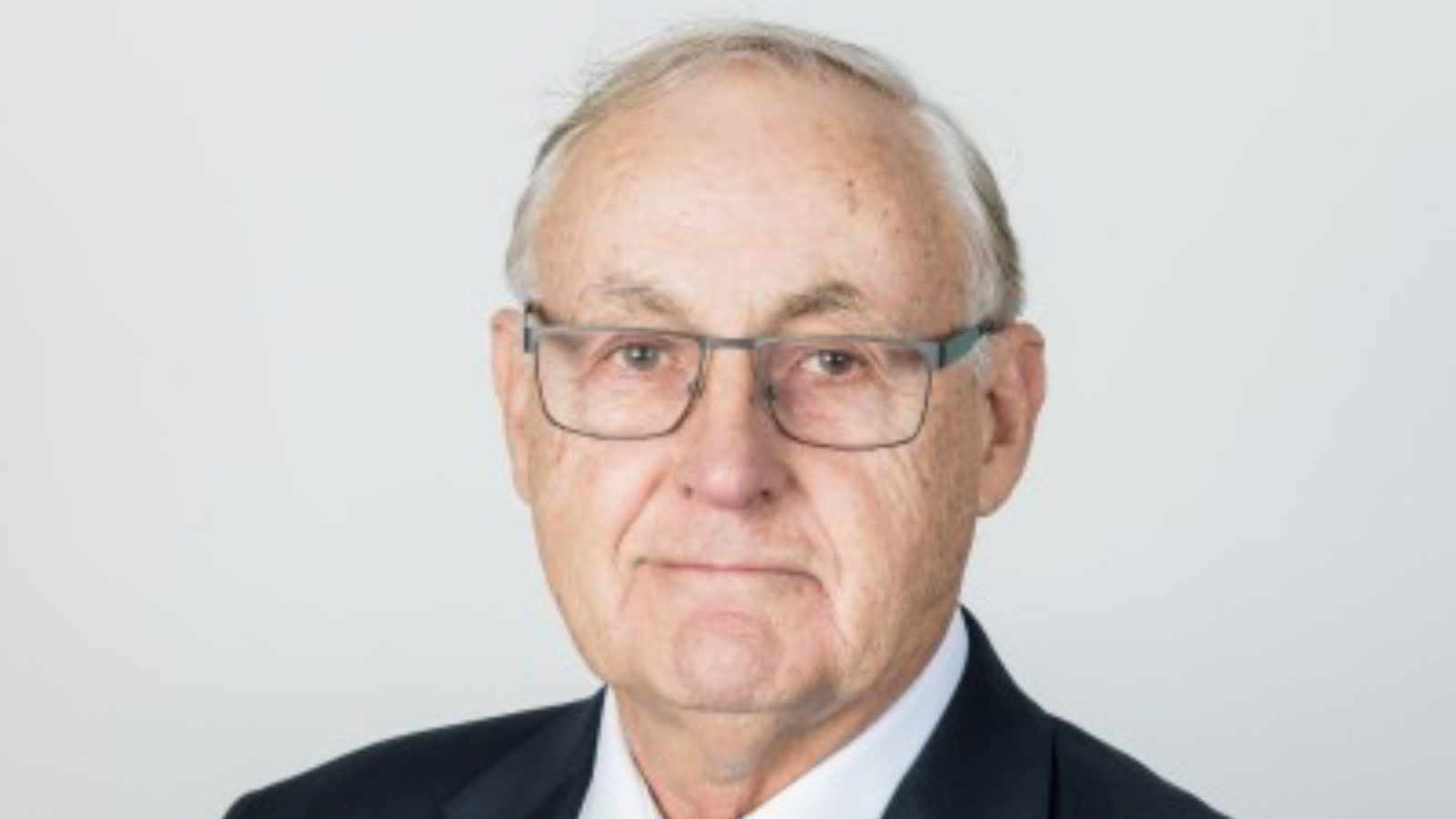
Amid a rupture in the global economy and growing fears of AI-driven job losses, economic development has become more urgent for countries around the world, said Allan Bollard, former Governor of the Reserve Bank of New Zealand, in an interview with The Indian Express.
Speaking on the sidelines of the Kautilya Economic Conclave last month, Bollard said India should come up with ideas for plurilateral pacts at the World Trade Organization (WTO) and reconsider its position on mega trade agreements. He also said that integrating into Chinese supply chains could help boost India’s competitiveness.
So, it is a big economic rupture in the world. A very big one. It is very significant, and we have to take it seriously. We need to remember that the US has had significant periods in the past when it decided that its interests differed from those of other major powers and pulled back into a form of isolationism.
We might have seen some of this coming in the 1980s, when Japan started growing its economy, particularly its motor vehicle and iron and steel industries, and competing with the US. American companies complained to the government, and there was a big pullback. This led to the US pulling out of the Gold Standard, (signing) the Plaza Accord and (imposing) so-called voluntary export restraints on Japan, which slowed down Japan’s growth quite considerably.
I think we’re seeing some of that again, but on a bigger scale because China is having a greater impact on the world than Japan did. So, from the US point of view, it is not unprecedented, but it is very significant.
Then, of course, we have China, which has made use of the East Asian growth model — a miracle growth model. It has lifted a huge number of people, about a billion, out of poverty. It is a huge economic achievement, but it has also led to very large trade surpluses. It is no surprise that if you have a trade surplus of over a trillion dollars, your main market, the US, is going to start objecting to that.
What is interesting is watching how China tries to respond. It is doing so by trying to restructure its industrial structures. I think it is finding this quite difficult because it has some structural problems. It cannot get domestic consumption up strongly enough. It knows it is probably exporting too much, but it is hard to pull back from that.
Story continues below this ad
With the weaponisation of economic power becoming a major tool for many countries, how do you think middle powers are positioned to provide leadership? BRICS, for instance, is gaining prominence.
I don’t see them gaining yet. I see possibilities, but I don’t see it happening. We’re all talking about BRICS, but it does not have enough binding power to keep its members together. It does not have a coherent, unified way of making decisions. So, I don’t actually see it as a major source of power.
The EU has many domestic political problems. ASEAN speaks with one voice, and then it speaks with many voices. So, you could say there is space for India, perhaps Canada, and other possible examples, such as Japan.
But then you have to ask: leadership to do what? I think there are many different kinds of leadership. I’m talking about a trade leadership role. We’re not seeing India play that role currently. The FTAs it is signing are a sign of that, but not a particularly strong one, in my view.
We have been looking at the WTO, where multilateralism is not working, and there is no clear sign of how it can work. Plurilateral agreements are another possibility, and several initiatives are under way. I think the world, or much of the world is interested in hearing India come up with ideas for plurilateral-type possibilities. But that hasn’t really happened so far. So, we’re all saying we need more leadership, but that doesn’t just happen.
Story continues below this ad
India has had concerns at the WTO about plurilateral agreements, particularly due to the wide divide between developed and developing nations. Are plurilateral pacts the only way forward?
I’d say plurilateral pacts, but also some mega trade agreements. Look at the Regional Comprehensive Economic Partnership (RCEP) and the Comprehensive and Progressive Agreement for Trans-Pacific Partnership (CPTPP). These were developed in the Asia-Pacific, which has always been a trade-driven growth area.
I do think India should look again at joining RCEP. But I think CPTPP is quite a long way beyond what I understand India is prepared to do. I’m sure India is looking at RCEP again.
It is very big. It is not what we would call a high-quality trade agreement, but that simply means the thresholds for market access are not as unrealistic as they might be under CPTPP. Of course, it has a political angle with China being the biggest player. But there would be considerable support for India joining, provided it does so sensibly, from almost every other country. I think that could make it quite possible.
Story continues below this ad
There is a huge pushback against Chinese overcapacity, a challenge that India is also facing. From that point of view, do you think India’s joining RCEP is a straightforward call?
I should just say that, for a country like New Zealand, we love Chinese overcapacity because we don’t produce or compete with China in those areas. So, we get lower and lower prices, and we are consumers. We like it.
As far as RCEP is concerned, to me, it is a way to compete with China, but also, importantly, to use the supply chains that China has used to become so competitive.
There are some things that I think are very Chinese and quite unusual, such as the huge subsidies they have provided in a very planned way to certain digital and other sectors. We accept that it is very hard to compete with that, whether in electric vehicles (EVs) or other areas.
But I would say that it is not all about production in China. China has made quite clever use of supply chains across Southeast Asia, South Korea and Taiwan. I think being part of those supply chains has a positive side to it.
Story continues below this ad
I also think the job-loss issue is changing now. We’re seeing concerns not just in India but in many other places about blue-collar job losses.
Of course, Donald Trump identified a very blue-collar issue, and he rode on it. But we’re also all assuming that AI will lead to white-collar job losses. That is very different. And, of course, looking at your politics, you have already identified that. So, it has changed the politics quite a lot, but it makes economic development more urgent, not less urgent.
KioskNews shows a cleaned-up reading view extracted from the publisher’s page — the original always lives on their site, not ours.