The 8 Most Fun Books of All Time, Ranked

Luc Haasbroek is a writer and videographer from Durban, South Africa. He has been writing professionally about pop culture for eight years. Luc's areas of interest are broad: he's just as passionate about psychology and history as he is about movies and TV. He's especially drawn to the places where these topics overlap.
Luc is also an avid producer of video essays and looks forward to expanding his writing career. When not writing, he can be found hiking, playing Dungeons & Dragons, hanging out with his cats, and doing deep dives on whatever topic happens to have captured his interest that week.
Sign in to your Collider account
Books can devastate us, frighten us, educate us, and force us to confront ideas we'd rather ignore. Sometimes, though, it's enough for them to simply be good fun. The titles below entertain their readers in various ways, whether sending them on madcap adventures, unleashing monsters on them, delivering perfectly constructed jokes, or introducing characters so enjoyable that we don't want to leave their company.
"Fun" doesn't necessarily mean cheerful, either. Some of the books on this list contain murder, war, monsters, ghosts, and genuinely disturbing material, yet they're told with such energy and imagination that reading them remains an absolute blast.
8 'The Wee Free Men' (2003)
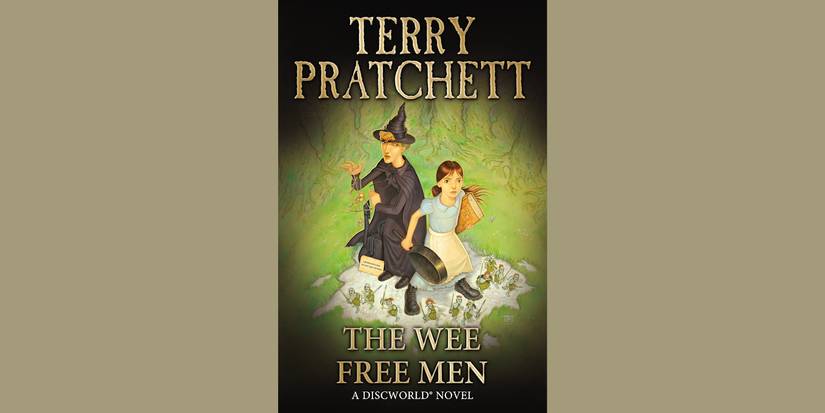
"There's no grays, only white that's got grubby." By the time Terry Pratchett published The Wee Free Men in 2003, Discworld had already been around for two decades. Somehow, its 30th novel still managed to make the setting feel fresh. A big part of this is the protagonist: the book introduces Tiffany Aching, a fiercely intelligent nine-year-old who discovers that she may have the makings of a witch after strange creatures begin appearing around her home.
When her younger brother is kidnapped by the Queen of Fairyland, Tiffany sets off to rescue him, accompanied by the Nac Mac Feegle: tiny, blue, perpetually belligerent men who enjoy drinking, stealing, fighting, and fighting after drinking and stealing. The characters and creatures here are as colorful as ever, while the plot is peppered with wry observations and hilarious moments. Few fantasy novels are this funny while simultaneously delivering such a satisfying old-fashioned adventure.
7 'Catch-22' (1963)

"Just because you're paranoid doesn't mean they aren't after you." A novel about World War II bomber crews doesn't exactly sound like it's going to be especially enjoyable. Yet, while the subject matter is serious, Joseph Heller approaches military bureaucracy with such relentless comic invention, serving up a steady stream of absurd situations, mind-bending contradictions, and perfectly engineered jokes. In the author's nimble hands, the terrifying, rigid environment of combat becomes a playground of pitch-black comedy and linguistic gymnastics.
Indeed, Heller populates his fictional military base with a cartoonish, unforgettable cast of misfits and schemers, like Major Major Major Major and Milo Minderbinder. The famous Catch-22 itself provides the novel's central joke: anyone willing to keep flying dangerous combat missions must be insane, but requesting removal from combat demonstrates enough concern for one's safety to prove one's sanity. That's the whole book's maddening logic in microcosm.
6 'The Hitchhiker's Guide to the Galaxy' (1981)

"Don't Panic." Perhaps the greatest comedy in sci-fi history. At the start of Douglas Adams' classic, Earth is destroyed to make room for a hyperspace bypass, and the unfortunate Arthur Dent discovers that his friend Ford Prefect is actually an alien researching an entry for an interstellar travel guide. From there, things somehow become considerably stranger. Arthur is launched into a universe of depressed robots, bureaucratic extraterrestrials, improbable spaceships, two-headed galactic presidents, and civilizations that have developed remarkably complicated solutions to remarkably stupid problems.
The enormous appeal of The Hitchhiker's Guide to the Galaxy comes from Adams' ability to make almost anything into a joke. The sci-fi genre provides him with endless material to work with, and he uses it to maniacally dismantle humanity's sense of importance. The number 42, the Infinite Improbability Drive, Marvin the Paranoid Android, Vogon poetry, and multiple quotes have all become iconic for good reason.
5 'The Shining' (1977)
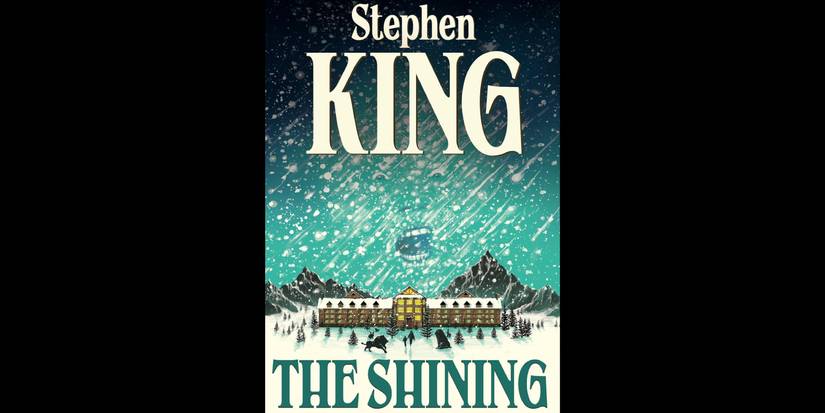
"This inhuman place makes human monsters." Calling The Shining "fun" might sound slightly deranged. The book is famously frightening and dark, jam-packed with addiction, domestic violence, psychological collapse, supernatural encounters, and one extremely unpleasant hotel. Yet horror can be enormously entertaining (that's why we ride rollercoasters), and few novels demonstrate that better. Here, King takes an irresistible premise, a family spending an isolated winter as the sole occupants of a gigantic mountain hotel, and explores practically every scary possibility contained within it.
The result is a tense, compulsively readable book, rendered in prose that carries you smoothly from one page to the next. There are mysterious rooms, disturbing visions, sinister topiary animals, ghostly parties, long empty corridors, and decades of buried violence waiting to resurface. Even the mundane scenes where nothing overtly spooky happens still feel creepy. Not for nothing, this book was a bestseller on release and has continued to reel in millions of readers in the decades since.
4 'Jurassic Park' (1990)

"Life finds a way." While the movie adaptation is probably superior overall, the original Jurassic Park book is still a true banger, serving up one of the juiciest premises in novel history. Billionaire John Hammond has used breakthroughs in genetic engineering to create a theme park populated by creatures extinct for millions of years. Naturally, everything goes catastrophically wrong. Once the park's security systems begin failing, scientists Alan Grant and Ellie Sattler, along with mathematician Ian Malcolm soon become prey.
Michael Crichton incorporates plenty of scientific speculation, chaos theory, and musings about humanity's reckless use of technology, but Jurassic Park ultimately moves with the momentum of a first-rate adventure story. Velociraptors stalk people through buildings, a T-rex escapes its enclosure, and characters desperately improvise solutions as one supposedly foolproof safety measure after another collapses. The plot is just so gripping the whole way through; all killer, no filler.
3 'Harry Potter and the Philosopher's Stone' (1997)

"It does not do to dwell on dreams and forget to live." It's difficult to recreate the feeling of discovering Hogwarts for the first time. The first Harry Potter book takes an unhappy eleven-year-old living in a cupboard beneath the stairs and gradually opens an entire hidden world before him. Learning that he is a wizard, Harry befriends Ron and Hermione and enters a castle filled with moving staircases, ghosts, secret passages, enchanted objects, and seemingly endless mysteries.
The plot eventually develops considerable danger, but much of the story's pleasure simply comes from exploring this world alongside Harry. The world-building is off the charts, an almost-inexhaustible wellspring of awesome ideas riffing on myths, legends, and earlier fantasy classics. In other words, wonder is at a premium here, which is why millions of readers the world over immediately responded, producing a literary sensation unlike anything else in the last three decades.
2 'The Hobbit' (1937)

"In a hole in the ground there lived a hobbit." Before Middle-earth became synonymous with enormous armies, ancient evil, tragic heroes, and the fate of civilizations, J.R.R. Tolkien invited readers on a considerably more cheerful adventure. The Hobbit begins with Bilbo Baggins enjoying an exceptionally comfortable life until Gandalf and thirteen dwarves arrive at his home and effectively recruit him into an expedition to reclaim a treasure hoard from the dragon Smaug.
This setup becomes a brisk, economical children's story akin to a fairytale, cramming a ton of color and whimsy into its relatively lean 300-ish pages. While nowhere near as grand as LoTR, The Hobbit surpasses it in terms of pure joy and fun. There's so much entertainment value here: trolls arguing over how to cook the company, goblins beneath the Misty Mountains, giant spiders, haughty elves, riddles in the dark, barrels used as an escape route, mountains full of treasure, and, of course, one magnificently arrogant dragon.
1 'The Princess Bride' (1973)

"This is my favorite book in all the world, though I have never read it." Before it was a beloved movie, The Princess Bride was a fantastic book. Presented as William Goldman's supposedly abridged version of a much older book by the fictional S. Morgenstern, the novel gleefully plays with the conventions of fairy tales and adventure stories while simultaneously delivering a terrific example of both. At its center are Buttercup and Westley, lovers separated by apparent death, unwanted engagement, and an assortment of increasingly ridiculous obstacles.
Around them gathers one of the most entertaining casts in all of fantasy, including the gigantic Fezzik, scheming Vizzini, revenge-driven swordsman Inigo Montoya, and the unpleasant Prince Humperdinck. There are sword fights, giants, pirates, torture chambers, miraculous recoveries, daring escapes, revenge quests, true love, political schemes, and the terrifying creatures of the Fire Swamp. Yet Goldman also continually interrupts and undermines the story through his fictionalized editorial commentary, turning the book itself into an elaborate joke about storytelling.
Collider Exclusive · 8 Questions · 2 Minutes What Fantasy World Do You Belong To? Middle-earth · Grand Line · The Continent · Camp Half-Blood
Pick your magic, your crew, where you want to wake up and who you would rather be fighting, and we will tell you which world you actually belong in. Four are open to you: an ancient kingdom living through its last good age, an endless sea full of pirates, a continent that pays people to kill monsters, and a summer camp where the Greek gods are extremely real and mostly a nuisance.
💍Middle-earth(Rings of Power)
👒Grand Line(One Piece)
🐺The Continent(The Witcher)
🔱Camp Half-Blood(Percy Jackson)
01
What kind of power do you want? Every one of these worlds runs on a completely different sort of magic.
02
Who is travelling with you? Nobody gets through any of these stories entirely on their own.
03
Where do you want to wake up tomorrow? The best fantasy is usually just somewhere you would genuinely like to live.
04
How are you making a living out there? Even in fantasy somebody has to pay for the horse.
05
There is something in the woods. What do you do about it? All four of these worlds keep something unpleasant out there in the dark.
06
Who is the villain of your story? The enemy tells you far more about a world than the hero ever does.
07
What do you actually believe in out there? Every world hands its heroes one rule and asks them to hold onto it.
08
A thousand years from now, how are you remembered? Eight questions in, this is the one that decides your world.
The Map Is Drawn Your World Is…
Four worlds and four completely different ideas of what a good life looks like. This is where you belong, what it would ask of you, and what you would get back in return.
Middle-earth
You belong somewhere old enough that the mountains have names and somebody can still tell you who gave them. Middle-earth is for people who think the right thing is worth doing even when it will not be finished in their lifetime.
- This is the only world on the list where doing good is understood as a very long defeat, fought anyway, by people who will never see how it ends.
- You are drawn to grandeur, to white cities and deep forges and the sense that almost everything you touch is older than your entire family line.
- The Rings of Power is set in the last good age before it all goes wrong, which gives every quiet scene in it a slightly unbearable weight.
- You would take the hard road, and you would take it on foot.
The Grand Line
You want the sea, a crew, and absolutely nobody telling you where you are allowed to go. The Grand Line is the world for people whose main ambition in life is finding out what is over there.
- One Piece has run for decades on one very simple engine, which is a group of people who each want something impossible and have decided to go and get it together.
- You collect people. Your ideal crew is a set of misfits who were each written off somewhere else before you turned up and offered them a better idea.
- The world is enormous and deliberately ridiculous, and the emotional gut punches land harder because of that rather than in spite of it.
- You would set sail knowing the map runs out, which is more or less the entire point of it.
The Continent
You would rather be feared and useful than liked and useless. The Continent is a world where the monsters are the straightforward part of the job and the people are where it all gets complicated.
- Witchers get paid to do what nobody else will and resented for existing at all, which is a trade most people would refuse and you would probably accept.
- You have no real illusions about which side is the good one, largely because on the Continent that question tends to have a disappointing answer.
- The best of these stories are not about the fighting. They are about somebody with a rigid code being repeatedly cornered into caring about people.
- You would take the coin, finish the job properly, and be out of town before the story got told wrong.
Camp Half-Blood
You want the myths to be real and loose in the actual world, and you want to find out at about thirteen that you were never anywhere near as ordinary as everybody kept telling you.
- Percy Jackson takes the oldest stories we have and drops them into car parks and diners, which makes the gods considerably funnier and a great deal worse.
- You would be the kid every school gave up on, who turns out to have been built for something nobody thought to test for.
- The series is genuinely about friendship rather than destiny, and it says so out loud every time a prophecy tries to get in the way.
- Camp Half-Blood is the real fantasy here: a place where the thing that made you difficult everywhere else is the thing that makes you belong.
KioskNews shows a cleaned-up reading view extracted from the publisher’s page — the original always lives on their site, not ours.