‘We’re doomed anyway’: young people disheartened about the future are splashing out on the present

An Tran treats herself to experiences like concerts and movie tickets.
The 21-year-old Sydney law student, who is working towards paying her tuition fees, says many of her friends spend their spare money on matcha, Labubu toys and trending makeup items.
Tran, who moved from Vietnam two years ago, says she appreciates what she has in Australia but can understand why young people like her are concerned about the future.
“We feel like we’re doomed anyway so why should we save?” she says.
Young people feeling disheartened about the economy are choosing to spend their money in the present – regularly buying “little treats” such as takeaway coffees or even “doomspending” if it feels like there’s no point saving for the future.
“If we believe in the future, we are much more likely to be able to defer gratification in the pursuit of it,” says brand strategist Eugene Healey.
Healey says “little treat” culture – a pattern of consumer behaviour where people, especially younger people, buy “affordable, everyday luxuries” like matcha or lunch – has come about because traditional milestones feel out of reach.
The rationale works like this: buying an $8 matcha five days a week for 48 weeks works out to $1,920 a year.
Even if you saved that money, the median house price in Australia’s capital cities combined is now $1,103,201 and the median unit price $738,778, according to Cotality research published this month.
Saving $40 a week and not getting to have a matcha during the work day may not seem worth it if even a 10% deposit feels out of reach and future job security is uncertain – especially amid the disruption to white collar industries caused by AI.
Housing affordability has reached its worst on record, according to the Housing Industry Association, as rising borrowing costs have eclipsed the recent retreat in prices. The average homebuyer nationally needs to save more than eight years for a deposit, and more than nine years in Sydney.
A recent report from realestate.com.au found that a typical household earning $125,000 a year could only afford 12% of the homes for sale across the country – also a historical low with the previous low watermark being 14% in 2008.
Australians on lower incomes are virtually shut out of the market. The analysis showed that a household earning $76,000 could afford just 2% of homes on the market.
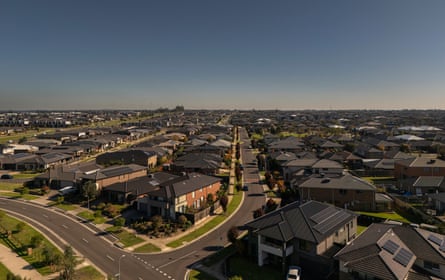
Meanwhile, workers’ wages have barely kept up with inflation since cost of living exploded from 2022, making it harder to save.
Healey says the social contract, that working hard and saving for the future ensured you would get ahead, has broken down.
“Not only are you paying into the system with superannuation, but there is no guarantee now that if you do well in school, get a relatively good job [and] accrue university debt, that you’re going to be able to enjoy … even a fraction of the prosperity that previous generations took for granted,” he says.
after newsletter promotion
Healey says doomspending is “perhaps a more advanced version or symptom of the same underlying feeling”.
Cambridge dictionary, which began tracking the word last year, defines doomspending as spending money that you cannot afford in order to make yourself feel better, which people sometimes engage in when they feel anxious and uncertain about the future.
“It’s not merely just, ‘Oh, things are a little expensive here and there [and] the major things are expensive. I deserve a little treat,’” Healey says.
“Its a quite significant paradigm shift [to]: ‘I don’t believe in what the future is going to look like any more … It’s much more rational for me to spend that money in the present and to enjoy what I have in front of me.’”
Terry Rawnsley, a senior economist at KPMG, says it is a “perfectly rational decision” to spend money on things that make you happy now, when the alternative – buying a home in the future – is unattainable.
Rawnsely says this phenomenon isn’t just evident among early 20-year-olds, but also for some millennials in their 30s who have found that “things haven’t worked out for them as it has for previous generations, and so they are having a different mix of priorities in their lives”.
“This is where superannuation has probably given people a financial safety net when they retire, as it was designed to do so,” he says.
Kayshini Logeswaran, 28, a business analyst in Sydney, says she has a “good, stable job” but saving up for big things like overseas holidays still feels out of reach.
Logeswaran says companies’ shifting of roles to AI and general cost-of-living pressures are making her more fearful of the future.
She considers indulging in some little treats worth it if they make her feel good in the moment.
“Whenever I go out or go for a walk I always make sure I get my favourite coffee: it’s something that keeps me happy and sane,” she says.
KioskNews shows a cleaned-up reading view extracted from the publisher’s page — the original always lives on their site, not ours.