The 10 Greatest Sci-Fi Books of the 2020s, Ranked

Diego Pineda has been a devout storyteller his whole life. He has self-published a fantasy novel and a book of short stories, and is actively working on publishing his second novel.
A lifelong fan of watching movies and talking about them endlessly, he writes reviews and analyses on his Instagram page dedicated to cinema, and occasionally on his blog. His favorite filmmakers are Andrei Tarkovsky and Charlie Chaplin. He loves modern Mexican cinema and thinks it's tragically underappreciated.
Other interests of Diego's include reading, gaming, roller coasters, writing reviews on his Letterboxd account (username: DPP_reviews), and going down rabbit holes of whatever topic he's interested in at any given point.
Sign in to your Collider account
Throughout the 2020s, the world has been treated to several of the best science fiction books of the 21st century. Some of them are awfully underappreciated, and others have been the subject of multi-million-dollar Hollywood film adaptations. However, they all share something in common: they're a testament to the tremendous quality that the genre has reached in recent years. If they're anything to go by, then 2020s sci-fi literature is bound to end up being one for the history books.
Perhaps it's an award-winning space opera like Children of Memory, a groundbreaking LGBTQ+ sci-fi novel like Some Desperate Glory, or a genre-defining bestseller like Project Hail Mary. Regardless, the best sci-fi books of the 2020s have been remarkable examples of what the genre can achieve when in the hands of a creative, passionate, and intelligent enough author.
10 'Children of Memory' (2022)

Award-winning British speculative fiction master Adrian Tchaikovsky has been writing novels since the late 2000s, but it has been throughout this decade that he has properly established himself as one of sci-fi's leading exponents in the English language. For proof, one needn't look much further than Children of Memory. In this science fantasy space opera, a multispecies crew encounters a struggling human colony on a desolate planet.
A sequel to Children of Time and Children of Ruin, Children of Memory is undoubtedly the best of the series, which was awarded the Hugo Award for Best Series in 2023. Its story spans several generations and galaxies, resulting in one of the best sci-fi epic books of all time. It breaks away from your typical space opera clichés, using its nonlinear structure to craft a tale of wonderful philosophical depth about human consciousness, identity, and the importance of memories.
9 'Some Desperate Glory' (2023)

Queer science fiction has experienced an unprecedented boom in popularity throughout the 2020s, moving toward the mainstream forefront of sci-fi like never before. This is perfectly demonstrated by Emily Tesh's Hugo Award-winning Some Desperate Glory, where a dedicated young soldier trains to avenge the Earth after its destruction by an alien army. But far from just being a powerful queer story, it's also an action-packed gem that deals with themes like AI and fascism.
Those thought-provoking thematic explorations are always at the core of Some Desperate Glory's narrative, fueling its momentum and keeping its action scenes grounded in a believable reality. It's a bold, consistently subversive deconstruction of the space opera genre, one perfect for people who love sci-fi novels with strong redemption arcs, morally grey protagonists, and politically sharp narratives.
8 'Eversion' (2022)

Every decade has its fair share of awfully underappreciated sci-fi books, of course; and Alastair Reynolds' Eversion seems to be one of the 2020s' examples most in need of extra love. In this mind-bending mystery space opera, a man finds himself serving as different expeditions' physician across several different decades, having to figure out why—and how to stop the process from continuing. All in all, it's one of the best sci-fi books of the last 10 years.
Reynolds has always been one of the spearheads of the 21st-century space opera genre, and Eversion is undoubtedly some of his strongest work to date. Its thought-provoking premise was already riveting on paper, but the way Reynolds executes the idea with such perfect pacing and such a multi-layered mystery is nothing short of perfect. It's a sci-fi story of pure existential dread, great for those who love when the genre keeps them thinking about their own lives after they put the book down.
7 'Nona the Ninth' (2022)

New Zealand writer Tamsyn Muir's The Locked Tomb series is a rather polarizing one, with many critics and readers finding Muir's unique style unappealing. However, those who read Gideon the Ninth (the first chapter in the series) and love it are in for a treat, because the third installment of the saga, Nona the Ninth, is one of the best science fantasy books of the last decade. It's about the titular character, an amnesiac who wants to live a normal life as an apocalyptic war comes to its boiling point around her.
Those who loved Nona's two predecessors may be caught off-guard by its hopeful tone and the tender, soft voice with which Muir writes Nona herself, and that contrast is precisely the point. It's a must-read novel for those who love more joyful, hopeful looks at otherwise terrifying sci-fi universes, a fresh perspective on the fascinating world that Muir has been building up to this point in the series.
6 'The Kaiju Preservation Society' (2022)

Written by John Scalzi, The Kaiju Preservation Society won a Locus Award for Best Science Fiction Novel in 2023, and for good reason. It's one of the most perfectly written sci-fi books in recent memory, a comedy about a food delivery driver who's recruited to join a secret kaiju rights group, having to protect the creatures from greedy exploiters in a parallel universe. It may seem like a ludicrous premise on the surface, but it results in one of the most irresistibly entertaining sci-fi books the world has seen in years.
Penned with exactly the kind of fast-paced, lighthearted prose that a piece of delectable pulpy fun like this needs, Kaiju Preservation Society is an ideal read for sci-fi fans looking for something on the lighter side. It's not a particularly epic or thematically profound novel, but those aren't really things that anyone would go into it looking for. Instead, Scalzi maximizes the story's entertainment value every chance he gets, and that results in one of the biggest speculative fiction page-turners of the last six years.
5 'Alien Clay' (2024)

If there could ever possibly be one author worthy of having not just one, but two of his books counted among the best works of sci-fi literature of the 2020s so far, it would have to be Adrian Tchaikovsky. As exceptional a sequel as Children of Memory is, not every sci-fi fan is into the idea of constantly getting into a new series. And as far as standalone sci-fi books from this decade go, it doesn't get much better than Alien Clay, a horror dystopia where an exiled biologist is forced into labor on a prison planet, where he discovers an alien ecosystem which shatters his totalitarian captors' beliefs.
Alien Clay is both gleefully critical of authoritarianism and a loving celebration of connection with the natural world.
It's both a powerfully satirical book and one gleefully critical of authoritarianism, as well as a loving celebration of connection with the natural world. That connection between alien biology elements and satirical political critique is perfectly balanced by Tchaikovsky, who blends genres like an absolute pro and delivers one of the smartest space sci-fi books of the last few years.
4 'Network Effect' (2020)

With season two of Apple TV's Murderbot currently in production, it seems about as good a time as any to dive into the Martha Wells book series that inspired the hit sci-fi show. While the first four installments in The Murderbot Diaries are all incredible novellas, Network Effect was both the first Murderbot story of the 2020s and the first full-length novel in the series. It just so happens to also be the best book of the bunch to date. In it, the cynical Murderbot is ambushed and abducted while on a routine assignment.
One of only a precious few books that have recently won all three of the Hugo, Locus, and Nebula Awards (and the only book from the 2020s to do so thus far), Network Effect is one of those sci-fi books that keep you hooked from start to finish. With its high stakes, exceptional character development, incredibly inventive worldbuilding, and the same charming and hilariously sarcastic prose that made its four predecessors hits, Network Effect will likely continue aging as one of the decade's best sci-fi novels.
Collider Exclusive · Sci-Fi Personality Quiz Which Sci-Fi Hero Are You Most Like? Paul Atreides · Captain Kirk · Princess Leia · Ellen Ripley · Max Rockatansky
Five iconic heroes. Five completely different ways of facing an impossible universe. One of them shares your instincts, your values, and your particular way of refusing to back down. Eight questions will tell you which one.
🏜️Paul Atreides
🖖Capt. Kirk
✊Princess Leia
🔦Ellen Ripley
🔥Max Rockatansky
01
How do you lead when the stakes couldn't be higher? The way you lead under pressure is the most honest thing about you.
02
What is your greatest strength in a crisis? The quality that keeps you alive when everything else fails.
03
What is the thing you'd sacrifice everything else for? Your deepest motivation is your truest compass.
04
How do you relate to the people around you? Who you are to others under pressure is who you really are.
05
You're facing a threat that no one else believes is real. What do you do? How you respond when you're the only one who sees it defines everything.
06
What has your heroism cost you personally? Every hero pays. The question is what — and whether they'd pay it again.
07
How do you feel about the rules of the world you're in? Every hero has a relationship with the system. What's yours?
08
When everything is on the line, what keeps you going? The answer is the most honest thing about you.
Your Hero Has Been Identified Your Sci-Fi Hero Is…
Your answers point to the iconic sci-fi hero who shares your instincts, your values, and your particular way of facing the impossible.
Paul Atreides
You carry a weight most people would crumble under — the knowledge of what you're capable of, and the burden of what you might have to become.
- You see further ahead than others and you plan accordingly, even when the vision frightens you.
- You are driven by loyalty to your people and a sense of destiny you didn't ask for but can't escape.
- Paul Atreides is not simply a hero — he is someone who understands the cost of power and chooses to bear it anyway.
- That gravity, that willingness to carry what others won't, is exactly you.
Captain Kirk
You lead with instinct, warmth, and an absolute refusal to accept a no-win scenario — because you've always believed there's a third option nobody else has thought of yet.
- You take the mission seriously without ever taking yourself too seriously.
- Your crew would follow you anywhere, not because you demand it, but because you've earned it.
- Kirk's genius isn't tactical — it's human. He reads people, bends rules with purpose, and wills outcomes into existence through sheer conviction.
- That combination of warmth, audacity, and relentless optimism is unmistakably yours.
Princess Leia
You are the kind of person who holds the line when everyone else is losing faith — not because you're fearless, but because giving up simply isn't something you're capable of.
- You lead through conviction. Your voice carries because your belief is unshakeable.
- You gave up everything ordinary the moment you chose the cause, and you've never looked back.
- Leia is not a supporting character in her own story — she is the moral centre of the entire rebellion.
- That same fierce, principled, unbreakable core is what defines you.
Ellen Ripley
You are not reckless, not grandiose, and not particularly interested in being anyone's hero — you just refuse to stop when it matters.
- You see threats clearly, you document the truth even when no one listens, and when the time comes you handle it yourself.
- Ripley's heroism is earned, not performed. She doesn't have a speech — she has a flamethrower and a plan.
- You share her composure under the worst possible pressure, and her refusal to pretend the monster isn't there.
- When it counts, you don't flinch. That's everything.
Max Rockatansky
You have been through fire that would break most people — and what came out the other side is something the world underestimates at its peril.
- You don't ask for help, don't need validation, and don't wait for anyone to tell you the rules no longer apply.
- Your loyalty, when it finally arrives, is absolute — but it's earned in silence and tested in action, not in words.
- Max is not a nihilist. He is someone who lost everything and found, against his will, that he still has something worth protecting.
- That bruised, stubborn, ultimately human core is exactly yours.
3 'The Deluge' (2023)

Another one of the most awfully underappreciated sci-fi books of the last six years, Stephen Markley's The Deluge is a true literary colossus, a dystopian novel spanning decades and covering nearly 900 pages. In it, Markley envisions a version of the United States slowly falling under ecological, political, and economic collapse. In all of those senses, it's a wonderfully complex must-read book that proves just how powerful 2020s science fiction literature has been.
It's an absolutely sprawling behemoth unlike anything else that the genre has seen in the last six years, fearlessly tackling an eerily realistic apocalypse with realism, urgency, and highly cinematic prose. But though it's a cautionary tale, Markley manages to never make The Deluge feel condescending or paternalistic. It's a book that's abundantly clear regarding its views on the future, politics, and the environment right off the bat, and it's through that confidence that it crafts such a hard-hitting epic that never talks down to its reader.
2 'A Desolation Called Peace' (2021)

Arkady Martine's Teixcalaan series began with A Memory Called Empire, followed by A Desolation Called Peace. Like its predecessor, this sequel won the Hugo Award for Best Novel, and it also went on to win the Locus Award for Best Science Fiction Novel. Both of those awards were well-deserved, and perhaps even more were in order. After all, this space opera about an alien armada threatening the borders of the Teixcalaanli Empire only keeps getting better as the years pass.
Wonderfully written and structured, A Desolation Called Peace is a true top-tier space opera that deals with subjects as nuanced as colonialism, culture, and consciousness. But while it's thematically layered and undeniably cerebral in its approach to its narrative, it's also tightly paced and immensely entertaining, a sweeping epic written with absolutely masterful prose. Anyone who loves modern space operas ought to consider this one a must-read.
1 'Project Hail Mary' (2021)
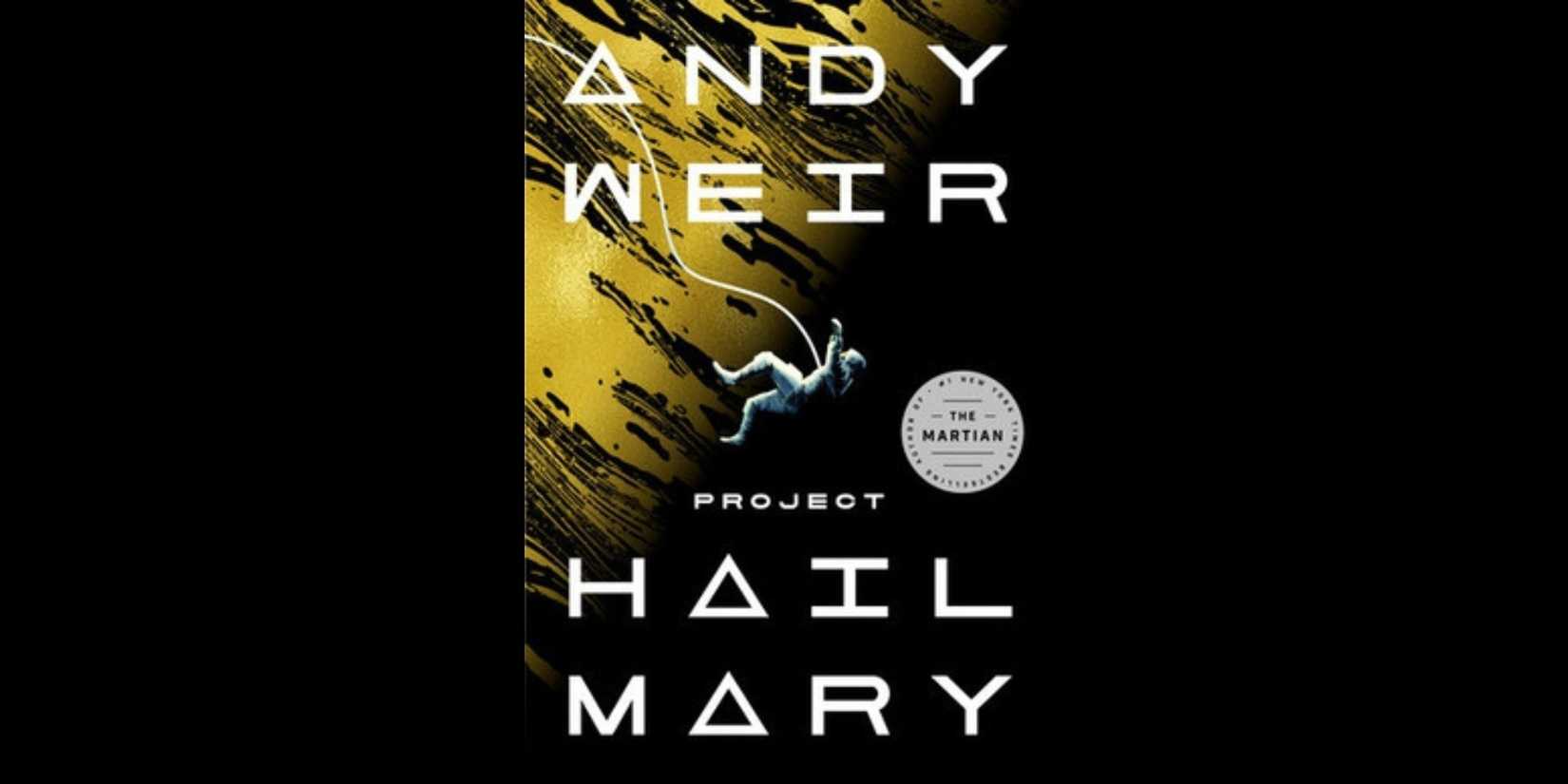
By this point, with its movie adaptation having become one of the highest-grossing science fiction movies of the 21st century, Project Hail Mary requires pretty much no introduction. It was written by Andy Weir, one of the most prominent masters of hard science fiction of the modern era, and it may very well be his best work to date. It's also one of those hard sci-fi books that are perfectly written, about an amnesiac interstellar traveler who slowly remembers that he's on a mission to save Earth from extinction.
It's an old-school premise that Weir executes with a refreshingly modern twist, delivering a wonderfully written space opera that should appeal to fans of hard sci-fi and soft sci-fi alike. The writer blends infinitely high stakes with a surprisingly emotion story about an unexpected friendship, throwing in plenty of sprinkles of sharp humor and accessible-yet-complex scientific language. It's hard sci-fi at its most incredibly fun, even for those who don't typically love the subgenre, and it's easily the best sci-fi book of the 2020s so far.
KioskNews shows a cleaned-up reading view extracted from the publisher’s page — the original always lives on their site, not ours.