Greetings from the Brazil-Argentina border, where waterfalls are flowing at near-record rates
Carrie Kahn/NPR
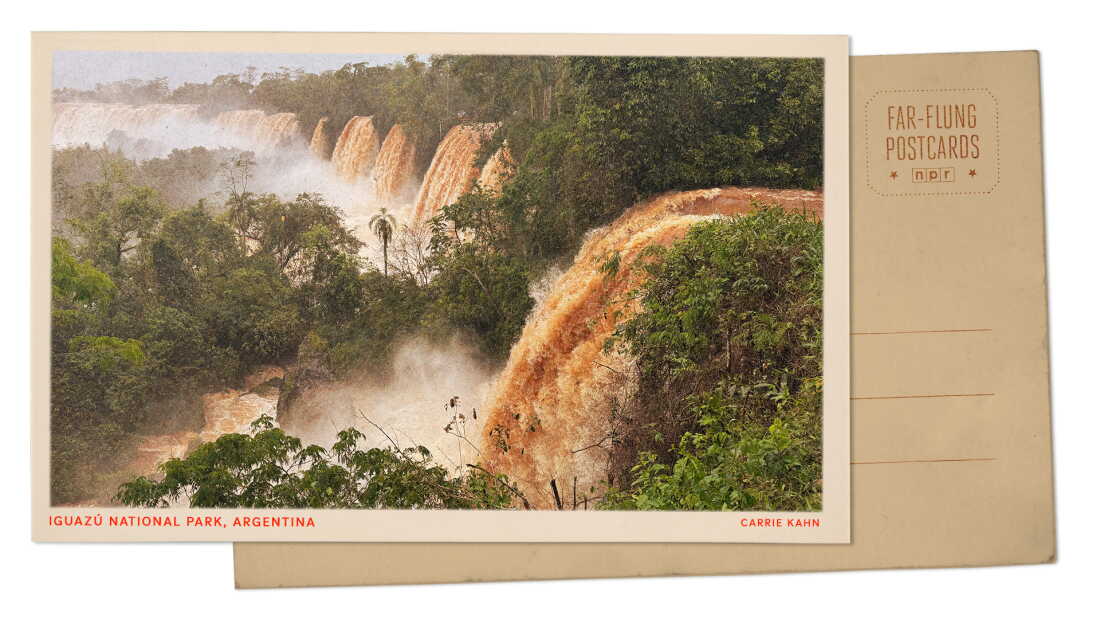
IGUAZÚ NATIONAL PARK, Argentina — Few times in my life have I felt the enormity and power of nature. Standing at the edge of Iguazú Falls, on the Brazil-Argentina border, was one of them.
Iguazú isn't just one imposing fall, but a complex of cascades spanning more than a mile across both countries. A rain-soaked October in Brazil has sent near-record volumes of water surging over its towering cliffs. Scientists link the relentless rains to this year's Super El Niño, causing extreme weather events across the globe.
But what a spectacular force of nature for the lower-than-average number of tourists who braved the deluge this month. The roar of the rushing Iguazú river under your feet penetrates your body; your eyes strain to keep up as the rusty swells disappear over the steep precipice.
One day during my recent visit, officials registered nearly 12 million liters (more than 3 million gallons) of water per second tumbling over the falls. That's 10 times the normal flow. As the Iguazú river's red, muddy waters raced furiously toward the falls' edge, they lapped the bottom of the narrow metal catwalks that usually hover a few feet above the falls during normal-rainfall years.
Officials closed the spectacular walkways as the river level kept rising. When asked why access was shut off, the national park's director simply said, "It just keeps raining."
KioskNews shows a cleaned-up reading view extracted from the publisher’s page — the original always lives on their site, not ours.