How NFL defenses are combatting unexpected rise of under-center offenses
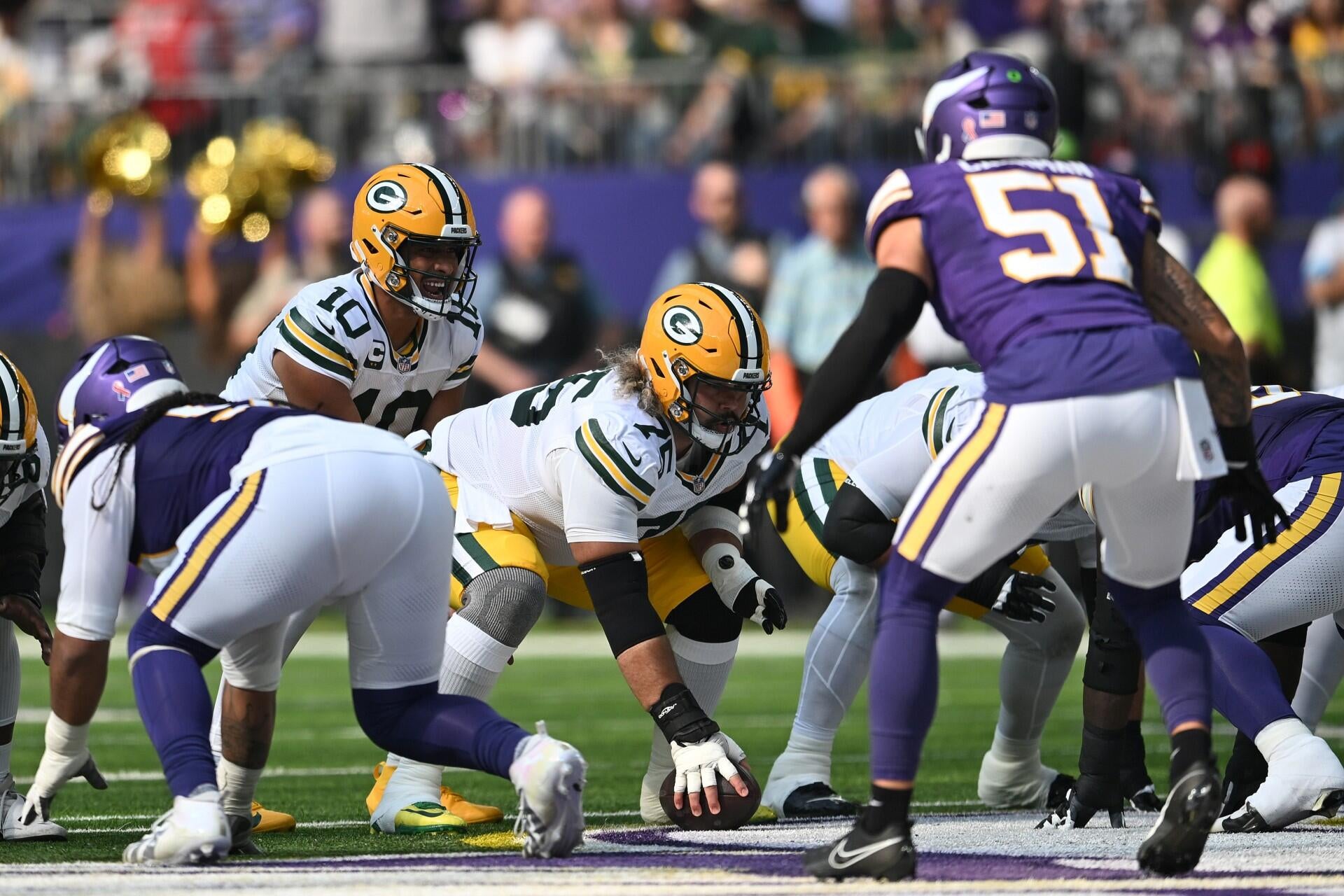
Defenses are blitzing under-center passes at a record 51% rate, unleashing linebackers and cornerbacks to disrupt condensed formations and outside zone runs

• 8 min read
If you digest football online, you've probably heard this before: "everyone in the NFL is going under center now," and it's true. Across the league, NFL teams are going under center to manufacture their offense at a rate we haven't seen this decade. According to TruMedia, through Week 3, the under-center rate is 42.0%, the highest the league has seen since 2013. If we want to parse it further, on early downs (first and second down), 2026's 49.6% under-center rate is also the highest since 2013. Even with the higher under-center frequency, the leaguewide success rate under center (47.4%) is also the highest it's been in that same time period (2025 is second at 46.9%). Teams are returning to ethical football, leaving behind the shotgun/RPO world we thought we'd get after the iconic Rams-Chiefs shootout of 2018.
But how are defenses countering the return to the under-center game that offenses are throwing at them? Longtime college defensive coordinator Don Brown once said to "solve your problems with aggression," and NFL defenses have taken note. The leaguewide blitz rate against all under-center passes is 51% through three weeks, the highest the NFL has seen since TruMedia started tracking blitz rate in 2006. Teams are leaning into the aggression to cause chaotic plays, but the reason why is a great illustration of the constant battle for supremacy within the white lines.
We have to start with the run game, which is a large part of why the NFL has moved to more under-center offense. As Sean McVay and Kyle Shanahan's roots grew around the NFL, the staple run has been the outside zone. In 2026, teams are running outside zone on almost 40% of their designed rushes, the highest since TruMedia began tracking in 2016. On outside zone and all zone run plays in general, you're blocking an area, not a man. If nobody is in your area, you move up to the second level. You also have to combine this with formations becoming much more condensed. Per Sumer Sports, the average formation width has shrunk to 22.67 yards, almost six yards shorter than the formation width in 2016. By condensing formations, you get a formula in which receivers are more involved as run blockers, and teams can mask their play-action game by making every run look similar.
In 2026, defenses have started to crater these outside zone runs by using blitzes to get defenders in unaccounted-for zones. By blitzing guys from depth, the defense forces the offensive line to play faster and stresses the eyes up front. When runs happen under center, for the offensive line, it becomes much faster than shotgun. Linebackers have to respect the mesh point in shotgun run scenarios, which slows them down. When working the double teams and combo blocks, offensive linemen are working with their feet, eyes and one hand to help. If there's a blitzing linebacker coming from depth, there's not a lot of time to get back into the blitzer while also helping on the combo block. So much talk has gone into changing the picture for quarterbacks, but defensively, the adjustment has been to force the offensive line to play on its back foot.
This rep is against a split-zone run, but you can see the idea behind what the Vikings and DC Brian Flores are trying to accomplish. They send LB Eric Wilson through the backside A gap, forcing the left guard to make a reactionary play to stop him from making the tackle. In turn, that ends up opening this hole for Blake Cashman, who makes the stop for a short gain.
Another way teams are changing the picture and attacking under-center offenses in the run game is by using corner blitzes. By making formations more condensed, offenses can add receivers to run-blocking schemes, but they also bring cornerbacks into the run fit. The mantra has always been to make CBs tackle, but if defensive coordinators just full send their corners on blitzes, it creates a new edge defender that nobody up front is accounting for, a simple answer to create negative plays. The Seahawks and head coach Mike Macdonald run this a lot with their corners, though it definitely helps to have willing tacklers like Devon Witherspoon and Josh Jobe on the team. It's not completely new, but we've started to see that blitz pick up around the NFL. The Jets ran it perfectly against a condensed formation here; you can see them check into it. The receiver isn't ready for the corner to go firing into the backfield, and ends up drawing a holding penalty to back the offense up even more.
This is another really good one from the Raiders and rookie CB Hezekiah Masses. Nobody on the Chargers is accounting for Masses blitzing from the condensed spot, and he knifes into the backfield to make the TFL.
Even against formations that aren't truly condensed, if the defense times it up well, they can get two free runners into the backfield against zone runs. Washington ran it really well against Philadelphia, getting both corners into the backfield because nobody accounts for them until it's too late.
Now the rubber really hits the road when we break down why teams are blitzing under center passes at such a high rate. We've discussed how blitzing forces offenses to play on their back foot and gets unaccounted-for runners into gaps that linemen aren't covering, but in the passing game, the direct goal is to make the quarterback uncomfortable, turning his back to the defense. Opposing defenses are blitzing under-center play action passes at a 52% clip through three games, the highest rate TruMedia has ever tracked. Showing the quarterback one thing, then presenting a completely different thing, isn't revolutionary, but what teams are doing is turning up the heat once QBs turn their back. It's basic information processing. If a QB turns to run fake and then sees a defender in the lap of his RB, the plan immediately goes haywire, and the rhythm of the entire pass is thrown off.
Think of passing offense like a metronome-every click you hear when a metronome hits is a QB going through his reads. Now imagine someone throwing a rock at the metronome and disrupting the flow--that's a blitzing linebacker. Blitzes not only create negative plays like sacks and TFLs but, more importantly, dictate the flow of play in the defense's favor. This play from the Bears' win over the Eagles is a great way of illustrating how the flow of the play is interrupted with an unaccounted-for blitz. Jalen Hurts finishes his run fake and there are two Bears' defenders in his face because LB Devin Bush blitzed, leaving a tight end blocking their EDGE. Hurts throws an intentional grounding, advantage defense.
The Saints and LB Kaden Elliss are a sterling example of how these blitzes can be weaponized to manipulate and completely throw off passing concepts from under center. The Saints have leaned more into blitzing on early downs this season, and a large reason for that is because of Elliss, who is simply a menace on these plays. He times this up well, but you can see the stress this puts on the running back in protection. The back has to sell the run fake but also be prepared to take on a linebacker with a full head of steam. This is a much more difficult block to make than in shotgun, trying to run play action, because the blitz is easier to see in gun when you're closer to the action.
These blitzes are even more effective because teams are dropping back to pass from under center more often than in previous years. While it's not 1985 all over again, under-center passing rates with no play action are the highest they've been in three years. But while teams are having their QBs take three-step drops from under center again, it's forcing the RB to play much quicker in the pass protection plan. This essentially creates a 1v1 with a running back and linebacker like we're in drills, and I know who I like in that scenario (the Saints know who they like, too).
This is another one against the Lions, this time from ageless wonder Demario Davis. Teams are starting to find more ways to throw off opponents' offenses in this lane.
We've outlined how defenses have tried to slow offenses down from their under-center game using blitzes, but how can offenses throw their next punch? I think the answer lies in more creative pass-protection schemes to better insulate their QB in these situations. If teams are going to start shifting into 12 and 13 personnel, using one of the tight ends to help protect against these blitzes. Buffalo does a good job of protecting QB Josh Allen in these scenarios by mixing up who picks up the blitzing linebackers. Here, they end up looking like they're running counter with both tight ends pulling, but running play action. Dawson Knox ends up blocking the blitzing LB through the B gap, making his tackle's job easier and allowing Allen to hunt big plays.
The Bears had an interesting one against the Eagles to help keep Case Keenum access this explosive to Rome Odunze. Chicago sees a double corner blitz like the one we talked about earlier, but ends up using RB Kyle Monangai and TE Cole Kmet (lined up in the backfield) to help seal the edge, and Garrett Bradbury does a little whirlybird to pick up any free runner. While it's not foolproof (my colleague and former Bears OL Kyle Long isn't the biggest fan of pulling guards on play-action passes), it does create the illusion of a run while insulating the pocket.
Across the league, blitz rates are skyrocketing. The 32.3% leaguewide blitz rate is the highest in the NFL since 2010, but it's not all emotional blitzing after a big play. These are calculated moves, schematic tweaks to force offenses out of their under-center comfort zone and swing the odds back in their favor.
KioskNews shows a cleaned-up reading view extracted from the publisher’s page — the original always lives on their site, not ours.